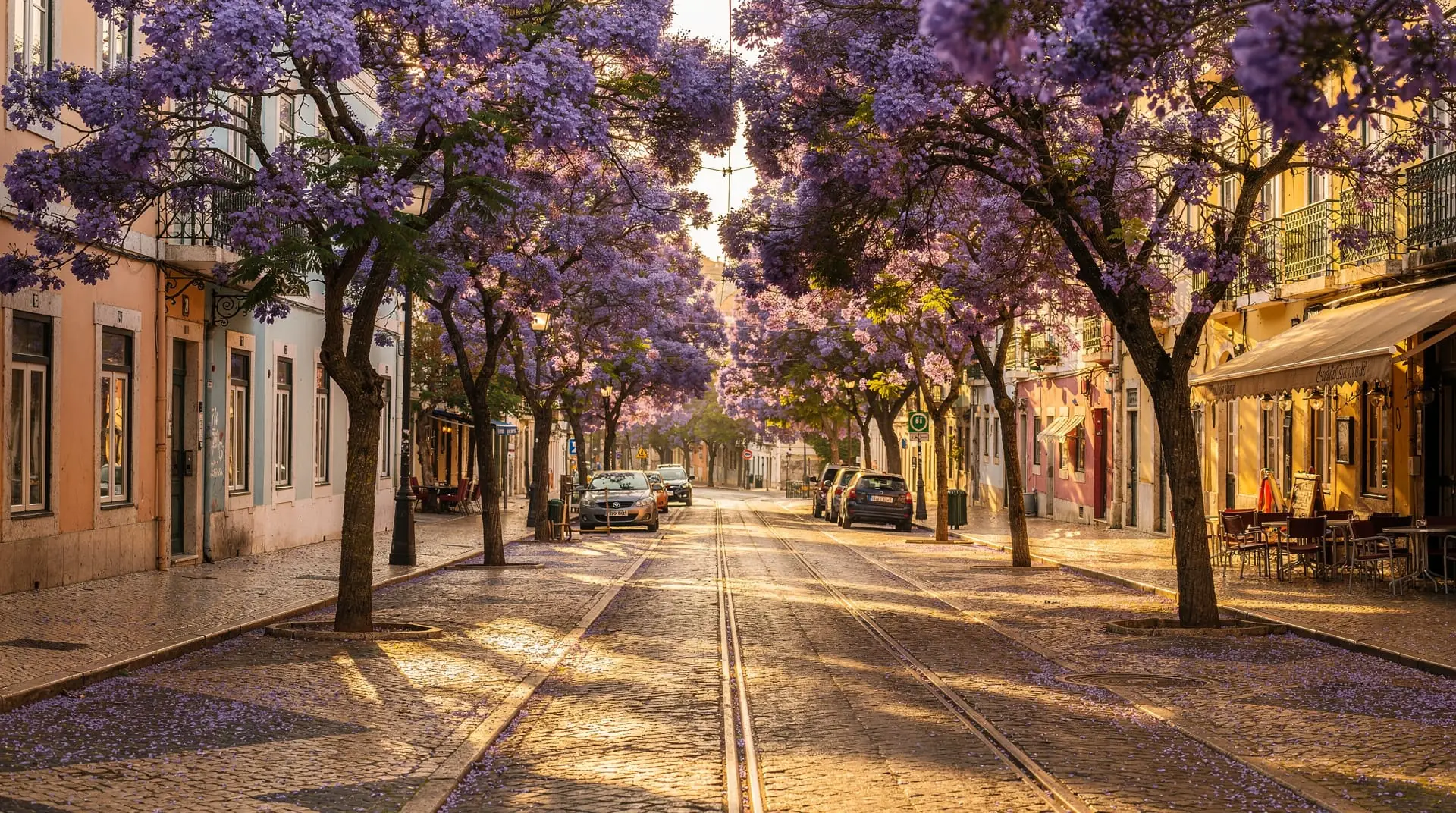
Spring 2026: when and where to see the jacaranda bloom in Lisbon
Lisbon planted its first jacaranda trees in the early 20th century, imported from Mozambique via the botanical gardens, and the city has been adding them since. There are now thousands of them, lining avenues and filling squares from April through May with flowers that are exactly between purple and blue — a colour that has no precise English name, which seems right for something this specific.
In 2026, the bloom in Lisbon was earlier than average. By April 20th the Avenida Almirante Reis had its canopy up. By April 30th — the date of this post — the Largo do Intendente and Avenida da República were at peak.
| Where | Avenida Dom Carlos I, Avenida Almirante Reis, Largo do Intendente, Sintra |
| When | Late April to early June, peaking early-to-mid May |
| Cost | Free — it’s street trees and public squares |
| Best light | Late afternoon, 16:00-18:00, sun from the west |
| Best time | Weekday mornings for fewer people in photos |
When the bloom happens
The jacaranda season in Lisbon is weather-dependent and therefore variable by a few weeks, but the typical pattern:
- Late April: First trees in sheltered, warmer spots (Intendente, lower Alfama) begin to flower
- Early-to-mid May: Peak bloom across most of the city, including the main avenues and university district
- Late May to early June: The flowers fall — spectacular in their own right, carpeting pavements in purple-blue
In 2026, the warm April (several days above 22 degrees by mid-month) pushed the bloom forward by about 10 days compared to 2025.
Where to see them
Avenida Dom Carlos I (Santos area): A long, straight avenue lined with mature jacarandas that forms a tunnel of purple canopy at peak bloom. One of the best in the city. Easy to reach from Cais do Sodré on foot (15 minutes).
Avenida Almirante Reis: The longest avenue in central Lisbon, running north from Martim Moniz through Intendente and Arroios. The jacarandas here are particularly mature and large-canopied. The contrast with the colourful azulejo building facades is the thing photographs are made of.
Largo do Intendente: The square has four or five large jacarandas that, at peak bloom, provide a purple canopy over the entire space. The late afternoon light (16:00-18:00) is particularly good here when the sun comes from the west and illuminates the flowers.
Universidade Nova (Campo Mártires da Pátria): The university precinct has a significant concentration and is slightly less trafficked than the main avenues.
Sintra: The jacarandas in the Sintra hills bloom slightly later than Lisbon (cooler altitude) and are scattered through the town and palace gardens. The combination of jacaranda flowers and Pena Palace in May is unreasonably beautiful. The Sintra destination guide has the wider context for combining a bloom visit with the palaces.
A rough bloom timeline by location
Because the trees don’t all flower at once, timing your visit to a specific street matters more than picking a single “peak week” for the whole city.
| Location | Typical peak window |
|---|---|
| Intendente, lower Alfama (sheltered, warmer) | Late April |
| Avenida Dom Carlos I | Late April to early May |
| Avenida Almirante Reis, Largo do Intendente | Early-to-mid May |
| Universidade Nova | Early-to-mid May |
| Sintra hills | Mid-to-late May (cooler altitude) |
Treat these as approximate — the whole window shifts earlier or later by a week or two depending on how warm the spring has been, as 2026 itself demonstrated.
Photographing the bloom
The purple canopy photographs best from directly underneath, looking up, rather than from across the street — it isolates the flowers against sky rather than competing with parked cars and building facades. Avenida Dom Carlos I and Largo do Intendente both work well for this because the trees form a near-continuous canopy over the pavement. Overcast days actually help: the soft light avoids the harsh dappled shadows that direct sun creates through the canopy. For a broader sense of where Lisbon photographs well beyond jacaranda season, the best Lisbon viewpoints guide covers the miradouros that work in any month.
The 2026 specific notes
By late April 2026, the bloom was notably good — dense flowers on trees that had a wet winter and a warm spring, which is the combination that produces the best displays. The Avenida Dom Carlos I is at or near peak as of April 30th. The Avenida Almirante Reis will be at peak by May 5-8 based on current progress.
The flowers fall from mid-May onward. If you’re visiting in the second half of May, the purple carpet on the pavement is its own aesthetic reward, though less dramatic than the tree-canopy version.
Spring as a travel season
The jacaranda season overlaps with what is, broadly, the best season to visit Lisbon:
- Temperature: 17-22 degrees Celsius in April-May. Warm enough for outdoor dining and viewpoint-sitting; not the exhausting heat of July.
- Crowds: Significant but not at July-August levels. Sintra is busy but manageable with the right timing; most Lisbon attractions don’t have the extreme midday queues of high summer.
- Prices: Mid-range. Lower than July-August peak; higher than November-February off-season.
- Rainfall: April in particular can be showery. May is more reliable. The pattern tends toward morning cloud clearing to afternoon sun.
Building a bloom day around the trees
Because the jacaranda streets are free and need no booking, they slot easily into a day that has other plans in it. The trees around Alfama and Intendente pair naturally with a slow wander through the old neighbourhoods; the Alfama destination guide and the what to do in Alfama guide cover the streets, viewpoints and stops worth folding into the same walk. If you would rather have someone point out the best frames, a guided option such as a photo walk through the old streets keeps the focus on light and composition rather than navigation.
Belém is a good second half of a bloom day, since the riverside is open and the spring weather suits long walks outdoors. The Belém destination guide and the Belém half-day guide lay out how to string the sights together, and the Jerónimos Monastery guide is worth reading first if you want to go inside. In spring the queues are shorter than in summer but not absent, so a skip-the-line entry to the monastery can save time on a day when you would rather be under the trees.
For a longer stay, the two-day Lisbon itinerary is an easy frame to hang a bloom visit on, and the Lisbon in 3 days itinerary leaves more room for a Sintra morning. If your dates are flexible, the Santo António festival guide and the Lisbon summer survival post show what comes after the flowers fall, and the day trips by season post helps you decide what to add around the bloom.
What else is happening in spring 2026
NOS Primavera Sound (June): The major alternative music festival traditionally held in Porto in June has had some Lisbon extension events. Check the programme for 2026.
Festas de Lisboa (all of June): Heading toward the Santo António festivals on June 12-13 — the neighbourhood parties, the sardines, the marchas populares parade. The festas season is building through late May.
Sintra spring light: The Serra de Sintra in May, when the moisture from the Atlantic keeps the vegetation unusually green and the palace gardens are in full bloom, is at its most beautiful. The Sintra day trip guide covers how to do it right.
For the full picture on spring timing, the best time to visit Lisbon guide has the month-by-month breakdown with weather, crowd levels, and seasonal events, and the Lisbon in spring guide covers the season more broadly. And for what’s currently good in Lisbon restaurants in May specifically, see the May 2026 restaurant update.
Related guides
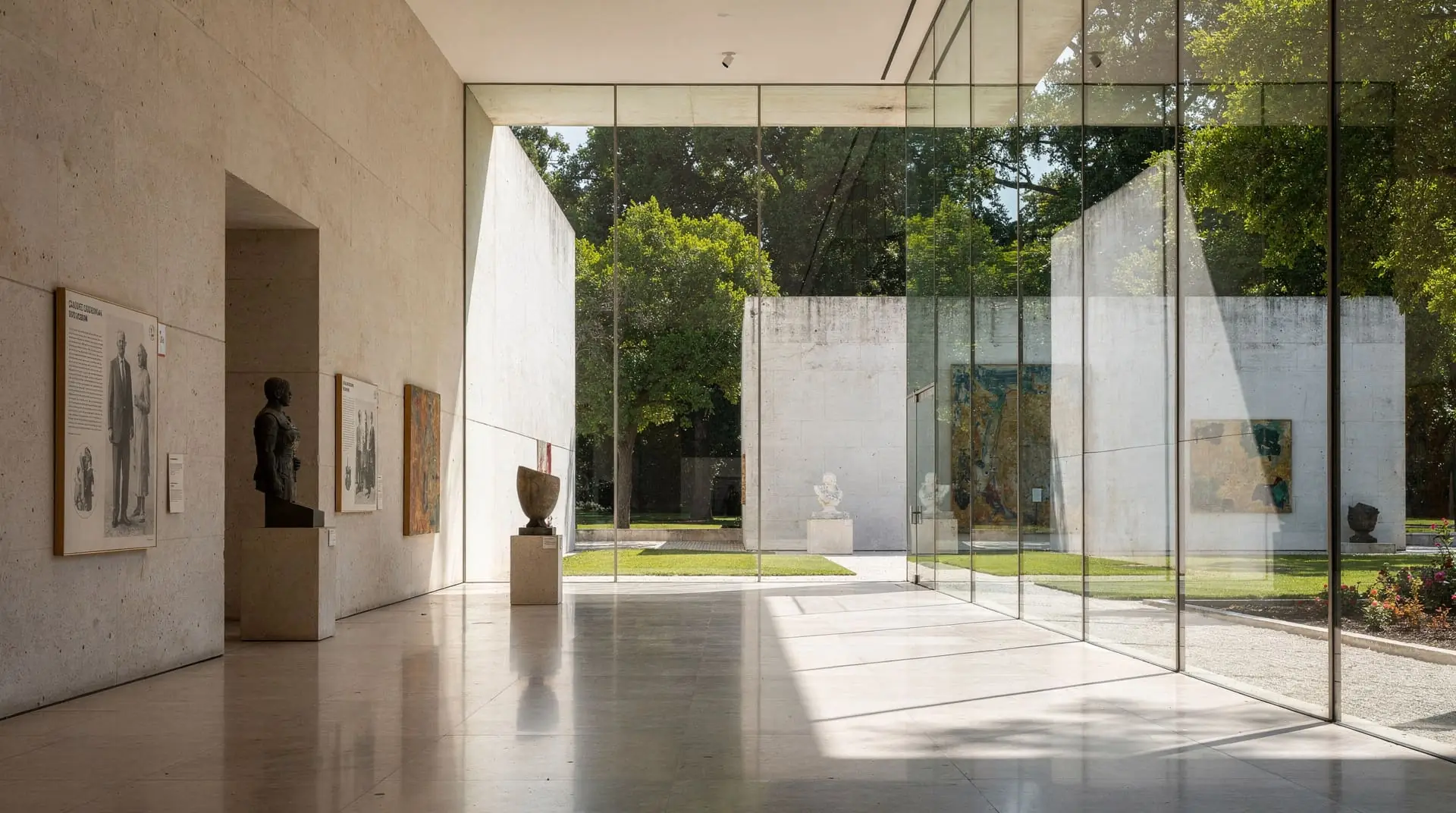
Calouste Gulbenkian Museum — the founder's collection
Complete guide to the Gulbenkian Founder's Collection in Lisbon: Egyptian antiquities to Art Nouveau, tranquil gardens, prices, and how to get there.
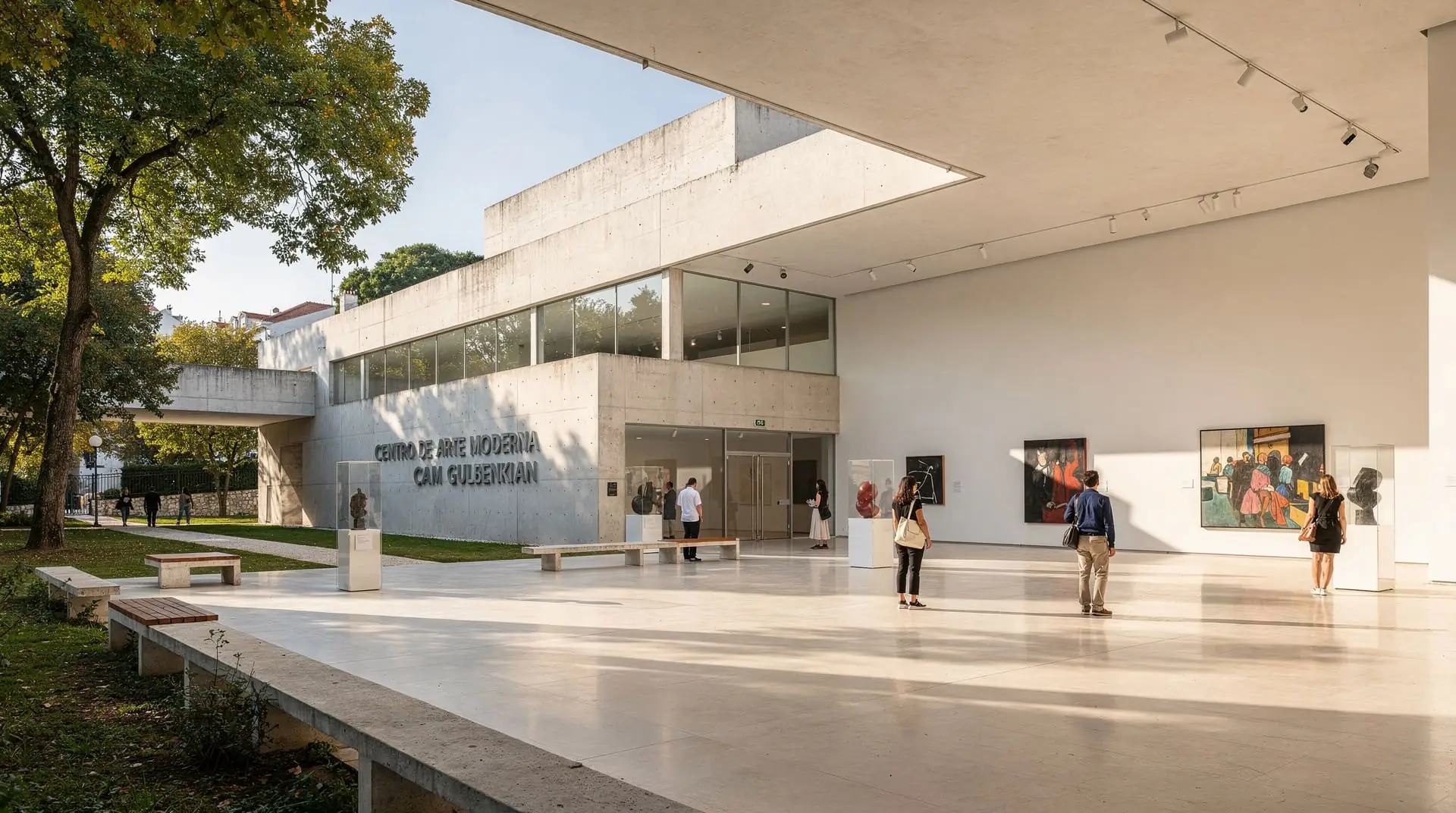
Centro de Arte Moderna (CAM) — Gulbenkian's modern art centre
Guide to CAM Gulbenkian in Lisbon: Kengo Kuma's 2024 redesign, Portuguese modernism, combined ticket with the Founder's Collection, gardens, and prices.
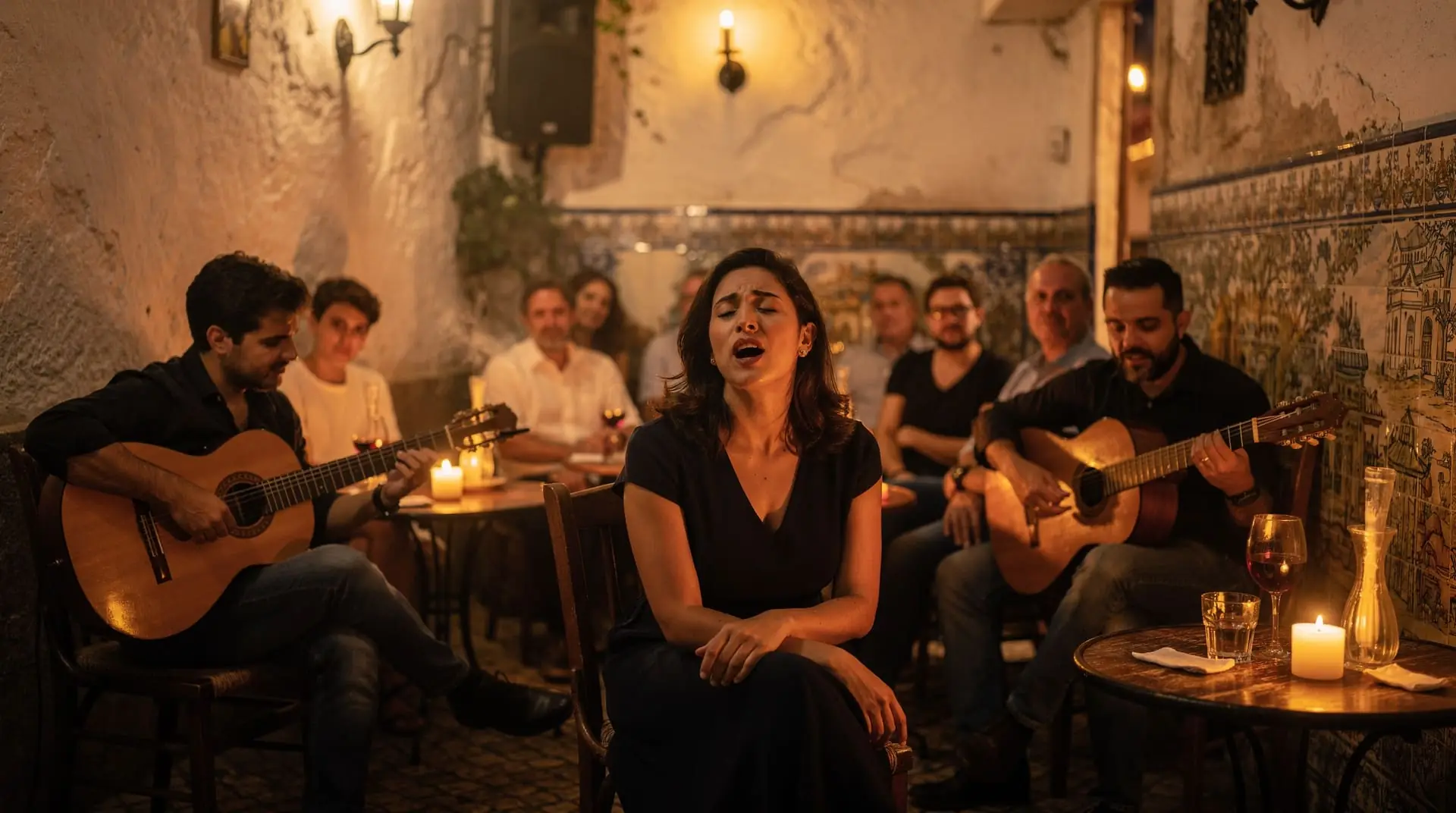
Fado dinner shows in Lisbon: what to expect, prices, and honest advice
Fado dinner shows in Lisbon: €45-90 prices, tasca fado vs dinner venues, what to expect, and how to avoid overpaying. Honest 2026 guide.
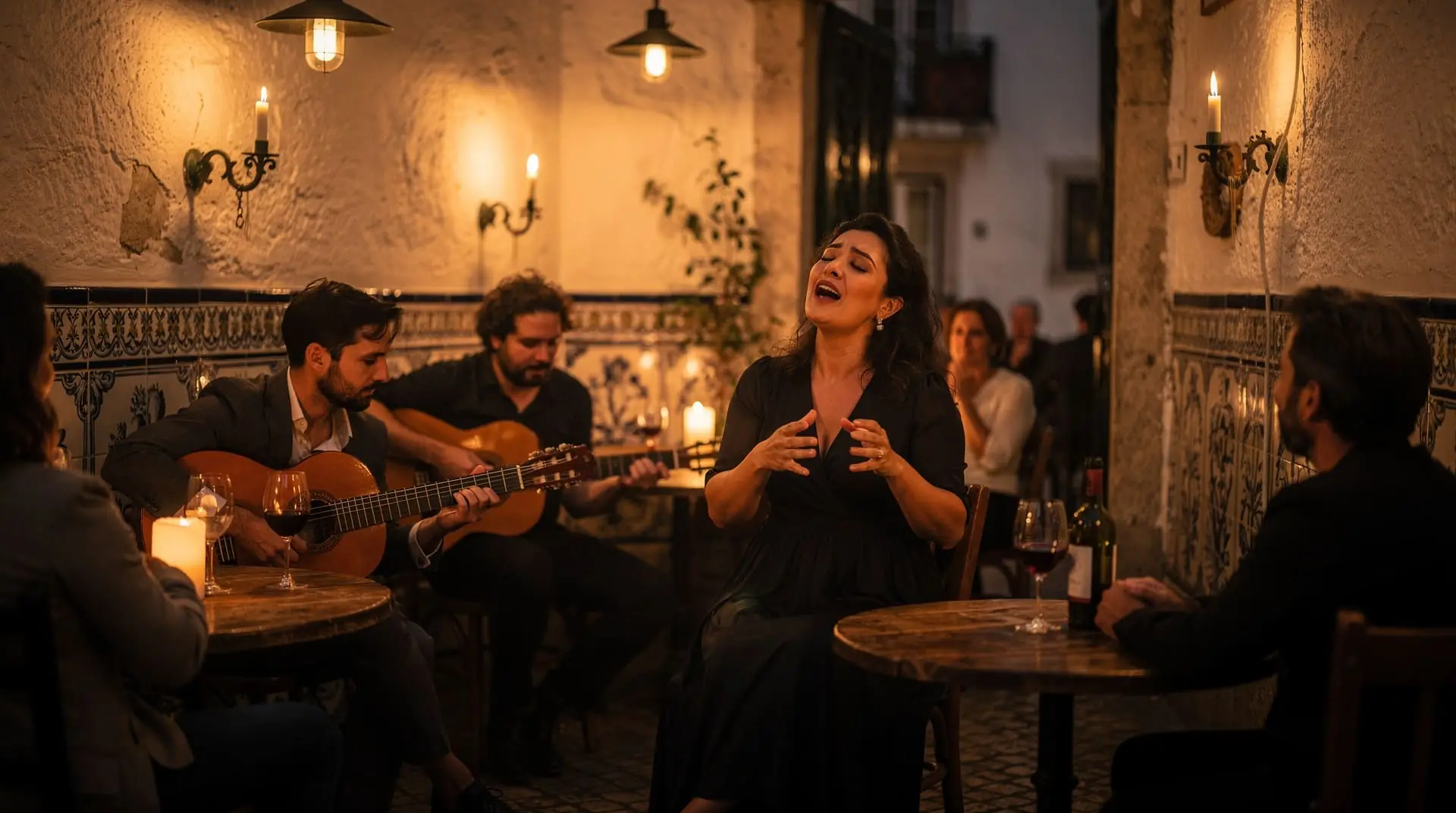
Fado in Alfama: the walking circuit, casas, and Museu do Fado
Why Alfama is fado's true home: the best casas, a walking circuit through fado history, Museu do Fado.