Lisbon markets: Feira da Ladra, LX Market, and Christmas markets
Last reviewed
When is the Feira da Ladra flea market in Lisbon?
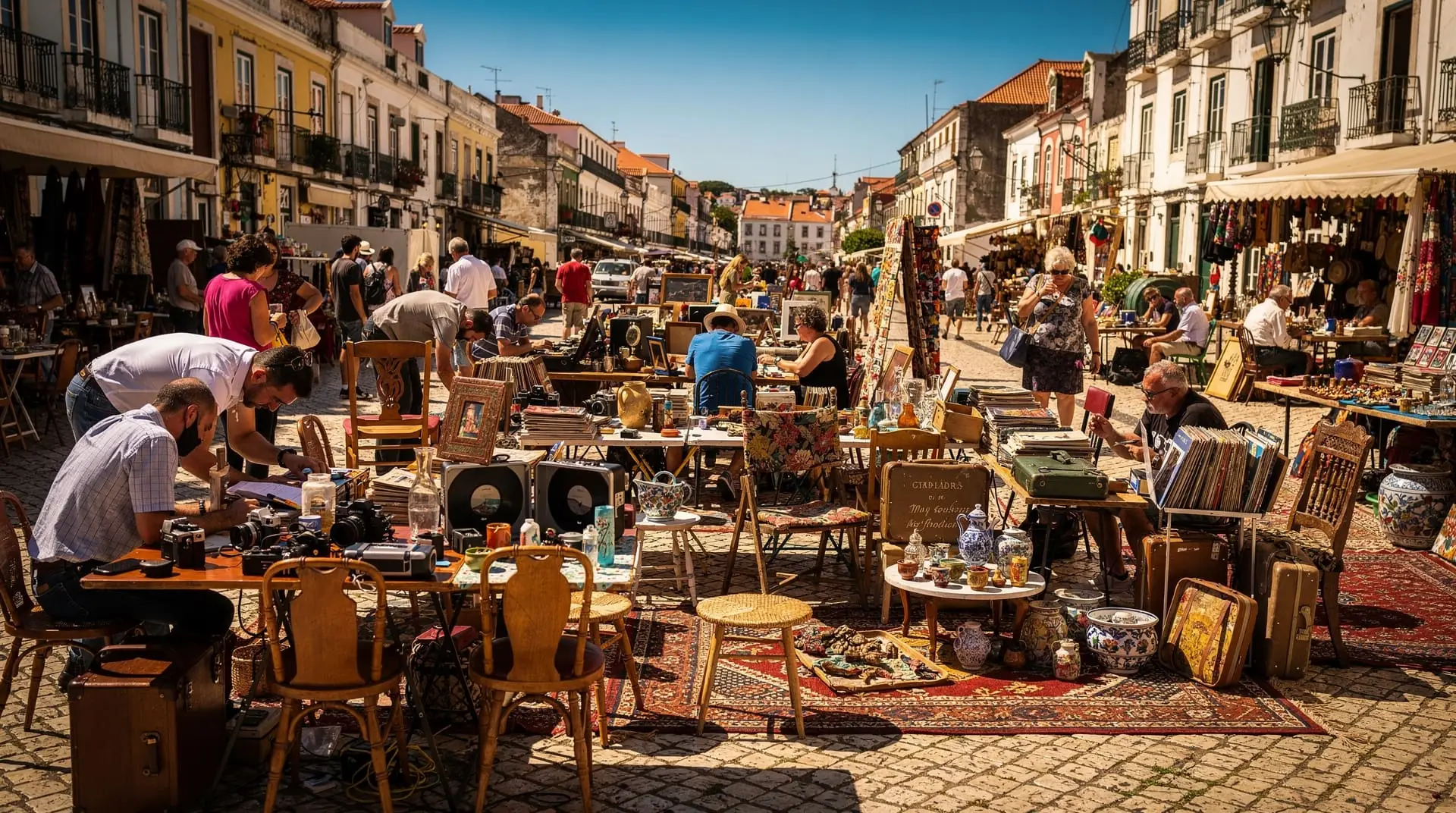
Feira da Ladra operates every Tuesday (09:00–17:00) and Saturday (07:00–17:00) at Campo de Santa Clara in São Vicente, near the National Pantheon. Saturday is the largest version with 300–400 stalls. Tuesday is smaller and less crowded. Both are free to enter.
Lisbon’s market culture spans flea markets, food markets, artisan markets, and seasonal events. This guide focuses on the retail and craft markets — places to find second-hand books, vintage ceramics, old azulejo tiles, handmade crafts, and the kind of random finds that define a good flea market day.
For food markets, see the dedicated food markets guide. This guide covers the markets where you come to find things, not to eat.
| Where | Campo de Santa Clara (flea market); LX Factory (Alcântara) |
| Cost | Free entry; bring around €20-50 cash for purchases |
| Time needed | 2-3 hours for a thorough browse |
| Getting there | Tram 28 or bus 734 (flea market); tram 15E (LX Factory) |
| Best time | Saturday morning, before 09:30, for the flea market |
Feira da Ladra: the city’s flea market
Location: Campo de Santa Clara, São Vicente (near the National Pantheon) Days: Tuesday 09:00–17:00; Saturday 07:00–17:00 Getting there: Tram 28 to Martim Moniz stop (15-minute walk uphill), or bus 734 directly to the market; alternatively, the 28 tram to its furthest Alfama stop and then a 10-minute walk through the neighbourhood Entry: Free
The Feira da Ladra (literally “Thieves’ Market”) is Lisbon’s oldest and most important flea market, operating on Campo de Santa Clara for at least 200 years and in various locations around the city for centuries before that. On Saturdays it spreads across the large square and down the sloping streets below, with 300–400 vendors depending on season and weather.
What you will find
Books: The largest category by volume. Predominantly Portuguese titles — 19th-century novels, illustrated scientific manuals, old travel guides, encyclopaedias. English-language books appear sporadically; French-language books are more common. Old illustrated books (naturalism, maps, children’s books) have genuine value and are priced accordingly at €5–30 per volume. Old paperback novels: €1–3 each.
Azulejo tiles and ceramic fragments: Among the most distinctive Lisbon market finds. Dealers sell both individual salvaged tiles and cracked fragments from demolished buildings. A single 19th-century azulejo tile (15x15 cm, hand-painted) from a genuine building: €5–25 depending on rarity and condition. Reproduction tiles are also sold; distinguish by looking at the back — old tiles have irregular clay; new tiles are smooth and uniform. Tile fragments (imperfect pieces with interesting partial patterns): €2–8.
Vintage maps and prints: Old prints of Lisbon, Portugal, and the former colonies appear regularly. A good 18th or 19th-century reproduction print (note: reproductions are common, authentic originals much rarer): €10–40. Original cartography from the age of discoveries is rare and expensive when genuine.
Vintage clothing: Mixed quality. Some stalls specialise in genuinely old Portuguese clothing (embroidered shirts, traditional costumes, 1970s–1980s streetwear); others sell ordinary second-hand at inflated tourist prices. Worth checking but requires patience.
Postcards: Old Lisbon postcards (pre-1970s) are a reliable inexpensive souvenir — €0.50–3 each for most, more for rare subjects. Stack-browsing is time-consuming but productive.
Coins and stamps: Specialist stalls at the edges of the market deal in Portuguese coins, stamps, and banknotes from the escudo era (pre-2002) and older. Prices are set and non-negotiable at these stalls; quality is usually authenticated.
Outright junk: A substantial proportion of the market is items of no particular value — broken electronics, cheap household goods, unfashionable clothing. This is normal for a flea market and the finding of good things among junk is part of the experience.
Practical notes
Arrive early: serious collectors and dealers arrive at 07:00 on Saturday to browse before the general public arrives. The best tiles, prints, and books are often picked over by 09:30. Casual browsers can arrive at 10:00–11:00 and still find good things.
Negotiation: standard practice at the Feira da Ladra. Offer 10–15% below the asking price for items you want; accept gracefully if the seller declines. Do not haggle aggressively on low-priced items (below €5) — it is not worth anyone’s time and creates bad feeling.
Cash only: nearly all vendors. Bring €20–50 in small denominations (€5 and €10 notes preferred).
Weather: the market operates in rain, but stalls with paper items (books, postcards, prints) are covered. If heavy rain is forecast, the market will be smaller and some vendors will not attend. Tuesday markets are most affected by weather.
Pickpockets: as at any busy outdoor market, be aware. Front pockets or an inside jacket pocket for your wallet; phones in front pockets or bags with closures. This is a precaution, not a deterrent — the market is safe, but it is crowded.
Combining with the neighbourhood
The market sits adjacent to two significant sights: the National Pantheon (Igreja de Santa Engrácia, converted into the resting place of Portuguese presidents and national heroes) and the Mosteiro de São Vicente de Fora, whose azulejo cloister is one of the finest in Portugal. Both are open Tuesday and Saturday mornings, making a market visit + sightseeing combination natural.
The Alfama neighbourhood begins just downhill from the market and is easily walked in combination.
Lisbon hidden gems guided tour — takes in the market area and lesser-known São VicenteLX Factory Sunday market
Location: Rua Rodrigues de Faria 103, Alcântara Days: Sunday 11:00–19:00 (permanent shops open daily) Getting there: Tram 15E from Praça da Figueira to Calvário stop (20 minutes) Entry: Free
The Sunday market at LX Factory brings outdoor vendors into the converted industrial complex, supplementing the permanent shops. The outdoor stalls concentrate on: vintage clothing, handmade crafts, plant sellers, illustrated prints, and street food.
Quality is higher than at the Feira da Ladra for crafts and lower for genuine antique finds. The permanent shops within LX Factory (Ler Devagar bookshop, cork products, fashion designers) are worth combining with the outdoor market.
Best for: Handmade Portuguese crafts, design objects, specialty food products, and the general experience of the industrial space. The Sunday market is more curated than the Feira da Ladra and correspondingly less likely to produce a chance discovery of something genuinely old.
Mercado de Santa Clara
Location: Campo de Santa Clara (adjacent to Feira da Ladra site) Days: Saturdays 08:00–17:00 (seasonal and irregular — check current schedule) Entry: Free
A smaller antiques and collectibles market that operates alongside the Feira da Ladra on some Saturdays. Fewer stalls than the flea market; more focus on genuine antiques — 18th and 19th-century ceramics, silver, furniture, and militaria. Prices are set and reflect the quality; negotiation is more muted than at the flea market stalls.
Worth combining with a Saturday Feira da Ladra visit. The presence of dealers who know what they have means you are less likely to find an accidental bargain, but more likely to find something reliably authenticated.
Campo de Ourique market and Mercado da Ribeira
Two other markets round out the picture, though they lean more toward food than the craft focus of this guide.
Campo de Ourique market, in the residential Campo de Ourique neighbourhood, is a small covered municipal market with a food-hall extension — closer in spirit to a neighbourhood grocery than a tourist destination. Reachable by bus 758 from Cais do Sodré or tram 28 to the terminus, it works well combined with a quiet, local afternoon away from the Alfama-Baixa tourist circuit.
Mercado da Ribeira, at metro Cais do Sodré, is now largely the Time Out Market food hall rather than a traditional produce market, though a working fresh-produce section survives on one side of the building. It is covered in detail in the Time Out Market guide and the food markets guide rather than here, since its focus is eating, not shopping.
Christmas markets in Lisbon
Dates: Approximately 25 November–5 January (varies by year)
Lisbon runs two main Christmas market formats:
Natal em Lisboa (Avenida da Liberdade)
The city-run Christmas market along Lisbon’s grand boulevard has 50–80 wooden chalets selling: handicrafts (ceramics, embroidery, woodwork), food (rabanadas, Portuguese sweets, chouriço), and occasional design objects. Free entry; open approximately 10:00–22:00 daily including Sundays.
The atmosphere is more relaxed than the summer markets — no crowds, pleasant evening lighting, and the boulevard’s trees strung with lights. The product quality varies widely: some chalets sell genuinely handmade items; others stock generic Christmas-market fare. Look for vendors from the interior of Portugal selling regional ceramics and textiles.
What to buy: Wool products from Alentejo (blankets, scarves in traditional weave), regional honey and preserves, handmade ceramic ornaments. Prices for quality items: €15–50. Generic items: €5–15.
Praça do Comércio Christmas village
A more commercial version in the main riverside square, running roughly the same dates. Skating rink, food trucks, and a selection of seasonal items. More tourist-oriented than Avenida da Liberdade; better for children and atmosphere than for genuine craft shopping.
Neighbourhood Christmas markets
Several neighbourhoods run smaller versions — Belém (around the monastery), Parque Eduardo VII, and sometimes Mouraria. These are the most local in character and the most interesting for authentic craft finds, though they operate fewer days and with irregular schedules. Check Lisbon city council (cm-lisboa.pt) for the current year’s schedule.
Permanent artisan markets and shops
Beyond the scheduled markets, several permanent spaces function as year-round artisan shopping:
A Vida Portuguesa (Rua Anchieta 11, Chiado; also Largo do Intendente): The best-curated selection of heritage Portuguese products — Viarco pencils (made since 1907), Confiança soaps, traditional ceramics, regional food products. Not cheap but everything is genuinely Portuguese and genuinely good. See the Portuguese souvenirs guide for more.
Conserveira de Lisboa (Rua dos Bacalhoeiros 34, Alfama): For premium tinned fish and sardines in vintage tins. Open since 1930; the décor has not changed much.
Embaixada (Praça do Príncipe Real 26): See the where to shop guide for full detail on this palace-turned-design-gallery.
What makes a genuine antique vs a reproduction
At the Feira da Ladra and Mercado de Santa Clara, the distinction between genuine antiques and reproductions matters both for value and for the authenticity of what you take home.
For azulejo tiles: Original tiles from demolished buildings (17th–19th century) have: irregular handmade clay on the back, visible brushstroke variation in the painting, slight thickness inconsistencies, and sometimes traces of the original mortar. Mass-produced reproductions have smooth, uniform backs, machine-perfect pattern repetition, and modern tile adhesive. Price differential: genuine original tile (15x15cm) €8–25; reproduction €2–5.
For ceramics: Portuguese Bordallo Pinheiro earthenware from before 1960 has the original backstamp (a leaf-and-fish motif). Genuine antique pieces have hand-painted touches and slight imperfections. Post-1980 pieces are machine-made. Look at the bottom of every ceramic piece before buying.
For books: Age of paper is the best indicator. Paper from before 1900 tends toward yellow-cream and is thicker than modern paper. Post-1900 acidic paper turns brown with age. Genuinely old books have foxing (brown spots from age), hand-sewn bindings, and smell distinctly of time. Reproductions have clean, white paper regardless of the “date” printed inside.
For prints and maps: Original copper engravings (18th century) show plate marks around the image edge and slight ink relief. Reproduction lithographs (common fakes) are flat with no plate mark. Hold any old print to the light — originals have the paper texture of their era; laser reproductions have a uniform sheen.
Bargaining at Lisbon markets
Negotiating price is expected at the Feira da Ladra and acceptable at antique markets. The unspoken rules:
Make a genuine offer: If you are interested, offer 10–15% below the asking price. This is serious negotiation, not aggressive haggling. “Faz melhor preço?” (“Can you do a better price?”) is the standard opener.
Do not lowball: Offering 50% of asking price is insulting except for clearly overpriced items. The vendors are professionals who know the value of what they sell. Start at 15% below asking maximum.
Walk away if needed: The walk-away move is genuine in market culture. If your counter-offer is not accepted, say “obrigado/a” and move on. Sometimes the vendor calls you back; sometimes they do not. Both are acceptable outcomes.
Do not negotiate on small items: For items under €10, negotiating is not worth the social friction. Pay asking price and move on.
Cash in small denominations: Vendors prefer exact change. Arriving with nothing but a €50 note for a €3 item is a poor start.
Visiting markets with children
The Feira da Ladra is manageable with children but requires some planning. The Saturday version is crowded; the Tuesday version is quieter and calmer. Specific advantages:
What children find interesting: Vintage toy stalls (cars, dolls, board games from the 1960s–1980s), old comic books, postcards, and the sheer volume of unexpected objects. The browsing experience appeals to some ages more than others; children under 6 often find it overwhelming.
Practical notes: Pushchairs are difficult on the Campo de Santa Clara cobbles; baby carriers work better. The market has no public toilets — plan accordingly. Adjacent to the market, the Jardim da Cerca da Graça has toilets and picnic space.
LX Factory on Sunday is more child-friendly: flat surfaces, interesting visual environments, several food options, and the Ler Devagar bookshop has a children’s section.
For a wider view of what else works well with children in the city, see the Lisbon with kids guide — it covers how a market morning slots into a broader family itinerary alongside the miradouros, the Oceanário, and tram rides that appeal to younger visitors.
Combining markets with a wider Alfama or Graça day
Both the Saturday Feira da Ladra and the quieter Tuesday version sit within easy walking distance of some of Lisbon’s best viewpoints and neighbourhood streets. After browsing, the walk downhill through Alfama toward Portas do Sol takes in the miradouro, narrow lanes, and — if timed for the evening — a first taste of live fado in one of the neighbourhood’s small venues. Combining a market morning with an Alfama circuit walk and lunch at a local tasca makes for one of the more rewarding, least touristy full days in Lisbon.
Markets and the Lisboa Card
The Lisboa Card (24/48/72-hour transport and museum pass) covers transport to all market locations via public transport (metro, bus, tram). See the Lisboa Card guide for whether it represents value on your trip.
Getting to markets by transport:
- Feira da Ladra (Campo de Santa Clara): Bus 734 from Marquês de Pombal; Tram 28 to Martim Moniz then walk
- Campo de Ourique market: Bus 758 from Cais do Sodré; Tram 28 to terminus
- LX Factory: Tram 15E from Praça da Figueira
- Mercado da Ribeira: Metro Cais do Sodré (Linha Verde/Green Line)
Planning a market day
Flea market day (Saturday): Start at 09:00 at Feira da Ladra (arrive early for books and tiles). Walk through the adjacent Mercado de Santa Clara. At 12:00, walk down through Alfama and stop for lunch at O Velho Eurico or a neighbourhood tasca. Afternoon: explore the Alfama streets below the National Pantheon.
Sunday: LX Factory market from 11:00, browse permanent shops including Ler Devagar. Lunch at one of the LX Factory restaurants. Tram 15E back to the centre by late afternoon.
Tuesday (quieter): Feira da Ladra morning, then Campo de Ourique market café for lunch, then Aloma pastelaria — a complete neighbourhood day avoiding the tourist circuit.
Christmas season: Evening market visit on Avenida da Liberdade after 18:00 when the lights are on. Combine with dinner in Chiado.
For the complete picture of what to buy once you find it at the markets, the Portuguese souvenirs and crafts guide explains which products are worth buying and how to assess quality. The where to shop guide covers the permanent shops in each neighbourhood.
Use the day-trip matcher tool if you are trying to combine a market day with an excursion outside Lisbon.
Which market suits you
| Market | Best for | Atmosphere |
|---|---|---|
| Feira da Ladra (Sat) | Antiques, tiles, books, real bargains | Busy, crowded, competitive |
| Feira da Ladra (Tue) | Same finds, calmer browsing | Quiet, local |
| LX Factory Sunday | Design crafts, curated goods | Relaxed, family-friendly |
| Mercado de Santa Clara | Genuine antiques, furniture | Calm, dealer-to-dealer |
| Christmas markets | Gifts, festive atmosphere | Seasonal, family-oriented |
FAQ
Is it safe to buy antiques at the Feira da Ladra, or are most items fake? Both genuine and reproduction items circulate side by side. Use the authenticity pointers above (paper age for books, backstamp for ceramics, clay texture for tiles) and buy from vendors who can explain an item’s history — most are happy to. For guaranteed authenticity over a bargain, Mercado de Santa Clara’s dealers are more reliable.
Can I visit Feira da Ladra and LX Factory on the same trip? They’re on different days (Feira da Ladra Tuesday/Saturday, LX Factory Sunday) and different sides of the city, so plan them as separate outings rather than combining in one day. A Saturday for the flea market and a Sunday for LX Factory makes a natural weekend pairing.
Related guides
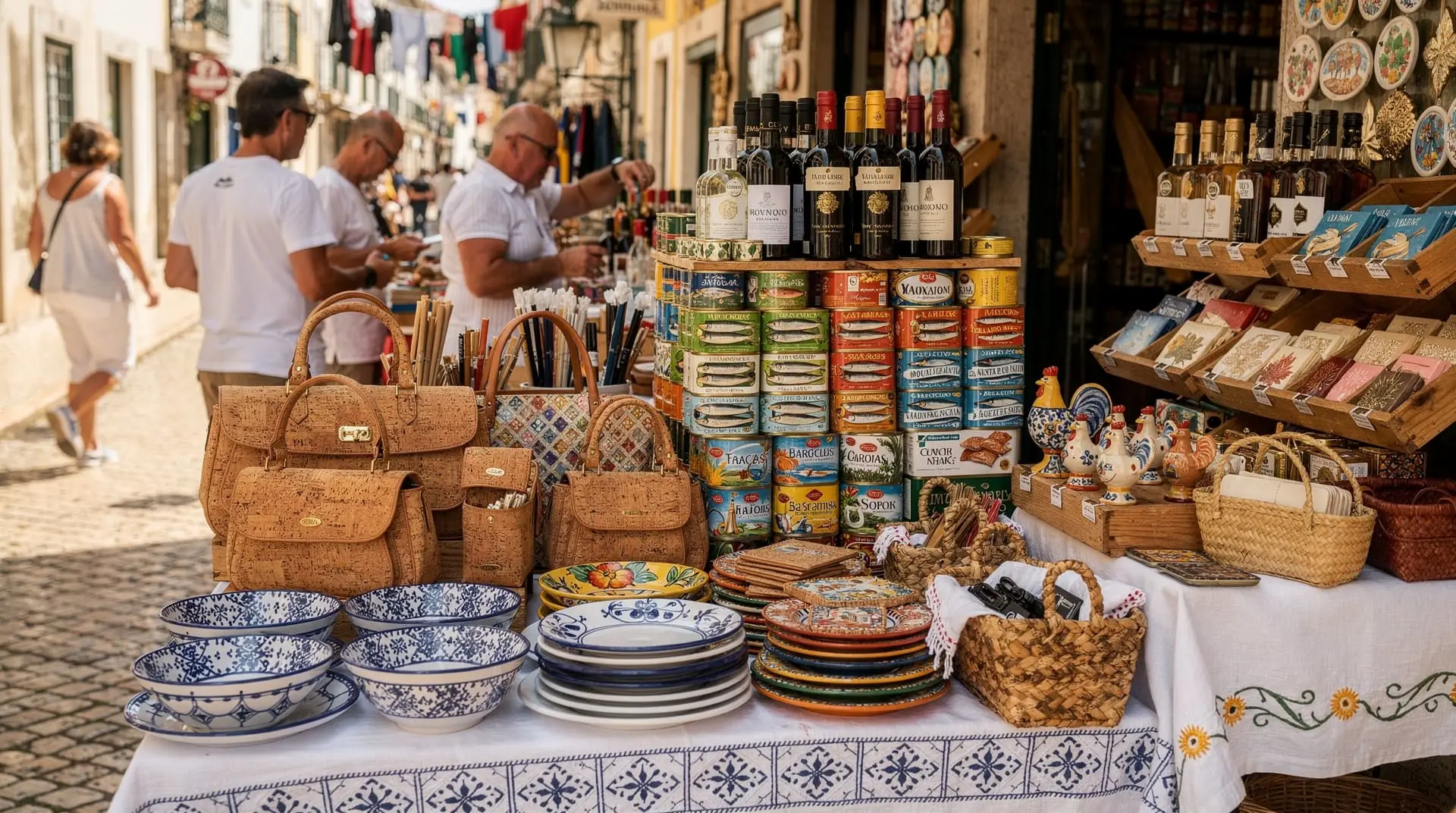
Portuguese souvenirs and crafts: what to buy in Lisbon
Best Portuguese souvenirs in Lisbon — azulejos, cork, embroidery, canned sardines, Vista Alegre porcelain. Where to buy authentic items, not tourist junk.
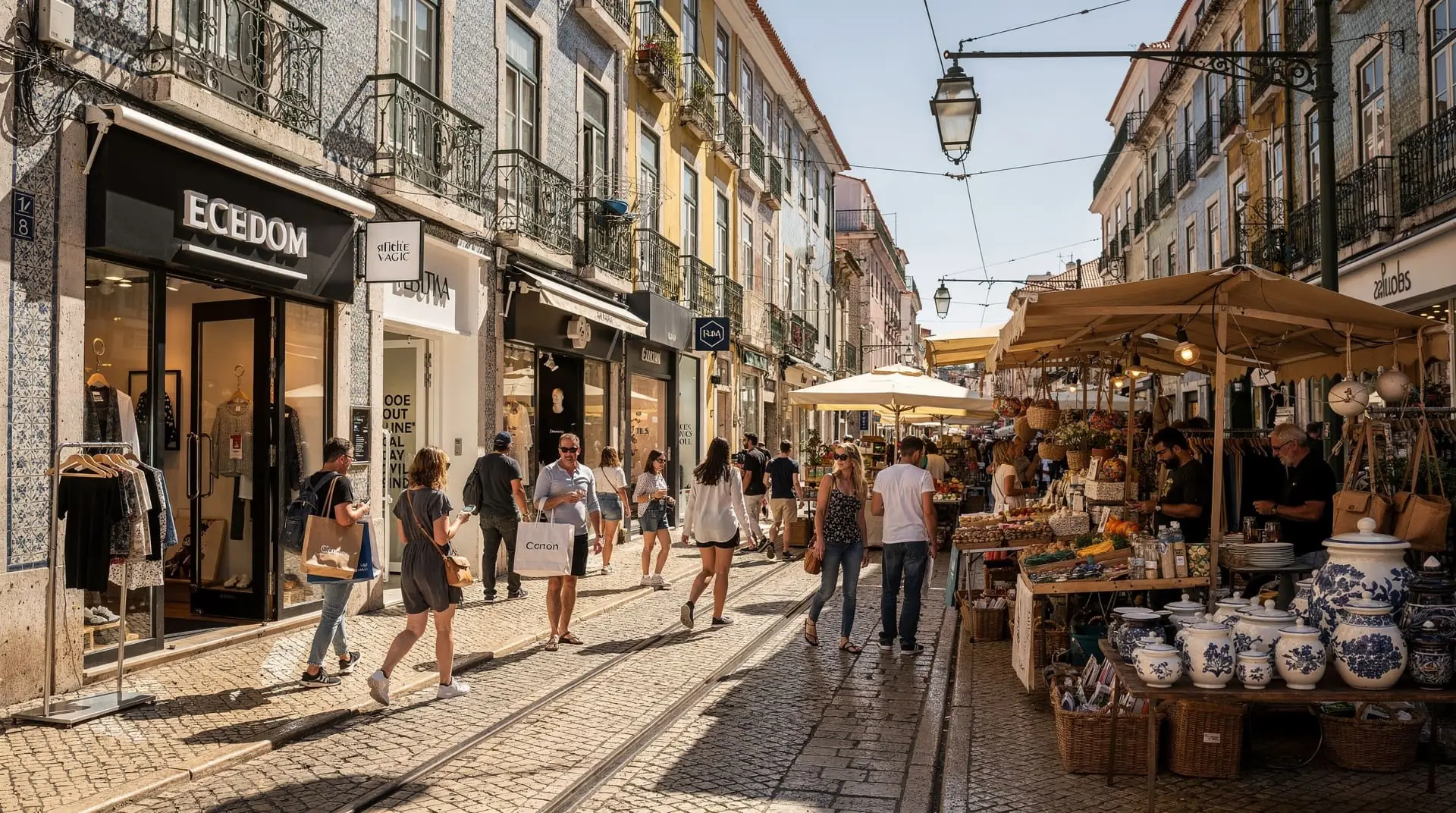
Where to shop in Lisbon: best neighbourhoods and stores
Shopping in Lisbon by neighbourhood — Chiado mainstream, Príncipe Real boutiques, Embaixada concept store, and Bairro Alto independents. 2026 guide.
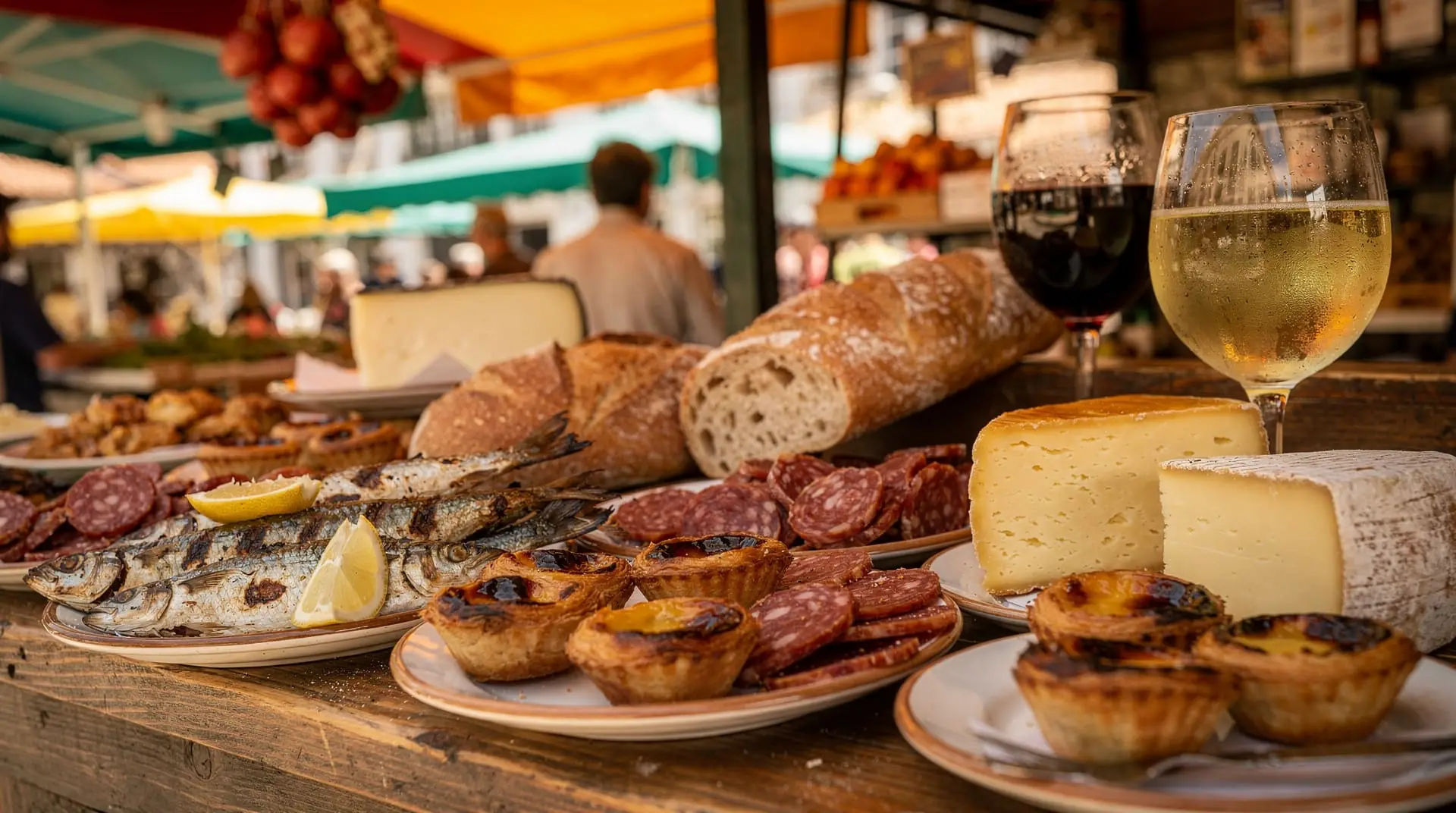
Best markets in Lisbon: from Ribeira to Feira da Ladra
The best markets in Lisbon — Time Out Market (Ribeira), Campo de Ourique, Feira da Ladra flea market, and Mercado de Espanha. Honest guide with opening hours.

National Pantheon Lisbon: the Santa Engrácia dome and rooftop views
Lisbon's National Pantheon — Amália Rodrigues' tomb, the baroque dome, rooftop views over Alfama, and combining with the Feira da Ladra flea market.
Ready to book? Top tours for this guide
We earn a small commission if you book through GetYourGuide — at no extra cost to you. Every tour is hand-picked and verified.

Lisbon: 48-Hour Hop-On-Hop-Off Bus Tour and Oceanarium Entry
Lisbon: MAAT Entry Ticket & Dolphin Watching Boat Tour
Lisbon: Alfama, Mouraria Walking Tour with Fado Night, Tapas
Lisbon: Hop-On Hop-Off Bus Tour
Lisbon: 1-or 2-Day Hop-On Hop-Off Bus Tour