
Tram 28 vs tuk-tuk in Lisbon: which is worth it?
Last reviewed
Is tram 28 or a tuk-tuk better for sightseeing in Lisbon?
Tram 28 is cheaper (€3 single or included in Lisboa Card) but slow, crowded and a pickpocket target in peak hours. Tuk-tuks run €20-35 per hour with a guide who explains what you are passing, depart on your schedule, and carry your bags safely. The tram is an experience; a tuk-tuk is a tour. They serve different purposes.
| Where | Alfama, Graça and the historic hills — same neighbourhoods either way |
| Cost | tram from €1.61; tuk-tuk from around €20–35 per hour (private vehicle) |
| Time needed | tram 40–60 minutes end to end; tuk-tuk tours typically 1.5–2 hours |
| Getting there | tram boards at fixed stops; tuk-tuk picks up at your hotel |
| Best time | tram before 10am or after 4pm; tuk-tuk works well any time of day |
Two ways to see the same hills
Lisbon’s hills are the defining feature of the city and the reason two very different vehicles have become tourist staples. Tram 28 — the iconic yellow electric tram — grinds up and down the Alfama, Graça and Estrela hills on rails laid in the 1930s. Tuk-tuks — the motorised three-wheelers imported from Asian cities — zip up the same roads with a guide in the driver’s seat.
Both take you through some of the same streets. Almost everything else about them is different.
Tram 28: the honest picture
Tram 28 runs from the Campo Ourique neighbourhood in the west, through Estrela, Chiado, Baixa, Alfama, Graça and up to Martim Moniz. The full route takes 40-60 minutes depending on traffic and boarding delays. The trams are original 1930s rolling stock — wooden interiors, leather straps, a driver who rings a bell at pedestrians.
The appeal is genuine: this is what Lisbon looked like before Uber arrived, and the route passes through some of the most visually dense parts of the city. Graça’s miradouro (viewpoint) is a stop. The Sé cathedral is a stop. Alfama’s tightest alleyways flank the tracks.
What nobody tells you upfront:
Peak-hour tram 28 (roughly 10am-4pm, and most of July and August) is one of Lisbon’s most reliably unpleasant tourist experiences. The tram runs infrequently (every 8-12 minutes), queues at major stops stretch 30-40 people deep, and once aboard the tram is packed so tightly that movement is impossible. In these conditions the tram is a pickpocket’s working environment — see our tram 28 pickpockets guide for specifics.
The tram is also not fast. Traffic, stops, and the sheer gradient mean it regularly sits stationary for 5-10 minutes at a time. If you are travelling from Chiado to Alfama as a transport decision (not a sightseeing decision), the 15-minute walk is almost always faster.
When tram 28 works well:
- Early morning (before 10am) from Martim Moniz terminus
- Late afternoon (after 4pm) when crowds thin slightly
- Off-season (November-February)
- When you pay with Viva Viagem Zapping (€1.61 vs €3 cash)
Tuk-tuks: the honest picture
Lisbon’s tuk-tuks are nothing like Asian tuk-tuks in noise, exhaust or chaos. They are electric or hybrid, quiet, and driven by licensed operators with city permits. A driver-guide picks you up, outlines a route (typically 1.5-2 hours covering Alfama, Mouraria, viewpoints and Belém variations), and provides running commentary in English.
What you get:
- Private vehicle, your group only
- Guide commentary in English (occasionally other languages)
- Door-to-door pickup and drop-off (usually at your hotel or meeting point)
- The ability to stop at viewpoints — and the driver waits while you photograph
- No queuing
- No pickpocket risk (your bags stay in the vehicle)
What you pay:
- €20-35 per hour (vehicle rate, not per person)
- Typical 2-hour city tour: €45-70 for 2-3 people
- Per-person cost for a couple: €22-35 each — comparable to a hop-on-hop-off bus
- Per-person cost for a trio: €15-23 each — better value than most alternatives
The honest limitations:
- You see Lisbon through glass (or at least at speed) rather than on foot
- The commentary varies significantly by operator — some guides are exceptional, some are rote
- Tuk-tuks cannot access pedestrian-only streets in Alfama — some of the best spots are walking-only
- They are visually recognisable as tourist transport (this bothers some people more than others)
The comparison
| Tram 28 | Tuk-tuk | |
|---|---|---|
| Cost | €1.61-€3 (or free with Lisboa Card) | €45-70 for 2 people (1.5-2 hours) |
| Pickup | Bus stop (queue) | Hotel/meeting point |
| Privacy | Shared with 50+ others | Private |
| Guide | None | Driver-guide included |
| Route flexibility | Fixed (Campo Ourique–Martim Moniz) | Customisable |
| Pickpocket risk | High in peak hours | Minimal |
| Photographic stops | Scheduled stops only | On request |
| Accessibility | Difficult (narrow steps, crowding) | Easier (low entry) |
| Speed | Very slow in traffic | Faster (can take back roads) |
| Best time | Early morning / off-season | Any time |
| Atmosphere | Authentic historical transport | Tourist-oriented tour |
When tram 28 wins
The tram is the right choice when:
- You are travelling early morning or off-season and the crowds are manageable
- You have the Lisboa Card (the ride is effectively free)
- You want the experience of riding historic infrastructure rather than a guided tour
- You are a solo traveller for whom the tuk-tuk per-person cost is prohibitive
- You want the specific experience of standing in the open section of a 1930s tram as it grinds uphill — which, done right, is genuinely atmospheric
The terminus-to-terminus ride (Campo Ourique or Martim Moniz) is far better than boarding mid-route. You get a seat rather than standing room.
When the tuk-tuk wins
The tuk-tuk is the right choice when:
- You are travelling as a couple or small group (the per-person cost becomes reasonable)
- You have children or elderly travellers (easier boarding, safer)
- You want to see multiple viewpoints without walking between them
- You are short on time and want a guide’s overview of the city
- You are visiting in high season (July-August) when tram 28 conditions are worst
- You are carrying camera equipment or valuables that you would rather not take on a crowded tram
The secret option: Several operators run a tram 28 combined experience — a tuk-tuk tour that follows the tram 28 route and stops at the same viewpoints, without the tram conditions. You get the geography without the queuing. These tours cost €35-45 per person for a 1.5-hour version.
Lisbon: half-day private guided tuk-tuk tourThe hop-on-hop-off alternative
A third option worth mentioning: the hop-on-hop-off bus. It covers the major sights (Belém, Alfama, Parque das Nações) on a fixed circuit and costs €20-30 per day per person. Commentary is via audio guide (headphones), not a live guide. It covers more ground than a tuk-tuk and costs less per person, but provides less character than either tram or tuk-tuk.
See hop-on-hop-off: is it worth it? for a direct comparison.
Frequently asked questions about tram 28 vs tuk-tuk
Is tram 28 safe to ride?
Statistically yes — the tram does not crash often and no one is mugged violently. The risk is pickpocketing: deft hands in a crush. Keep your phone in your front pocket, bag zipped and worn in front. If you do these things, the risk is manageable. If you are travelling with significant cash or expensive equipment, a tuk-tuk or a quiet-hour tram ride is smarter. Read tram 28 pickpockets for detailed advice.
Does tram 28 still run or has it been replaced?
As of May 2026, tram 28 is still running on the original route. There have been intermittent proposals to modify the line for traffic management reasons, but no permanent changes have been implemented. Check Carris’s website (carris.pt) for real-time service disruptions.
Can I book a tuk-tuk on the day?
Yes — most tuk-tuk operators accept same-day bookings. In peak summer, they fill up by early afternoon. Book the night before to guarantee your preferred time. GYG lists available time slots up to the hour.
Are there two-person tram 28 tours with a guide?
No. Tram 28 is public transport. Tours involving tram 28 and a guide are typically walking tours that end with a tram segment, or they are the combined tuk-tuk-on-the-tram-route option mentioned above.
What is the best viewpoint reachable by tuk-tuk that tram 28 doesn’t stop at?
Miradouro de Santa Catarina (Alfama, fantastic Tagus views) and Miradouro de São Pedro de Alcântara (Bairro Alto, city panorama) are both accessible by tuk-tuk and not served directly by tram 28. Tuk-tuks can also reach Miradouro da Graça (quieter than Senhora do Monte, excellent light). See best Lisbon viewpoints.
Doing both on the same trip
These two options are not mutually exclusive, and combining them often makes more sense than picking one. A common pattern: ride tram 28 early on the morning it’s least crowded, purely for the atmosphere and the photograph opportunities from the open platform, then book a tuk-tuk later in the trip for a more comprehensive guided overview that reaches viewpoints the tram doesn’t serve. This spreads the cost and gives you both the authentic-transport experience and the curated-tour experience rather than treating it as an either-or decision. If your Lisbon stay is 4 days or more, there’s little reason not to do both — see how many days in Lisbon for how it fits alongside everything else.
What locals actually think
Worth knowing if you want context beyond the tourist experience: many Lisbon residents in Alfama and Graça have mixed feelings about both. Tram 28 was, and in parts still is, genuine commuter infrastructure — residents who need it for daily journeys are sometimes squeezed out by tourist crowds during peak hours, which is part of why early morning and evening rides feel different in character, closer to the tram’s original purpose. Tuk-tuks draw a different reaction: some residents find the constant procession through narrow residential streets intrusive, particularly in the quietest alleys where the vehicles’ presence changes the neighbourhood’s feel. Neither reaction should stop you from enjoying either experience, but a considerate approach — keeping noise down, not blocking doorways for photos — goes a long way in neighbourhoods where people actually live. See what to do in Alfama for wider context on visiting respectfully.
Related guides

Lisbon vs Porto: which Portuguese city should you visit?
Honest head-to-head: vibe, weather, food, wine, day-trips and budget. Which city wins for your trip — and when to visit both.

Sintra vs Cascais: which day-trip should you pick?
Sintra offers palaces and hills but costs time and crowds. Cascais offers beaches and a marina and half the effort. Pick the right one for your trip.
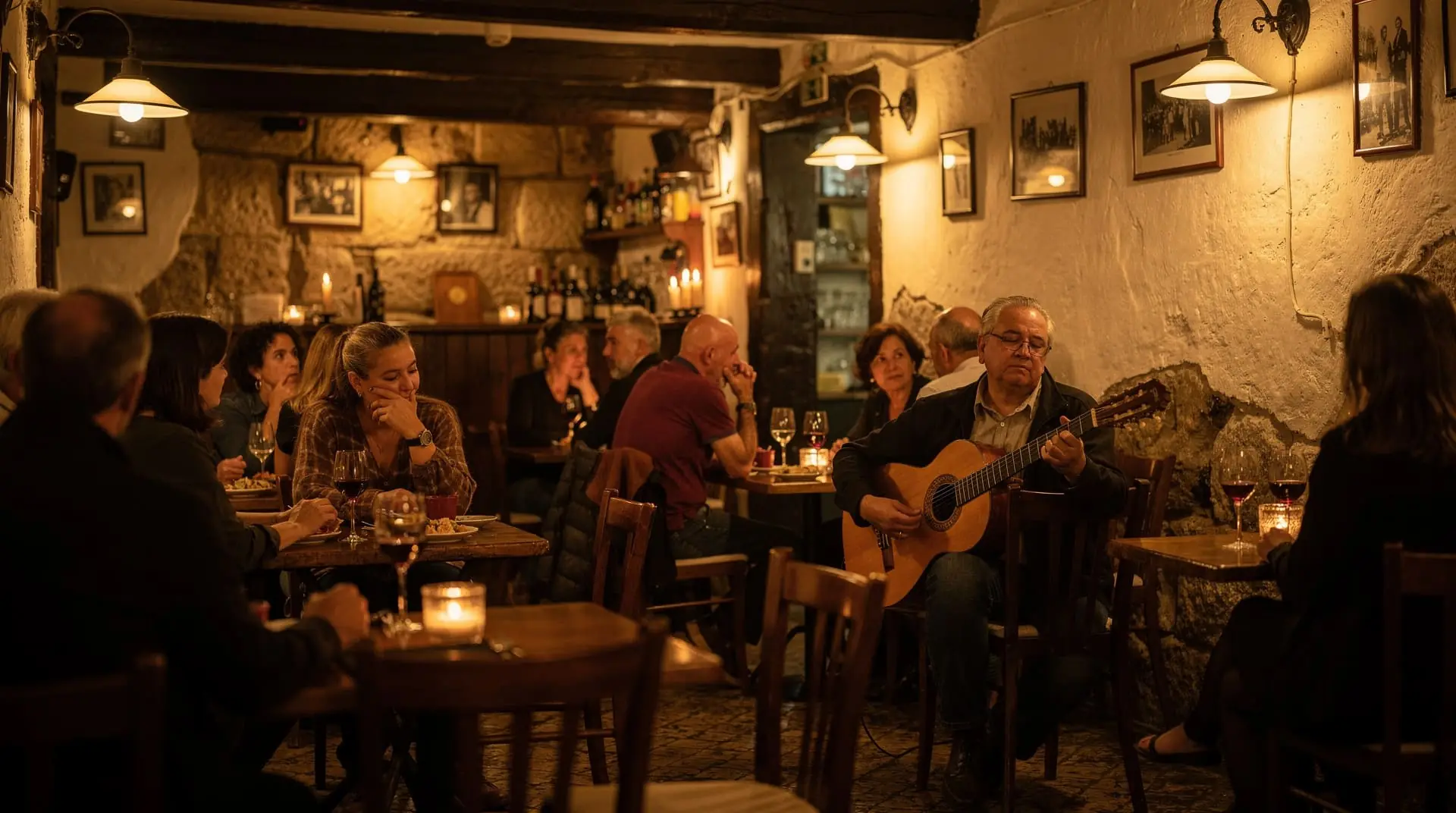
Fado houses compared: which one should you book?
Side-by-side comparison of Lisbon's main fado venues: atmosphere, price, quality and tourist-trap risk. Honest picks for every budget.

Lisboa Card vs paying separately: is it worth it?
Worked break-even examples for 1, 2 and 3-day Lisboa Cards. Honest verdict: who saves money and who pays more.
Ready to book? Top tours for this guide
We earn a small commission if you book through GetYourGuide — at no extra cost to you. Every tour is hand-picked and verified.

Lisbon: 48-Hour Hop-On-Hop-Off Bus Tour and Oceanarium Entry
Lisbon: MAAT Entry Ticket & Dolphin Watching Boat Tour
Lisbon: Alfama, Mouraria Walking Tour with Fado Night, Tapas
Lisbon: Hop-On Hop-Off Bus Tour
Lisbon: 1-or 2-Day Hop-On Hop-Off Bus Tour