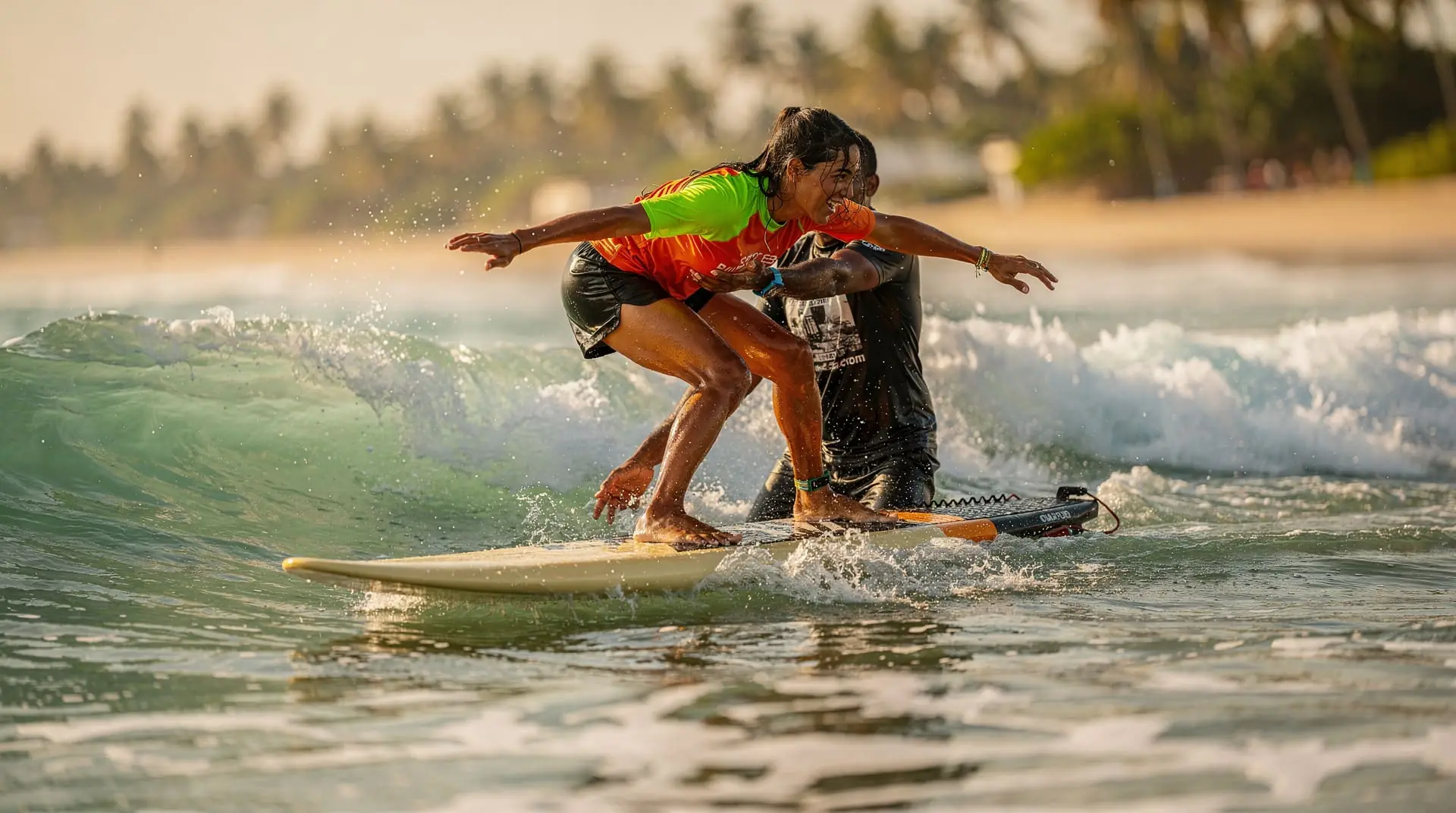
Learning to surf at Carcavelos: a first lesson, honestly reported
Published
I have never surfed in my life. This is relevant context for what follows.
Carcavelos is a beach on the Estoril coast, thirty-one minutes from Cais do Sodré on the Cascais line. It is a long, wide beach — maybe 700 metres of usable surf break — that faces approximately southwest and picks up Atlantic swell from the northwest. In June, with a light offshore wind and a 1-metre wave height, it is what the surf schools call “ideal beginner conditions,” which translates roughly as: waves large enough to ride, small enough that you are not going to hospital.
I booked a lesson for €35 through a school whose hut sits in the middle of the beach. The time: 10:00. The duration: two hours.
| Where | Carcavelos, ~31min by train from Cais do Sodré on the Cascais line |
| Cost | €30-45 group lesson, €60-80 private |
| Time needed | 2 hours for a lesson, half a day as a trip |
| Getting there | direct train, no transfer needed |
| Best time | June-September for warmer water and steadier beginner swell |
The equipment situation
The wetsuit they gave me was 3/2 millimetre neoprene — appropriate for the Atlantic in June, where the water temperature runs around 17-18 degrees Celsius, warm enough for short sessions but cold enough that you notice after twenty minutes. The board was a longboard, 9 feet, foam-topped (a “foamie” in surf school terminology), which is the correct board for a beginner because it floats well and doesn’t split your head open when it hits you.
There were five of us in the group. A couple from Germany, a family with a teenage son, and me. The instructor — Portuguese, late twenties, the exact right combination of patient and specific — started us on the sand.
The sand part (which matters more than it seems)
We spent forty-five minutes on the beach before we entered the water. The pop-up — the motion of going from lying flat to standing on the board in one fluid movement — sounds simple and is not. I practiced it maybe thirty times on the sand. I failed maybe twenty of those.
The instructor corrected my back foot position (too far back), my arm position (too stiff), my eye direction (looking down at the board instead of the horizon). These are not errors you discover by watching videos. You discover them by someone watching you from ten feet away and saying “back foot, more front, eyes up” repeatedly until it sticks.
This is, I think, the main argument for taking a lesson rather than just renting a board and guessing. The sand time seems trivial. It is not.
Into the water
Carcavelos in June at 10:00 is not empty, but it’s not crowded either. The main rush of summer visitors hasn’t arrived yet, and the morning light is good. We waded out to about waist depth, boards under our arms, and the instructor positioned us in the white water — the broken waves coming in from the main break — which is where beginners belong.
The first wave I tried to catch: I didn’t. I was too slow to paddle.
The second: I paddled, stood up, immediately fell sideways.
The third: I stood for approximately two seconds before the board shot out from under me and I went underwater.
The fourth: I stood, stayed, rode it for maybe four seconds, fell forward.
The fifth: four seconds again, slightly more controlled.
By the end of the session I had stood successfully on perhaps eight out of twenty attempts. This, the instructor assured me, is a perfectly respectable result for a first lesson. I don’t know if this is true or something they tell all beginners, but I was inclined to believe it because by that point I was too tired to be sceptical.
What Carcavelos is like as a beach
Separate from the surfing: Carcavelos is a good beach. It’s accessible (train from Cais do Sodré, €2.45 with Viva Viagem card, 31 minutes), wide enough that it doesn’t feel crowded even in summer, and has a decent selection of beach bars along the back dune. The water is cold but clean. There are showers at the beach entrance.
The western end of the beach, toward Cascais, is calmer — useful if you have children who aren’t surfing. The surf break is concentrated more at the centre and slightly east. For a wider list of family-friendly sand, the family beaches near Lisbon guide covers the calmer options along this coast.
It’s also worth noting: if you want warmer water and a guaranteed consistent swell, Costa da Caparica on the other side of the Tagus is the Lisbon area’s main surf coast. The waves there can be more consistent in summer. But getting there is slightly more complex (ferry from Cais do Sodré to Cacilhas, then bus or taxi). Carcavelos’ main advantage is direct train access.
Where to learn: three options compared
| Beach | Access from Lisbon | Best for |
|---|---|---|
| Carcavelos | Direct train, 31min | Easiest logistics, good all-round beginner beach |
| Costa da Caparica | Ferry + bus/taxi, ~45-60min | More consistent swell, better for a second lesson |
| Ericeira | Bus or car, ~1hr | Serious surfers; a World Surfing Reserve, less beginner-focused |
For a first lesson with the least possible friction, Carcavelos wins on convenience alone — you can be in the water within 40 minutes of leaving central Lisbon.
Book a surf lesson at Carcavelos or the wider Cascais coast through a local schoolShould you do it?
If you have two hours spare during a Lisbon trip and any interest at all in the ocean: yes, unambiguously. It’s an easy addition to a day that also includes the best beaches near Lisbon more broadly, or a short stop if you’re already spending the day on the Cascais beaches. The train from Lisbon makes it a realistic half-day excursion even from a short stay. The lesson itself is well-priced (€30-45 for a group lesson, €60-80 for private), the instructors at the main schools are professional, and the experience of actually riding a wave — even for two seconds, even badly — is genuinely exhilarating in a way I had not expected.
It is also worth acknowledging: you will not surf well on your first lesson. You will fall off the board many times. You will swallow some seawater. Your arms will be sore the next day from paddling. This is the deal, and it’s a good one.
The surfing near Lisbon guide covers all the beaches, schools, and conditions across the region — including Ericeira (the world surfing reserve to the north) and Peniche (for serious surfers). For beginners, Carcavelos or Cascais or Costa da Caparica are the right starting points. The surf lessons guide has more detail on booking and what to expect.
The five-day Lisbon itinerary includes a surf half-day as one of its day trip options. I’d put it on any itinerary where the person in question has any interest in water at all. If you want to pair the lesson with the rest of the coast, the Cascais day trip guide covers combining a morning surf session with the town itself in the afternoon.
Related guides
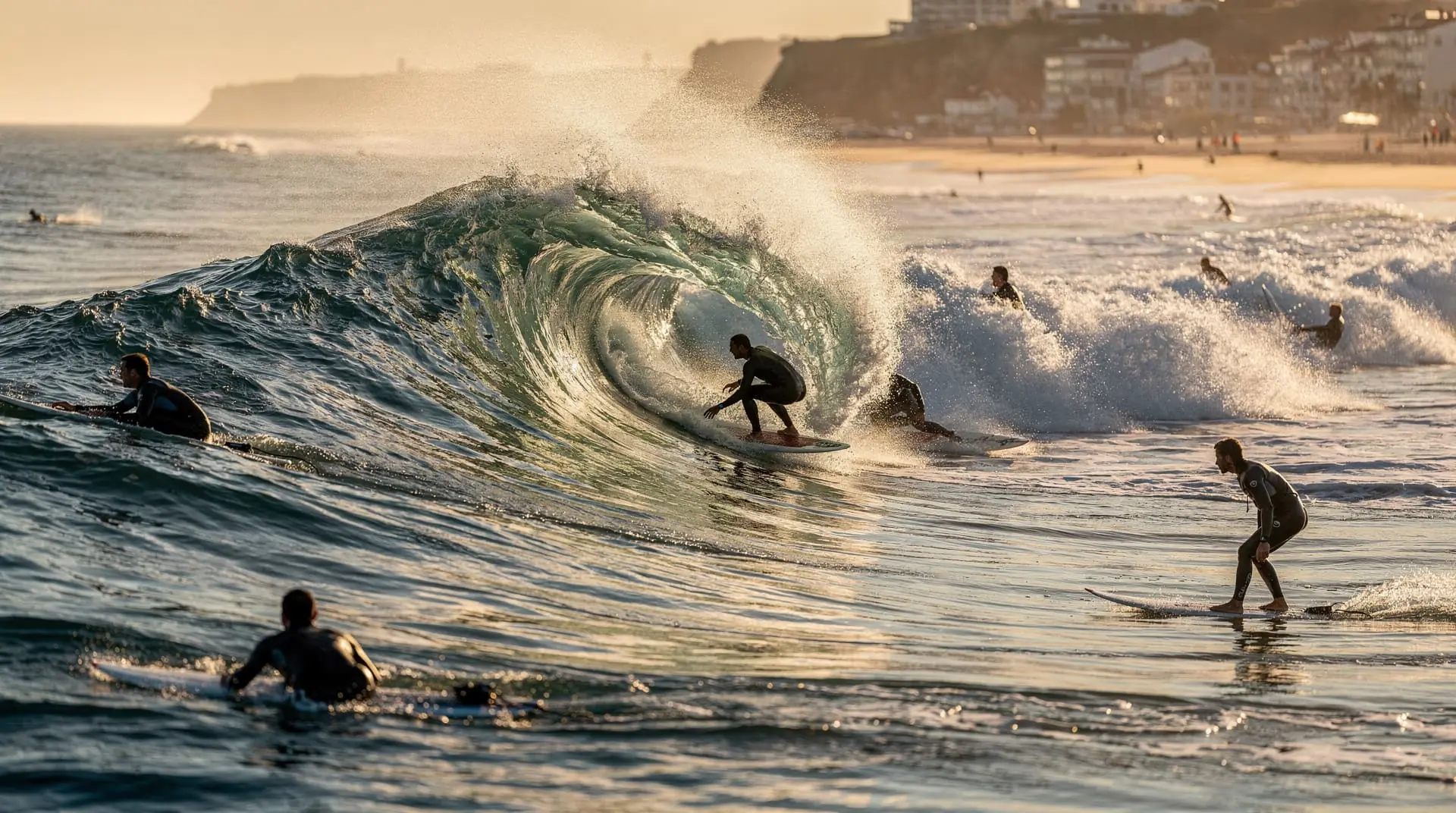
Surfing near Lisbon: Carcavelos, Caparica, Guincho and Ericeira
Best surf near Lisbon: beginner Carcavelos, consistent Caparica, advanced Guincho wind, and the Ericeira World Surfing Reserve.
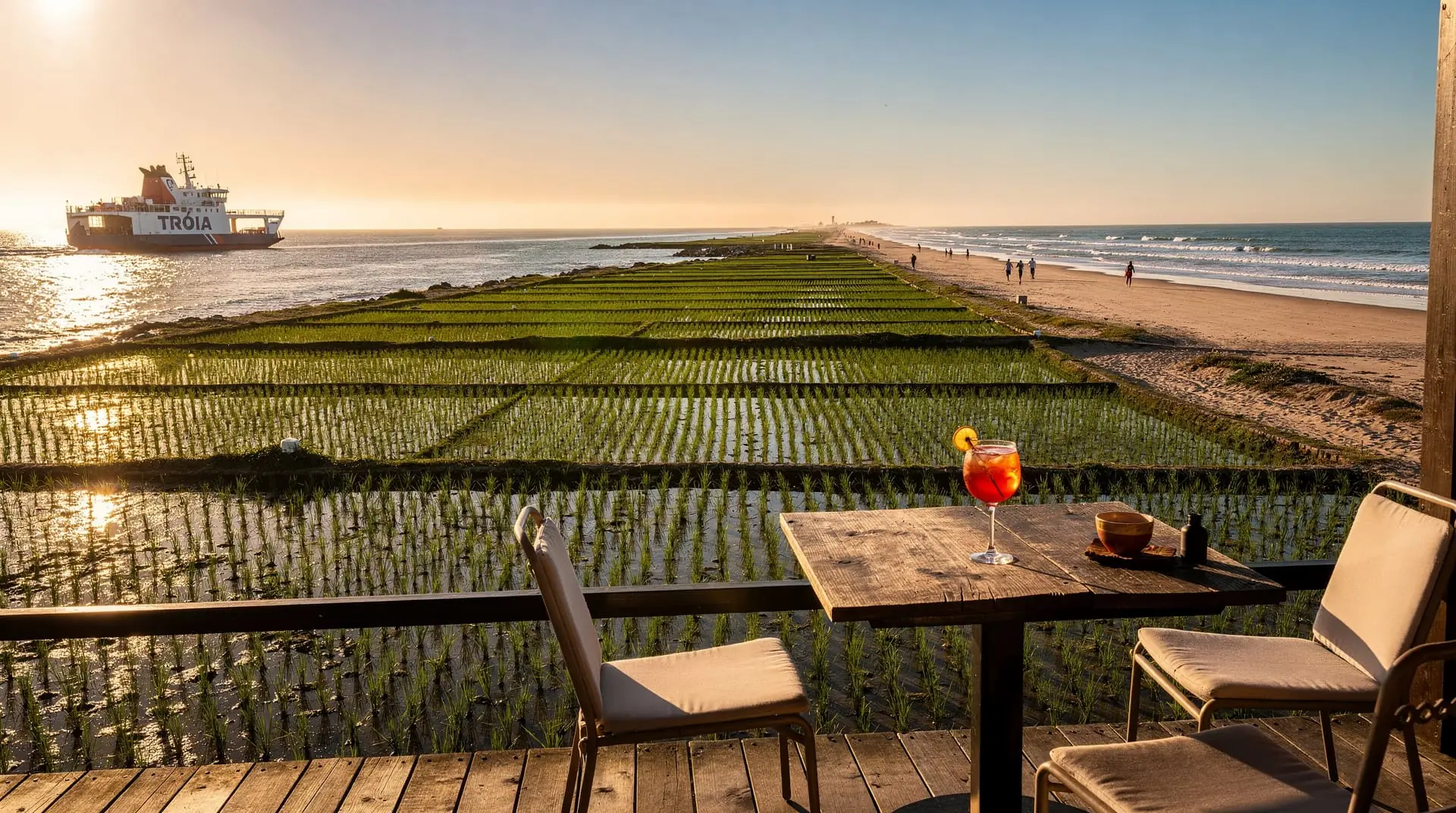
Comporta day trip from Lisbon: Tróia ferry, rice paddies, beach and the €15 cocktail
Comporta day trip via Tróia ferry — how to get there carless, the beach reality, €15 sunset cocktails, rice paddies, and whether the effort is worth it.
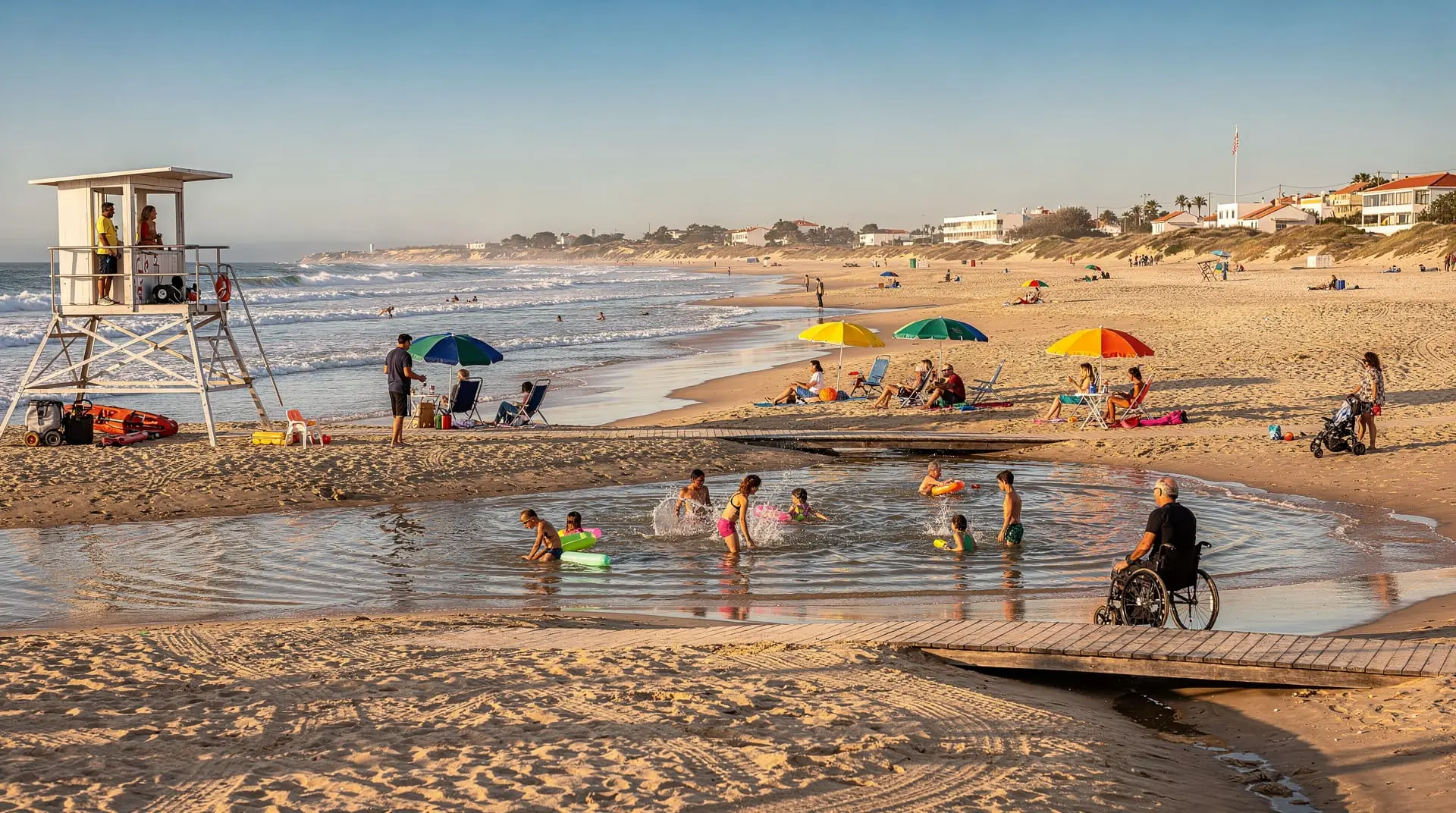
Best family beaches near Lisbon: Carcavelos, Cascais, and Arrábida
The safest, most family-friendly beaches near Lisbon in 2026. Calm water, lifeguards, easy transport — Carcavelos, Praia da Rainha, and Portinho da Arrábida.
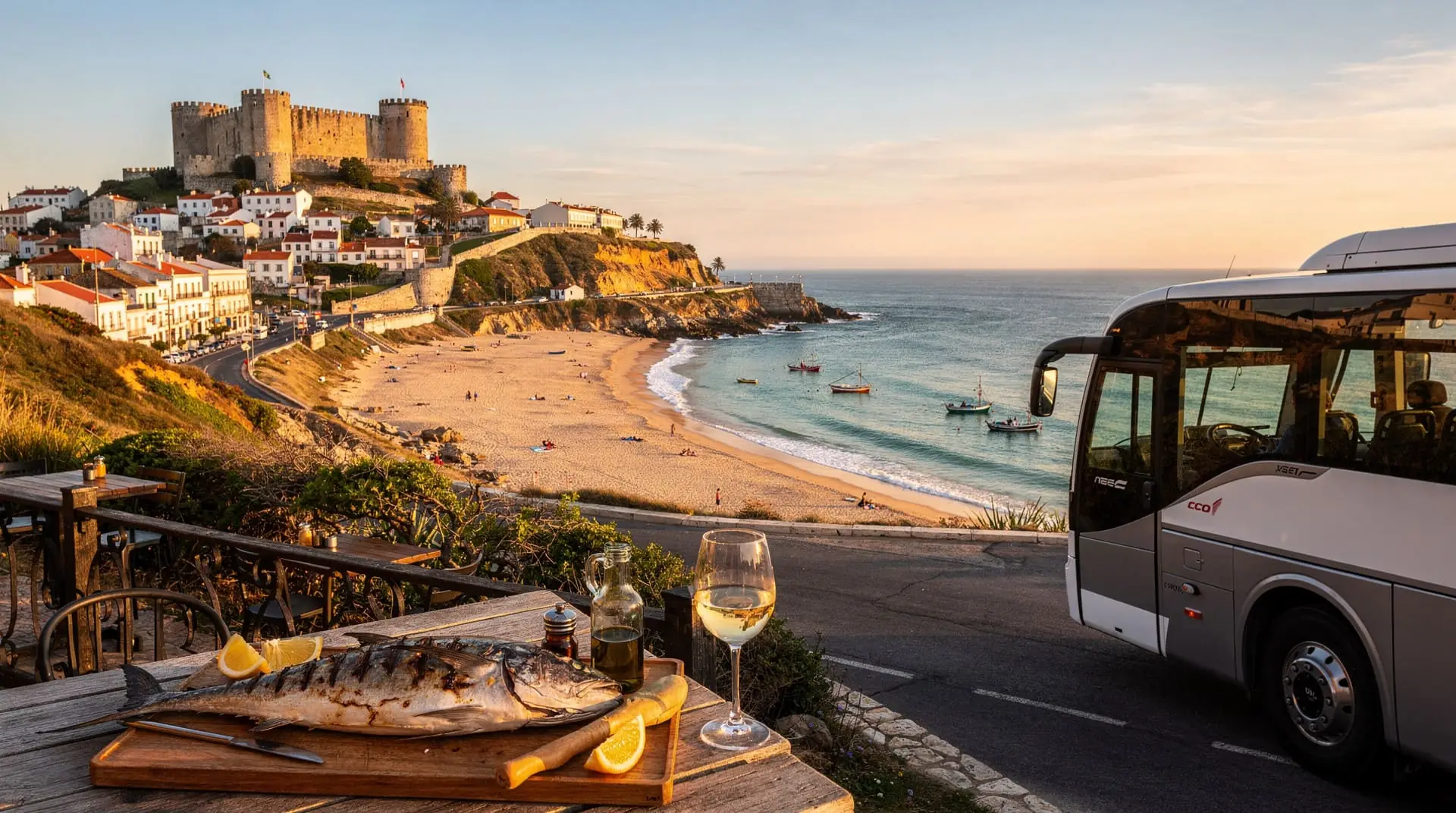
Sesimbra day trip from Lisbon: beach, castle, espadarte and how to get there by bus
Sesimbra day trip — TST bus from Praça de Espanha (75 min, €3.60), sheltered beach, medieval castle, espadarte fish lunch. Lisbon's underrated coast.