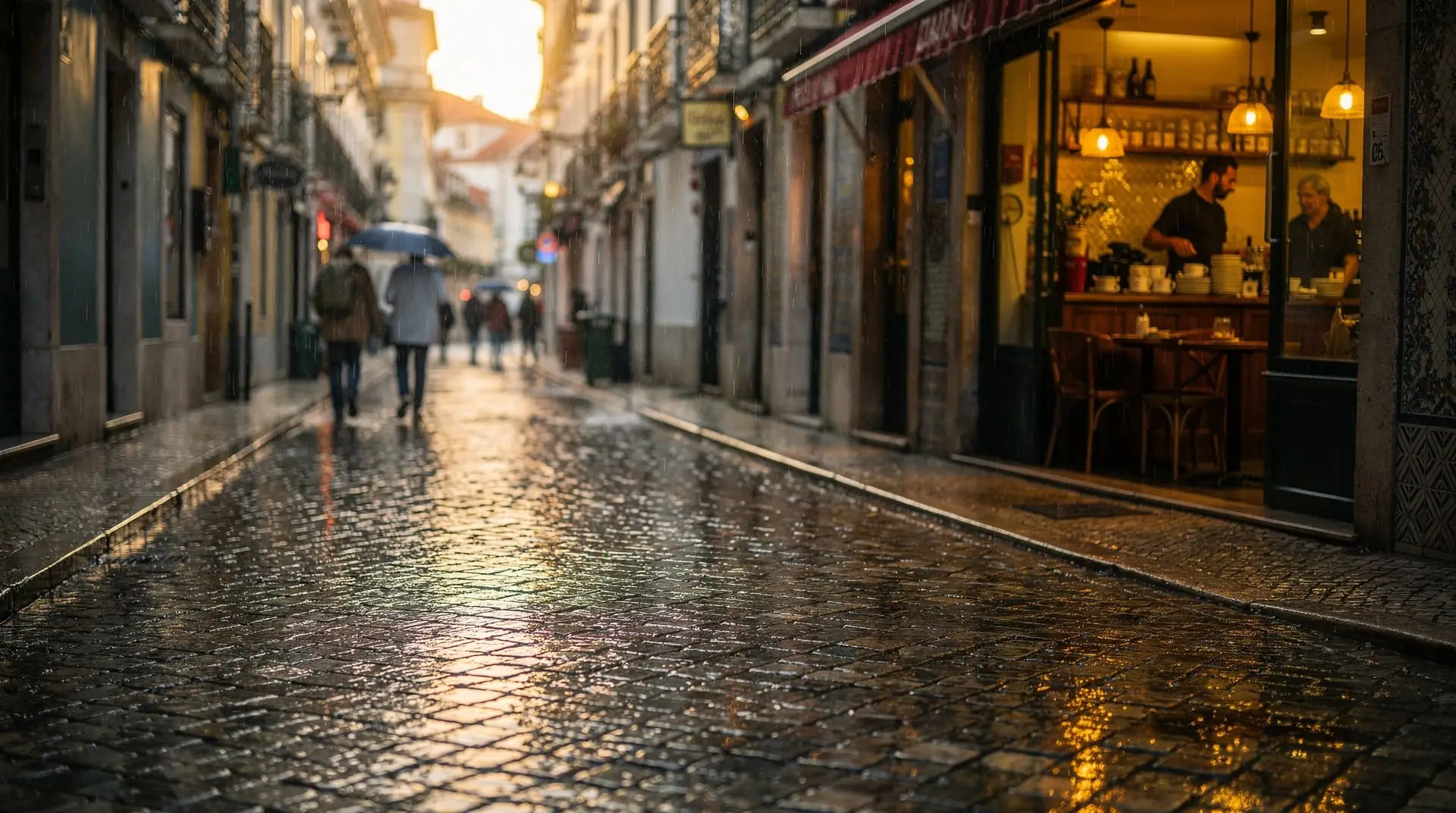
Lisbon in the rain: 30 things to do when the weather turns
Published
Lisbon gets approximately 770 millimetres of rain per year, mostly concentrated between October and March. For three or four days per wet season month, it rains properly — not Portuguese drizzle but the Atlantic kind, which comes sideways and renders umbrellas partially useless.
This is fine. Lisbon in the rain is a different city, and some parts of it are better. Here are thirty things to do when the forecast goes grey.
| Wettest months | November-March |
| Rainy-day essential | Museu Nacional do Azulejo |
| Entry fee range | Free-€10 for most museums on this list |
| Best rain-specific experience | Alfama’s wet cobblestones and empty lanes |
| Backup plan | Time Out Market or a covered food hall |
The museum tier (indoors, hours of engagement)
1. Museu Nacional do Azulejo. This is the rainy-day museum in Lisbon, full stop. The tile museum is housed in a converted convent in the eastern city, with azulejo panels covering every surface including the extraordinary cloister. Allow two to three hours. Entry €5 (free first Sunday of each month). Tram or bus from central Lisbon.
Tile Museum e-ticket with audio guide — pre-book to skip the entry queue2. Museu Calouste Gulbenkian. One of Europe’s genuinely great private collections, housed in a purpose-built mid-century complex in the north of the city. Egyptian antiquities, Islamic art, European paintings, Lalique glass. Plus the modern art wing next door. A full rainy day.
3. MAAT — Museu de Arte Arquitetura e Tecnologia. Contemporary art in a striking waterfront building near Belém. The building itself is partially worth visiting for its architecture. Good for 90 minutes.
4. Museu Nacional de Arte Antiga. The national collection of pre-modern Portuguese and European art, including the Panels of São Vicente — a six-panel altarpiece by Nuno Gonçalves from the 15th century that is among the most significant Portuguese paintings in existence.
5. Museu do Aljube — Resistência e Liberdade. A museum of the Portuguese resistance to the Estado Novo dictatorship, housed in a former political prison. Sobering, serious, and genuinely excellent if you want historical depth on modern Portugal.
6. Museu Nacional dos Coches. The coach museum in Belém — sounds mundane, is actually extraordinary. The largest collection of historic royal carriages in the world, in a purpose-built Siza Vieira space.
7. Palácio Nacional de Queluz. 15 kilometres from central Lisbon, a train ride to Queluz-Belas station. The 18th-century pink palace and its formal gardens. Less crowded than the Sintra palaces and reachable without committing to a Sintra day.
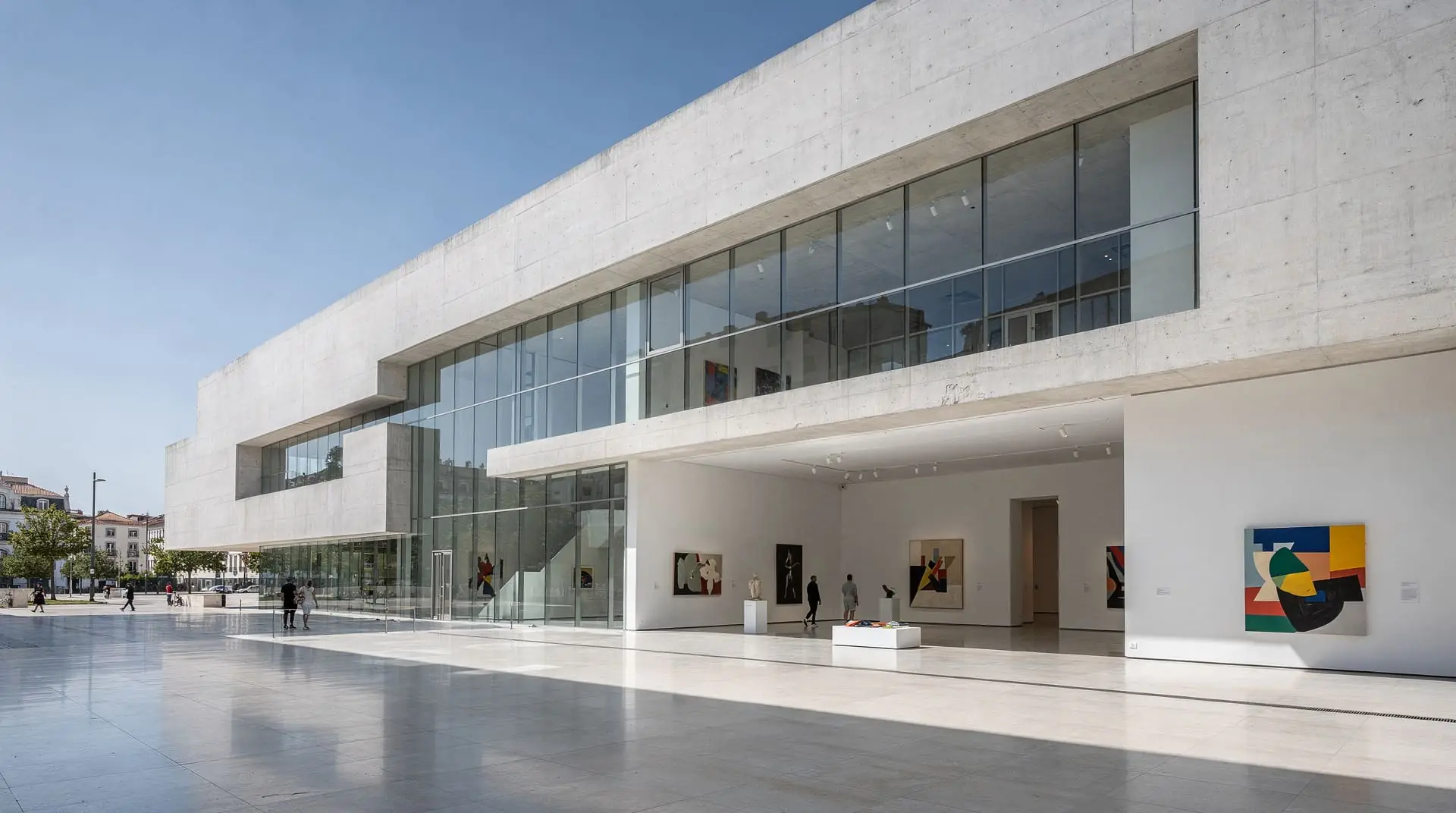
8. Berardo Collection (Centro Cultural de Belém). A major collection of 20th-century modern and contemporary art. Free entry.
Covered markets and food halls
9. Time Out Market (Mercado da Ribeira). Yes, it’s touristy. On a rainy day it’s also an excellent place to spend two hours eating various things under cover without getting wet.
10. Mercado de Campo de Ourique. A neighbourhood market in western Lisbon with excellent food stalls and a less tourist-concentrated atmosphere than the Ribeira.
11. Mercado do Intendente. A working market in the Intendente square that has food, craft, and a covered hall.
12. LxFactory. A covered industrial complex in Alcântara with restaurants, bars, bookshops, studios. The Sunday market is the highlight but the regular week has plenty going on under cover.
Historic cafés (the proper ones)
13. A Brasileira. Rua Garrett, Chiado. 1905. Marble and mahogany, traditional galão service, the Fernando Pessoa statue outside. Order a bica and sit at the bar.
14. Versailles. Avenida da República. Period pastry café with extraordinary decor that nobody seems to visit who isn’t Portuguese. The pastéis de nata are excellent.
15. Confeitaria Nacional. Praça da Figueira. 1829. Pastry and coffee in a central square location with no tourist surcharge on the prices.
Indoor experiences
16. Tile-making workshop. Several operators offer hands-on azulejo workshops where you design and fire a tile. Good for rainy half-days.
17. Pastel de nata baking class. Make your own at a real bakery. Runs 2-3 hours.
Pastel de nata masterclass at a real Lisbon bakery — hands-on, 2 hours18. Fado vadio evening. A rainy Tuesday evening in Alfama, a small fado house with locals — this is the correct setting.
19. Wine tasting session. Multiple operators run 1-2 hour tastings covering Portuguese wine regions. Indoor, educational, warm.
20. Cooking class. Portuguese cooking classes typically run 2.5-3 hours and cover a full menu. Very good value on rainy afternoons.
Architecture and covered spaces
21. Estação do Oriente. Santiago Calatrava’s 1998 railway station in Parque das Nações is worth visiting as an architectural object. The vaulted steel and glass structure is extraordinary.
22. Elevador de Santa Justa. The neo-Gothic iron elevator connecting Baixa to Carmo — enclosed cabin, outdoor walkway at the top (worth it briefly between rain showers).
23. Palácio da Pena interior. If you’re already doing Sintra and it rains: the interior is actually better appreciated in grey light, which brings out the colour of the painted rooms.
24. Convento do Carmo. A Gothic convent in Chiado roofless since the 1755 earthquake, its nave now housing an archaeological museum open to the sky but covered sides. Eerie and beautiful in rain.
25. Basilica da Estrela. An 18th-century baroque basilica in the western city with a stunning interior and usually empty on weekday mornings.
The rain-specific experiences
26. Alfama in the rain. The wet cobblestones reflect the azulejo tiles. The lanes are empty. The cats retreat under doorway overhangs. This is closer to historic Alfama than the summer version.
27. Tagus River in a storm. The estuary whipped up by Atlantic wind looks genuinely impressive. The viewpoints at Belém or the waterfront at Terreiro do Paço give you the drama without full exposure.
28. A neighbourhood bookshop afternoon. Livraria Bertrand in Chiado (the world’s oldest operating bookshop, 1732) has an excellent Portuguese literature section and a calm interior.
29. Ginjinha in Largo São Domingos. €1.50-2 for a shot of ginja (sour cherry liqueur), served from the hole-in-the-wall bars around this square since the 19th century. Perfect rain activity.
30. Sintra on a weekday in November. Counterintuitive, but the crowd reduction in bad weather combined with the atmospheric mist on the Serra means you might get Pena Palace closer to its romantic 19th-century ideal than at any other moment.
How rain changes the logistics
A rainy day in Lisbon isn’t really about finding indoor options — the list above shows there are plenty — it’s about the walking. Cobblestones in Alfama, Graça, and Bairro Alto get genuinely slippery when wet, more so than most northern European cobbles, and the hills mean you’re often walking on an incline as well as a slick surface. Wear shoes with real tread, not the smooth-soled trainers that work fine in dry weather. The trams and funiculars (tram 28 in particular) get busier on rainy days as visitors shift from walking to riding, so expect longer waits at the main stops. If you were planning a walking tour, check ahead — some operators run rain-or-shine and some reschedule.
Rain and the day trip decision
If a wet forecast lands on a day you’d planned for Sintra or the Cascais coast, don’t automatically cancel. Sintra’s palace interiors (Pena especially, per item 23 above) hold up well in rain, and the crowds thin out noticeably. Coastal day trips are the ones to reconsider — a rainy Cascais or Arrábida strips out the main appeal (the beach, the views), so swap those for a museum-heavy day in the city and save the coast for a clear forecast. The best time to visit guide has the fuller monthly rainfall breakdown if you’re choosing travel dates around this.
Gulbenkian Museum entry ticket — book ahead for the modern art wing on a heavy rain dayFAQ
Is Lisbon worth visiting if it rains most of your trip? Yes. The city has enough indoor depth — world-class museums, historic cafés, covered markets — that a rainy multi-day trip doesn’t feel like a compromise. Alfama specifically is arguably better in rain, with empty lanes and wet-tile reflections that the summer crowds obscure.
What’s the single best rainy-day activity in Lisbon? The Museu Nacional do Azulejo. It’s purpose-built for a wet afternoon: two to three hours indoors, genuinely important art and history, and a covered cloister that’s stunning regardless of weather outside.
The Lisbon in winter guide covers the full seasonal picture, including which months are wettest and which attractions are less impacted by weather than others.
Related guides
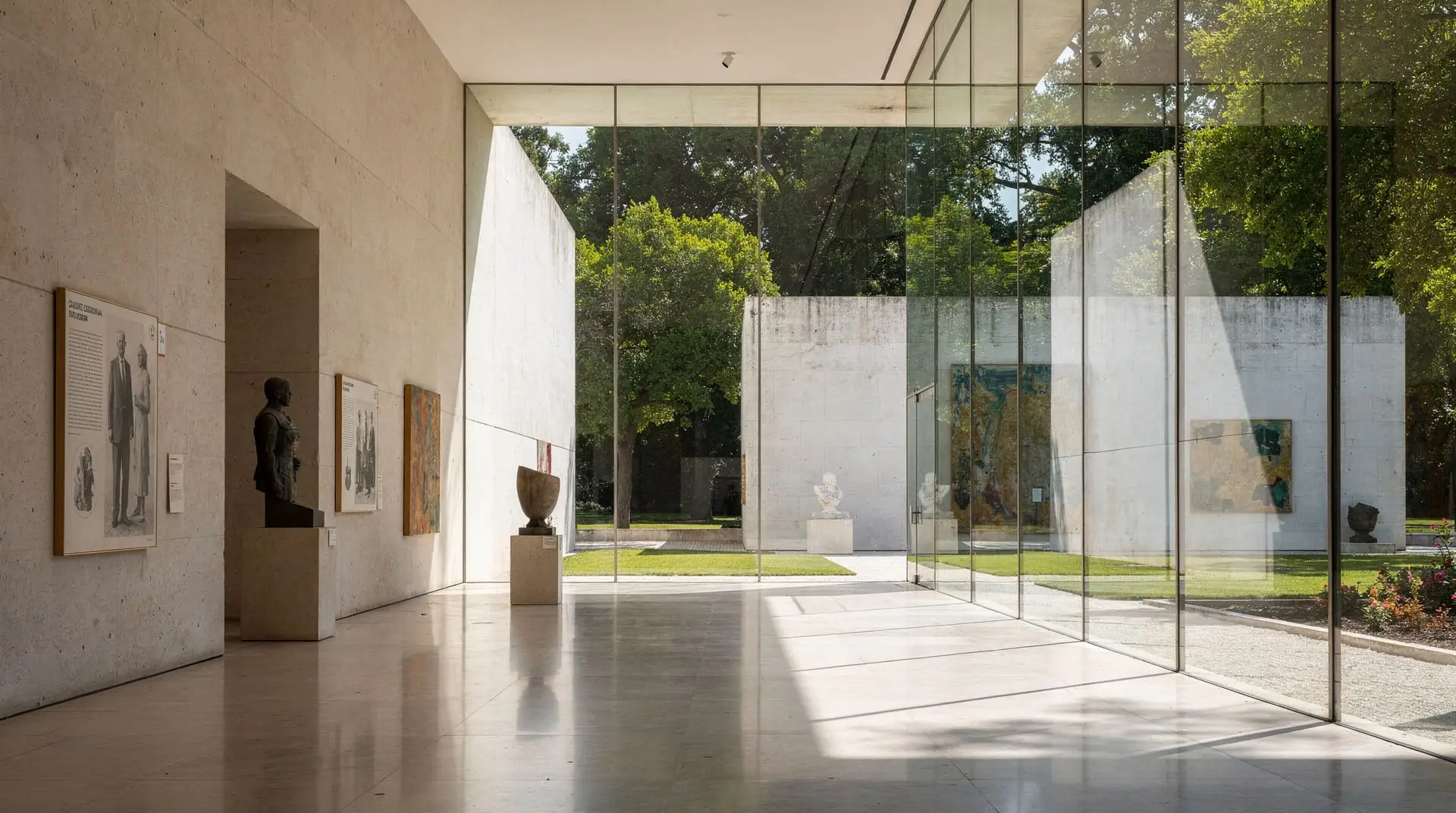
Calouste Gulbenkian Museum — the founder's collection
Complete guide to the Gulbenkian Founder's Collection in Lisbon: Egyptian antiquities to Art Nouveau, tranquil gardens, prices, and how to get there.
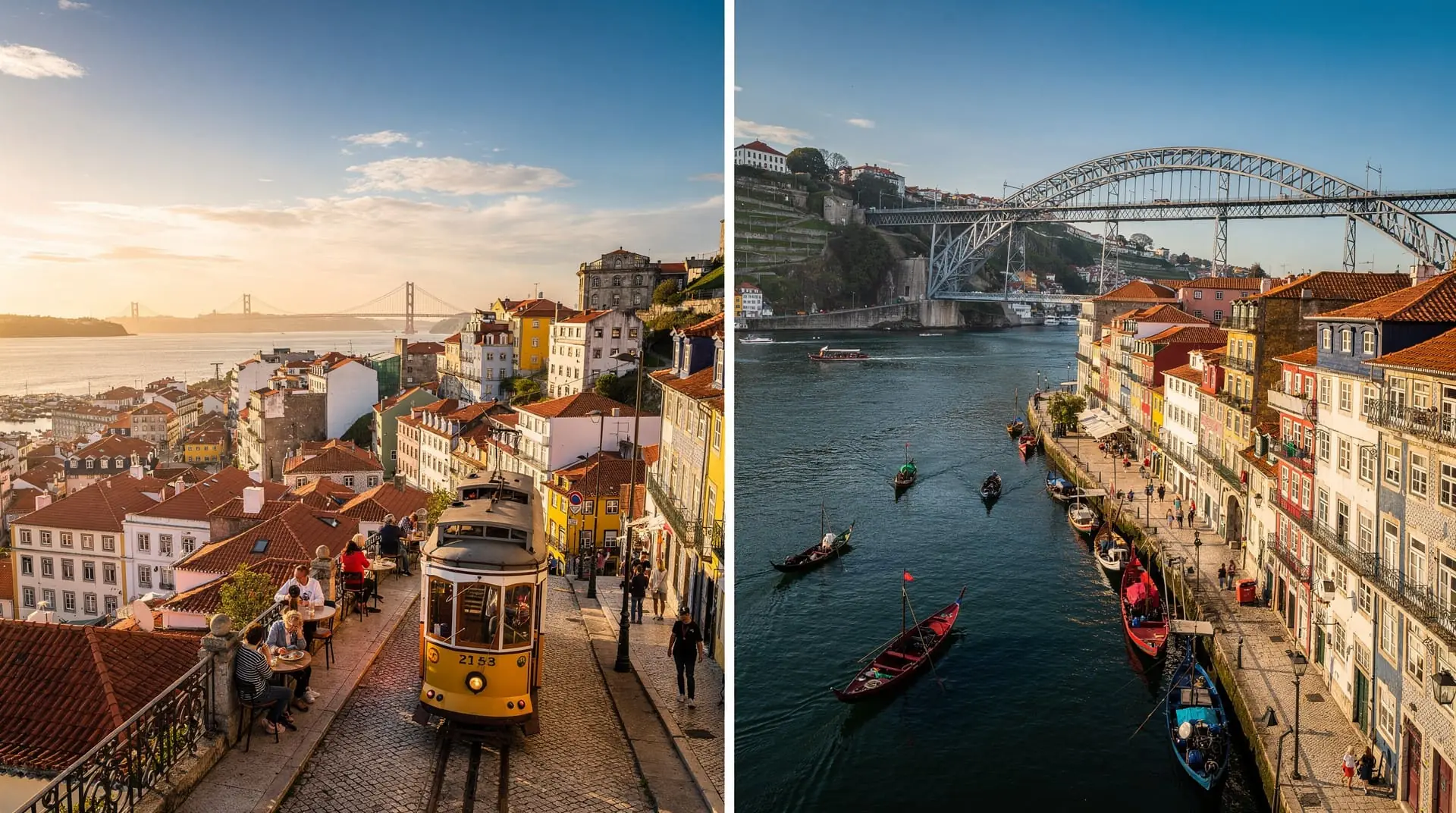
Lisbon vs Porto: which Portuguese city should you visit?
Honest head-to-head: vibe, weather, food, wine, day-trips and budget. Which city wins for your trip — and when to visit both.
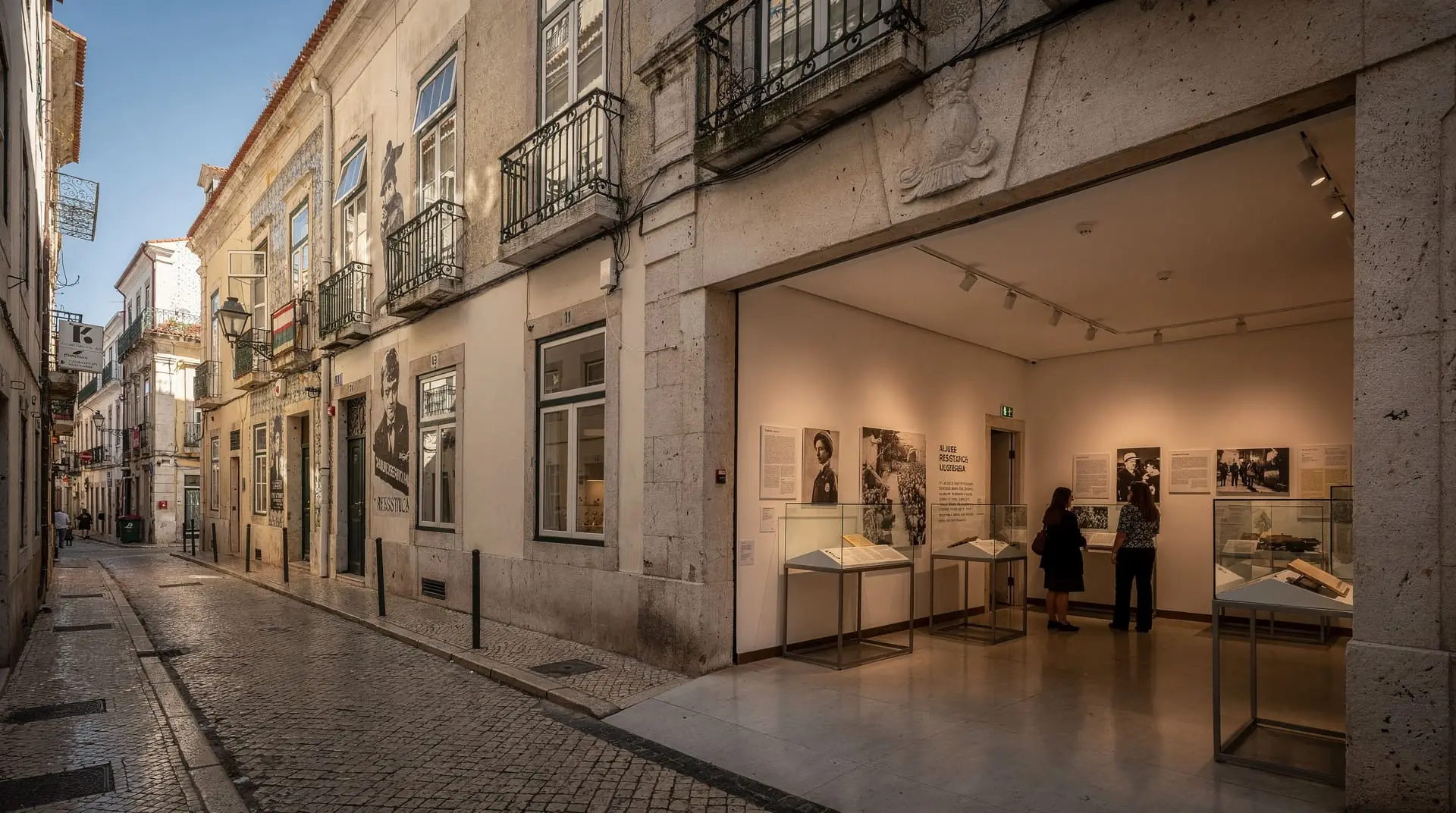
Aljube Resistance Museum — Lisbon's anti-fascist memorial
Guide to the Aljube Museum in Lisbon: the PIDE political prison near the Sé cathedral, the Estado Novo dictatorship, entry prices, and how to visit.
Berardo Collection at CCB — modern art in Belém
Guide to the Berardo Collection Museum in Belém: Picasso, Warhol, Bacon, free Saturdays, entry prices, and how to plan your visit alongside Jerónimos.