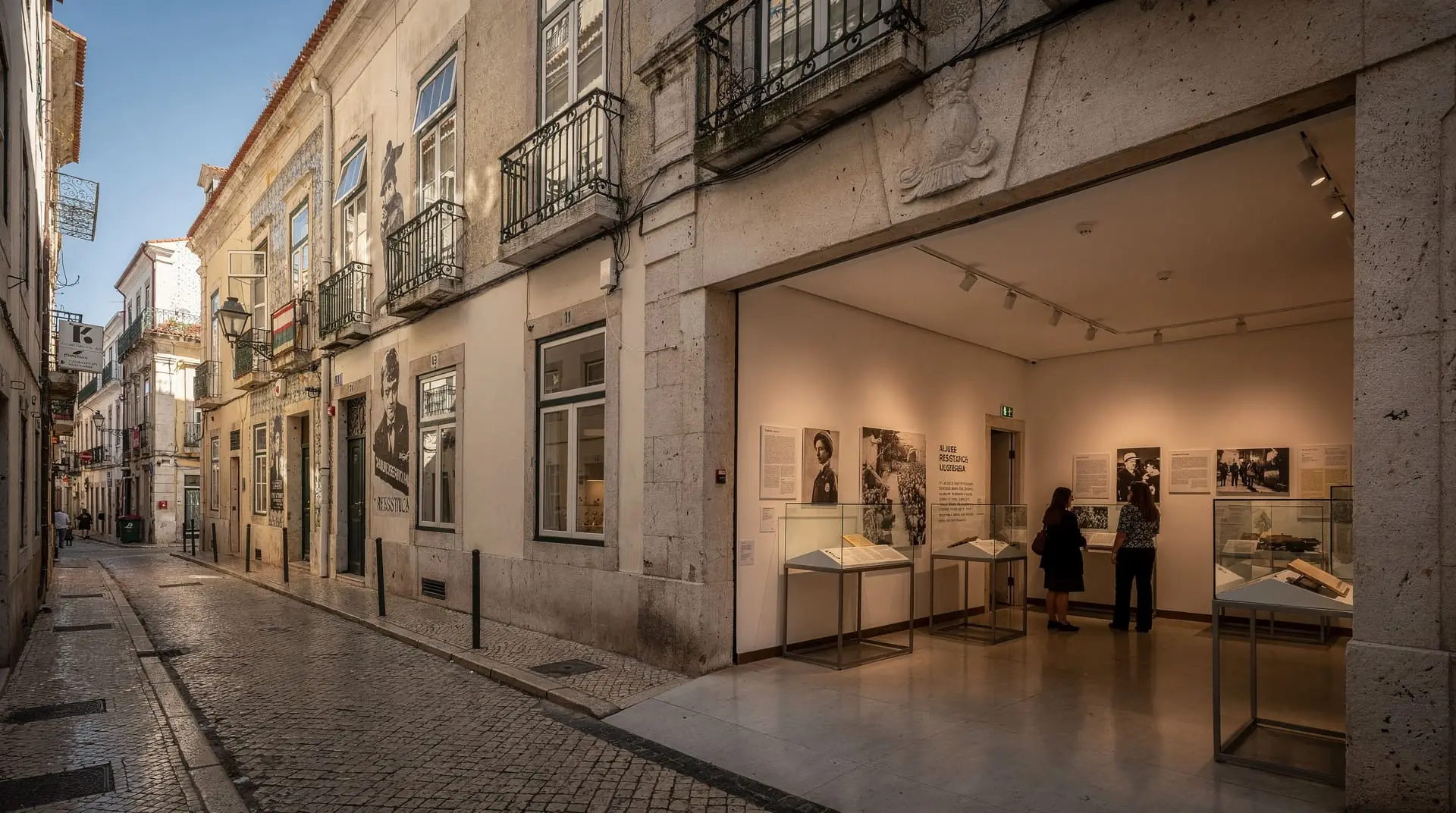
Aljube Resistance Museum — Lisbon's anti-fascist memorial
Last reviewed
What is the Aljube Resistance Museum in Lisbon?
The Museu do Aljube Resistência e Liberdade occupies the former Aljube prison near the Sé cathedral in Alfama, where the Estado Novo dictatorship's political police (PIDE) held and tortured dissidents between 1928 and 1974. It documents the 48-year authoritarian regime and the resistance that eventually ended it with the 1974 Carnation Revolution. Entry is around €3.
| Where | Rua Augusto Rosa 42, Alfama, below the Sé cathedral |
| Cost | Around €3, free under-18 and students |
| Time needed | 90 minutes to 2 hours |
| Hours | Tuesday-Sunday 10:00-18:00, closed Mondays |
| Getting there | Tram 28 to Sé stop, or 20-minute uphill walk from Baixa |
The prison that became a museum
The building at Rua Augusto Rosa 42, set into the hillside below the Sé cathedral in Alfama, looks from the outside like many other old Lisbon structures — thick walls, small windows, a nondescript facade. From 1928 until the Carnation Revolution of April 25, 1974, it was one of the most feared addresses in Portugal: the Aljube prison, where the PIDE (Polícia Internacional e de Defesa do Estado — the political police of the Estado Novo dictatorship) held, interrogated, and tortured political opponents of the Salazar regime.
Today it is a museum of resistance and freedom — one of the most serious and honest institutions in Lisbon, largely unknown to international visitors who arrive in a city that can seem so effortlessly pleasant that its 48-year experience of authoritarian rule feels like a historical footnote rather than living memory. For many Portuguese people, the Aljube is not a footnote. Some of the people who were imprisoned here are still alive.
The museum opened in 2015, forty-one years after the revolution. It took that long partly because the political and moral reckoning required was uncomfortable, and partly because Portugal was in no position, economically or psychologically, to build a dictatorship memorial in the decade after the revolution. That it was built at all — in the actual former prison, preserving the cells, the isolation chambers, and the interrogation records — is a form of institutional honesty that not every European country has managed.
What the museum covers
Floor 1: The Estado Novo — understanding the regime
The museum opens with extensive documentation of the Estado Novo (New State) established by António de Oliveira Salazar in 1933. Salazar was an economics professor who became finance minister in 1928 and prime minister in 1932, ruling Portugal through a combination of political repression, censorship, corporatist ideology, and the promotion of an idea of Portuguese identity centred on religion, rural traditionalism, and empire.
The Estado Novo was not identical to Spanish Francoism or Italian Fascism — Salazar was more conservative than fascist in ideological terms — but it employed the same instruments: political police, press censorship (the lápis azul, the blue pencil), political trials before special courts, and the suppression of political parties, trade unions, and independent civil society. The African colonial wars (1961–1974) were the final crisis that brought the regime down.
The first floor uses photographs, documents, and explanatory text to construct a clear account of how the regime worked. The censorship section is particularly striking: the PIDE’s filing systems for monitoring citizens, the lists of banned books, and the physical evidence of what the censors’ pencils excised from newspapers are displayed alongside testimonies from journalists and editors.
Floors 2 and 3: The prison — cells and isolation
The museum preserves the physical structure of the prison across its upper floors. The cells are small — some barely large enough for a single person to lie down in. The isolation chambers (segredo, “secret”), where prisoners were held incommunicado and sometimes denied sleep for extended periods, are intact. There is something about standing in an actual cell, knowing that people were held here for weeks or months under conditions designed to break them, that documentation in a conventional museum gallery cannot replicate.
The testimony of former prisoners — recorded interviews and written accounts — forms the emotional core of these floors. The museum presents testimony from people across the political spectrum of the opposition: communists, socialists, Catholic progressives, labour organisers, journalists. What unites them is not ideology but the experience of the PIDE’s methods: sleep deprivation, the estátua (being forced to stand without moving for days), and in documented cases, physical violence.
Floor 4: Resistance — the movements and the revolution
The final floors cover the organised resistance to the regime: the communist underground, the progressive Catholic movements, the student protests of 1962 and 1969, and the military officers (the MFA — Armed Forces Movement) who eventually executed the coup of April 25, 1974. The carnation that gives the revolution its name appears in photographs everywhere — the decision by Lisbon’s flower sellers to hand out carnations to the soldiers who moved through the city without firing a shot is one of the more remarkable images in modern European history.
The museum does not depict the revolution as entirely uncomplicated — the political turbulence of 1974–1975 is acknowledged, including the economic disruption and political conflict that accompanied the transition. But the fundamental narrative is clear: April 25 ended a dictatorship that had lasted 48 years and returned Portugal to democratic governance.
Practical information
Address: Rua Augusto Rosa 42, 1100-059 Lisbon (Alfama, below the Sé cathedral on the south-facing hillside).
Opening hours: Tuesday to Sunday, 10:00 to 18:00 (last entry 17:30). Closed Mondays.
Entry: Around €3 for adults — one of the most affordable museum entries in Lisbon. Free admission for under-18 and students. Reduced rates for seniors.
Getting there:
- Tram 28 to the Sé stop — the museum is 50 metres downhill from the cathedral. Read the tram 28 guide before riding, and be aware of pickpocket risk on this tram.
- On foot from Baixa: 20 minutes uphill via Rua da Madalena or Rua dos Bacalhoeiros — the route through the narrow streets is pleasant.
- On foot from Alfama: the museum is natural stop on the downhill route from the castle towards the Sé.
How it compares to Lisbon’s other history museums
| Museum | Focus | Time needed | Entry |
|---|---|---|---|
| Aljube Resistance Museum | Estado Novo dictatorship, PIDE, resistance | 90 min-2h | ~€3 |
| Lisbon Story Centre | Broad city history, multimedia, family-friendly | 45 min | €7 |
| National Pantheon | Commemoration of national figures, architecture | 45-60 min | €4 |
The three sit within 20 minutes of each other and cover complementary ground: the Story Centre gives a light introduction suitable before the Aljube, while the National Pantheon offers a different, more ceremonial register of how Portugal remembers its past. Visitors with a genuine interest in 20th-century history should prioritise the Aljube over the other two if time only allows one.
Integrating into an Alfama day
The Aljube is a natural component of any serious exploration of Alfama. A logical sequence from the bottom of the hill:
Start at Praça do Comércio, walk through the riverside Alfama streets to the Sé cathedral (exterior is free), turn down the hill slightly to the Aljube Museum (allow 90 minutes), then climb through the medieval Alfama streets past the Miradouro de Santa Luzia towards the Portas do Sol viewpoint and continuing to the São Jorge Castle.
The Alfama guided walking tour covers much of this same territory. An Alfama guided walking tour with a local guide can provide narrative context for the neighbourhood’s social history — including the relationship between fado, the working-class community of Alfama, and political resistance under the Estado Novo (fado was complicated: simultaneously claimed by the regime as a symbol of “authentic” Portuguese identity and used by performers as a vehicle for coded political expression).
For context on Lisbon’s broader 20th-century history, the final room of the Lisboa Story Centre at Praça do Comércio covers the Estado Novo period in condensed form — useful as preparation before visiting the Aljube, though the Story Centre’s account is necessarily superficial compared to the museum dedicated to the period.
Who this museum is for
The Aljube is an adult museum in the straightforward sense: children can visit, but the subject matter — torture, political repression, imprisonment — is not calibrated for young audiences and requires honest explanation from parents. There are no activity sheets or child-oriented interpretation programmes.
For adults with any interest in 20th-century European political history, the museum is essential. Portugal’s experience of authoritarian rule is often less well known outside the country than the Spanish or German versions, partly because Salazar was more discreet than Franco or Hitler and partly because Portugal was peripheral to the main events of 20th-century European history. The Aljube corrects this and does so honestly, without self-pity or triumphalism.
The Lisbon history and stories walking tour covers the Estado Novo period as part of a broader historical narrative of the city — some guides incorporate the Aljube building’s exterior into their route. This can be useful as a less intense introduction before a museum visit.
What to look for on the ground floor
Beyond the general censorship displays, the ground floor holds a reconstructed PIDE interrogation room and a wall of confiscated personal items — letters, identity documents, and photographs seized from prisoners on arrival. These small, specific objects tend to affect visitors more than the broader wall texts about the regime’s structure. Give yourself at least 15 minutes on this floor alone rather than moving straight to the cells above; the context it establishes makes the upper floors considerably more powerful.
Free multilingual audio guides are available at the entrance desk (Portuguese, English, French, Spanish) and are worth taking — several of the recorded testimonies are only available through the audio guide, not the wall text.
Honest assessment
This is one of the few genuinely unmissable museums in Lisbon for visitors interested in history, not merely in art or architecture. It is under-visited because it requires something of you — attention, some emotional engagement, a willingness to sit with difficult material rather than moving briskly through it. Most visitors spend 90 minutes to two hours; some spend longer.
The multilingual interpretation (Portuguese, English, French, Spanish) is thorough. The physical preservation of the prison structure is more effective than any amount of explanatory text. The former isolation cells on the upper floors are the rooms that most visitors remember for the longest time.
Go. The €3 entry price makes this Lisbon’s most underpriced serious museum experience.
For related context, see the fado history guide for the relationship between the music and political expression, and the National Pantheon guide for the public commemoration of Portuguese historical figures — a different but complementary perspective on how Portugal remembers its past.
Related guides
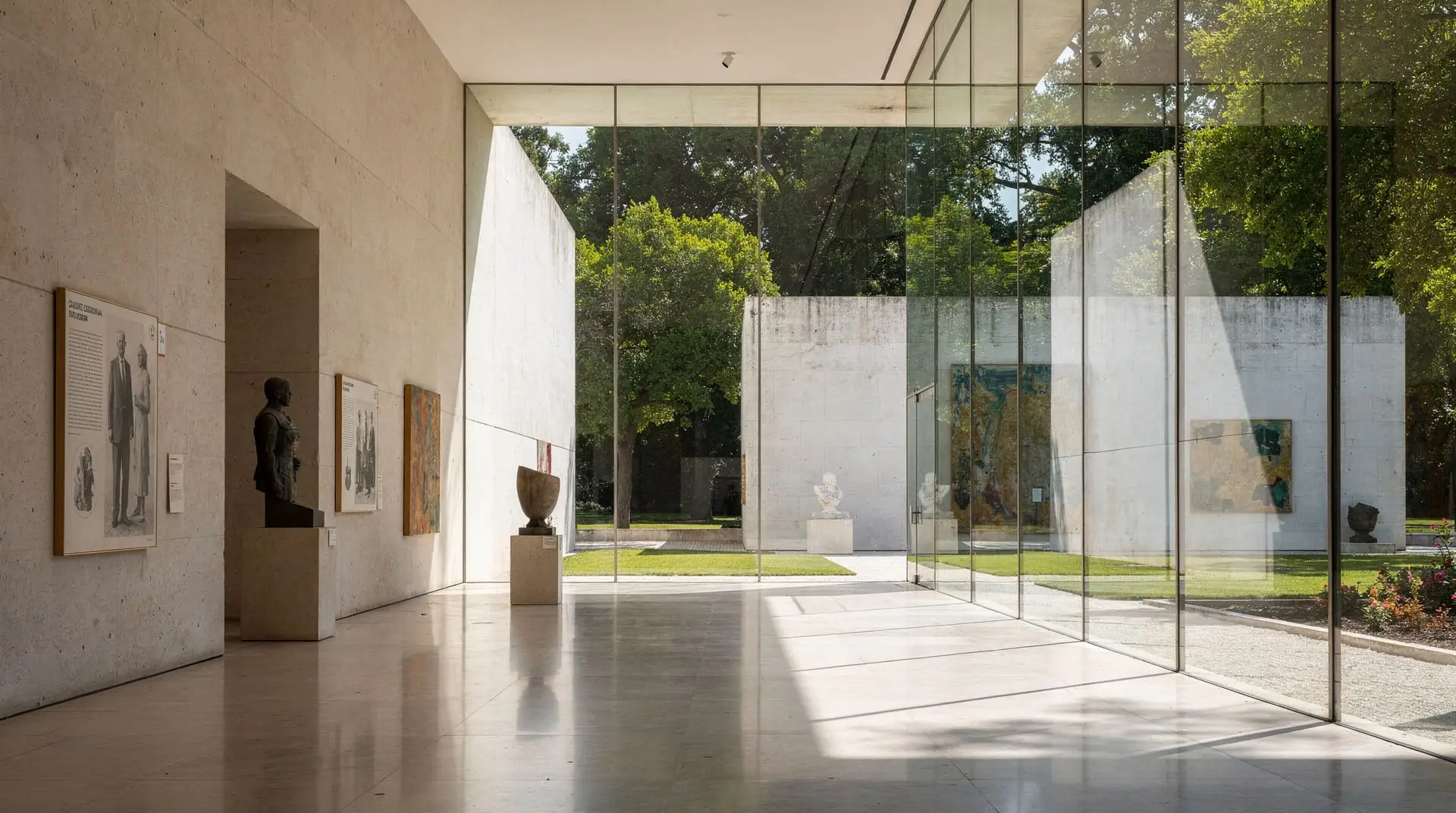
Calouste Gulbenkian Museum — the founder's collection
Complete guide to the Gulbenkian Founder's Collection in Lisbon: Egyptian antiquities to Art Nouveau, tranquil gardens, prices, and how to get there.
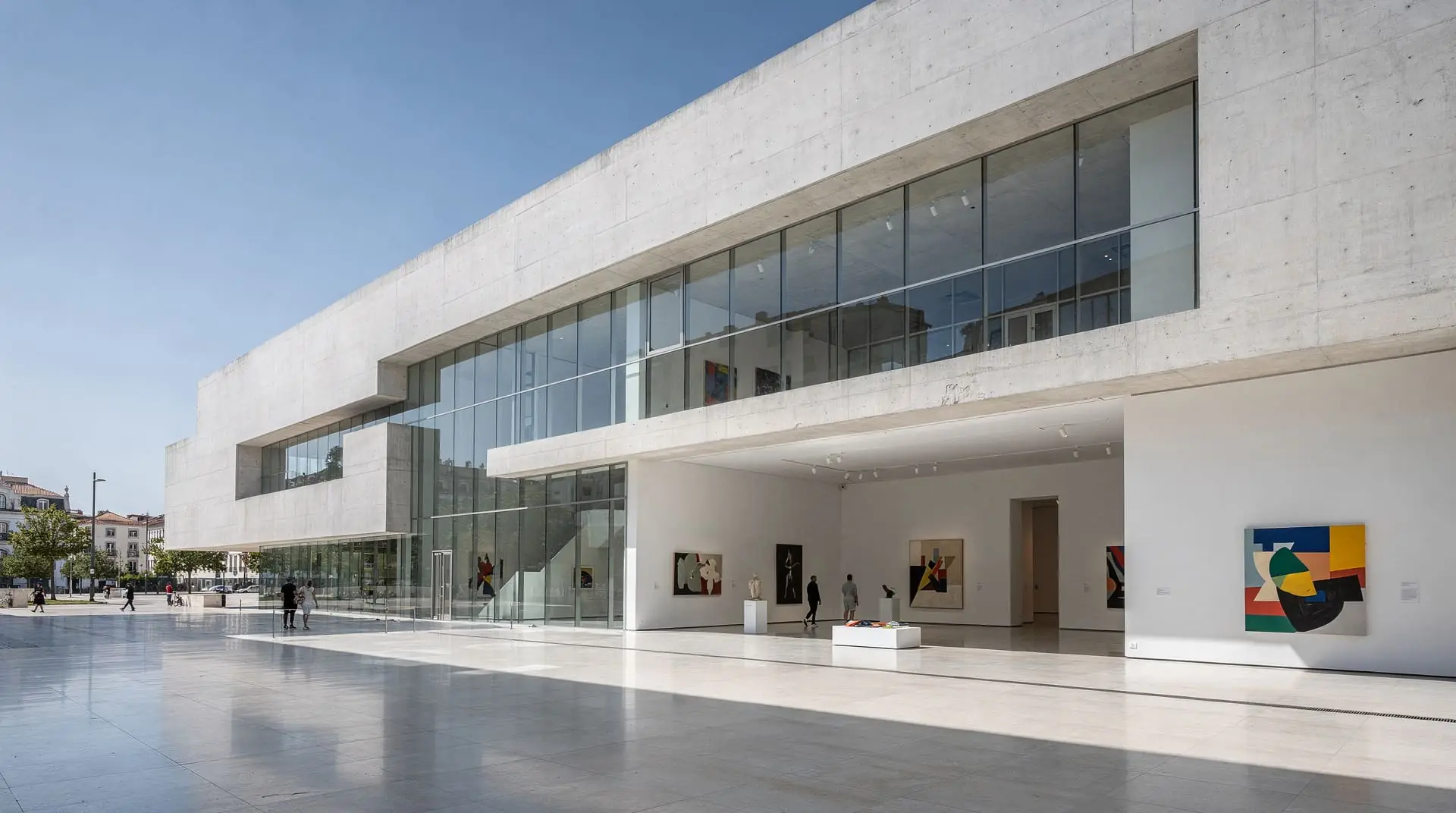
Berardo Collection at CCB — modern art in Belém
Guide to the Berardo Collection Museum in Belém: Picasso, Warhol, Bacon, free Saturdays, entry prices, and how to plan your visit alongside Jerónimos.
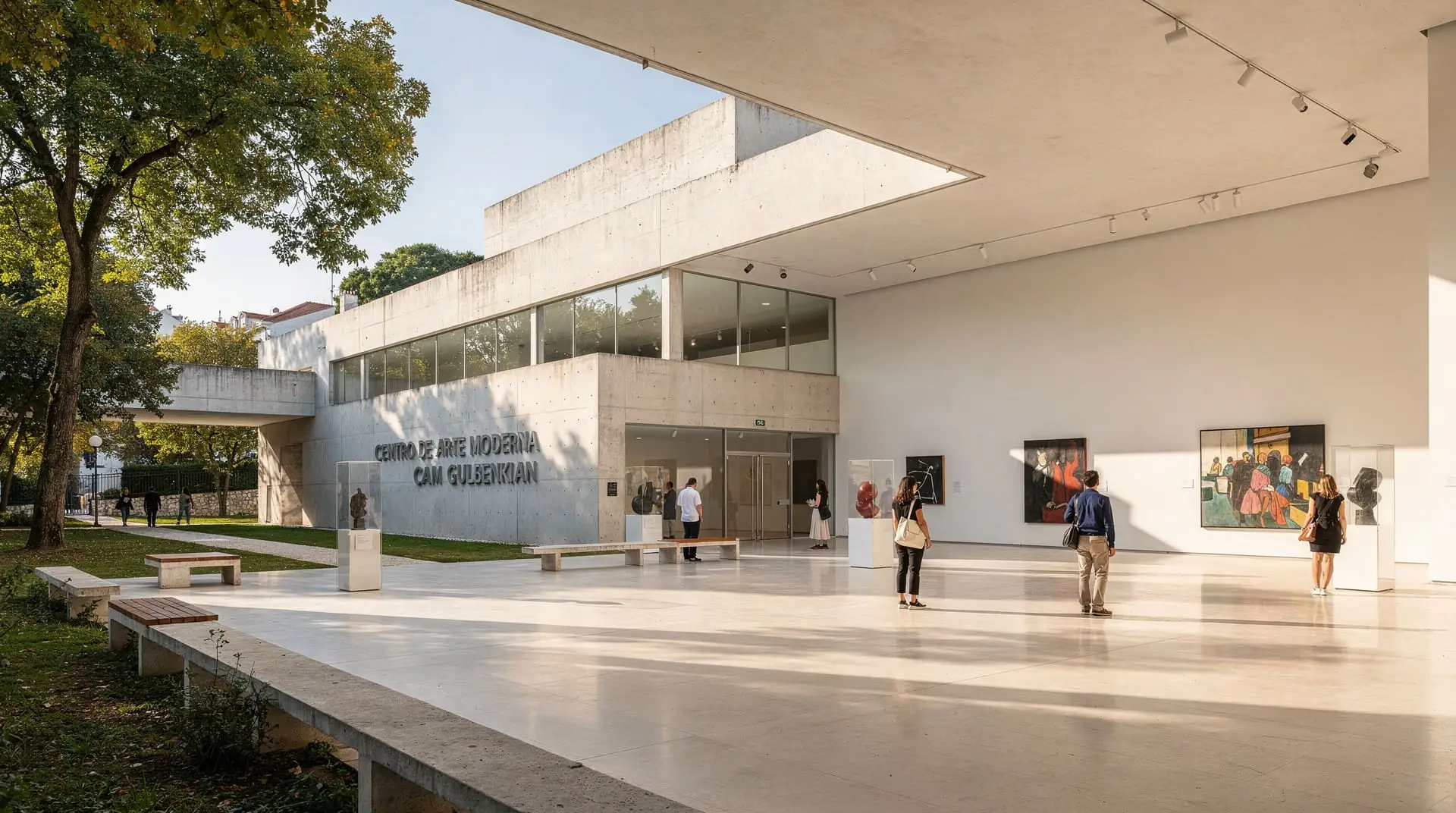
Centro de Arte Moderna (CAM) — Gulbenkian's modern art centre
Guide to CAM Gulbenkian in Lisbon: Kengo Kuma's 2024 redesign, Portuguese modernism, combined ticket with the Founder's Collection, gardens, and prices.
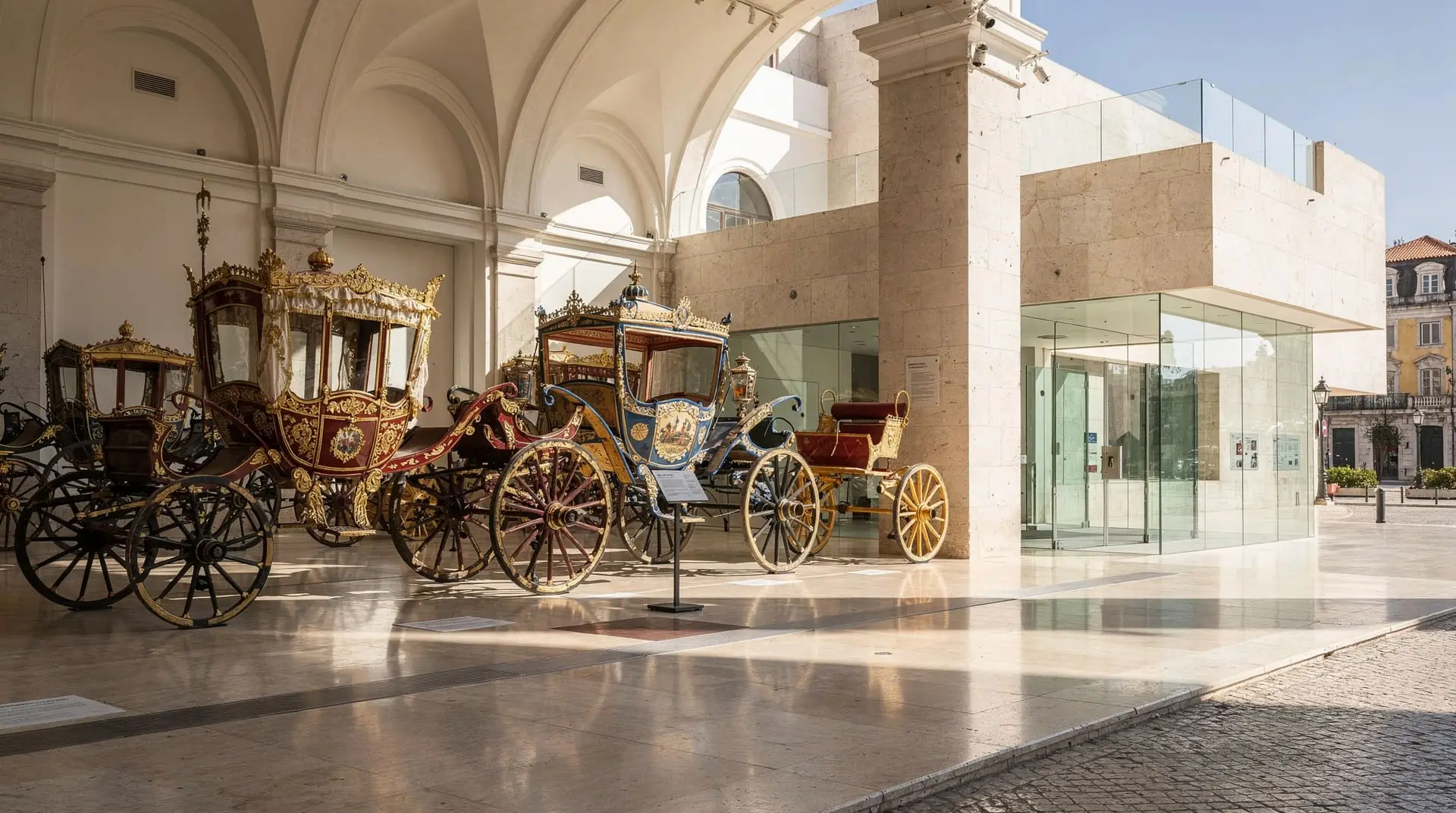
National Coach Museum Belém — royal carriages of Portugal
Guide to Lisbon's National Coach Museum in Belém: royal carriages, entry prices, the Philip III papal coaches, and how to combine it with Jerónimos.
Ready to book? Top tours for this guide
We earn a small commission if you book through GetYourGuide — at no extra cost to you. Every tour is hand-picked and verified.
Lisbon: 48-Hour Hop-On-Hop-Off Bus Tour and Oceanarium Entry
Lisbon: MAAT Entry Ticket & Dolphin Watching Boat Tour
Lisbon: Alfama, Mouraria Walking Tour with Fado Night, Tapas
Lisbon: Hop-On Hop-Off Bus Tour
Lisbon: 1-or 2-Day Hop-On Hop-Off Bus Tour