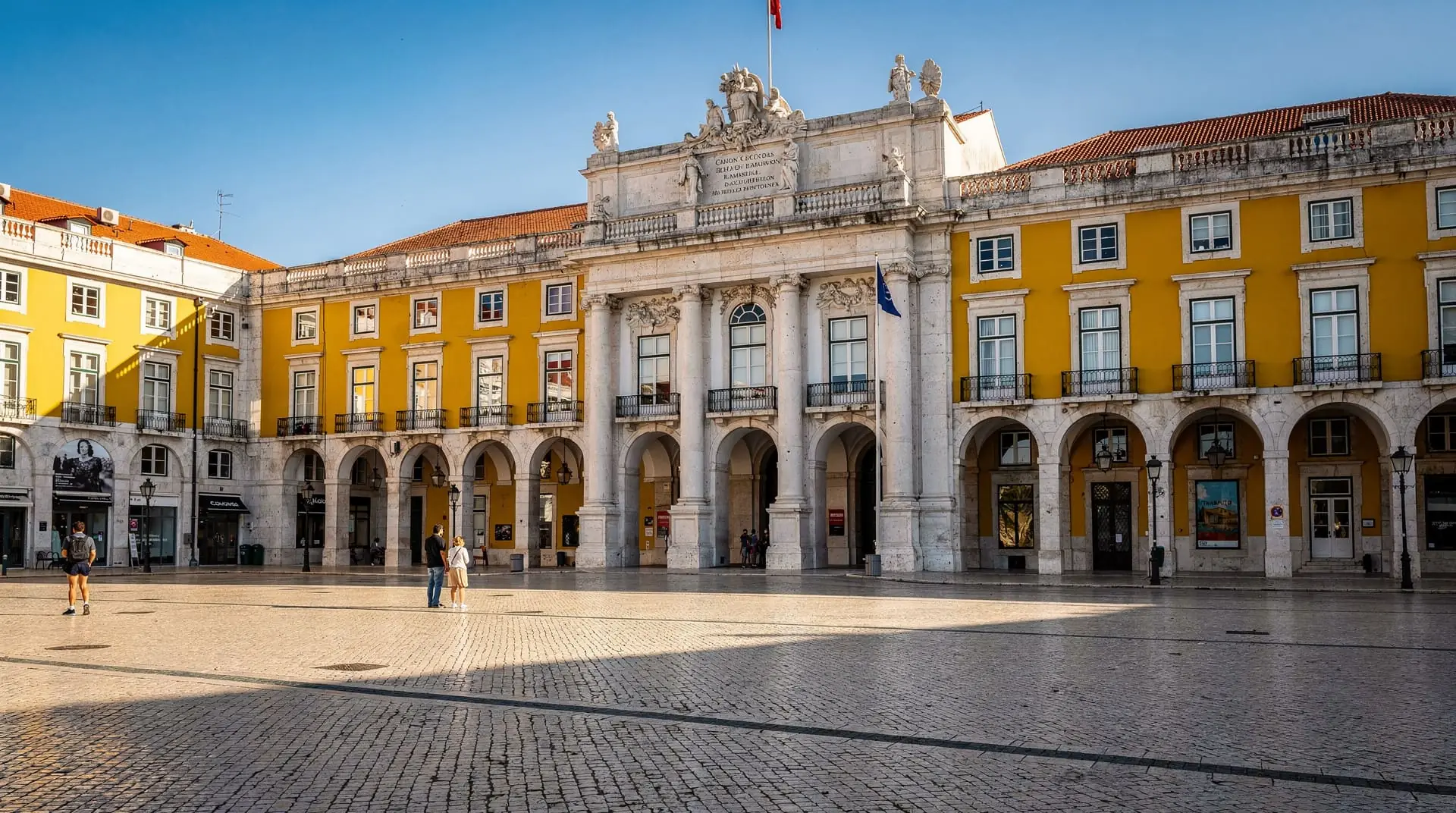
Lisbon Story Centre — the city's history at Praça do Comércio
Last reviewed
What is the Lisbon Story Centre and is it worth visiting?
The Lisboa Story Centre is a multimedia museum at Praça do Comércio that walks you through 2,000 years of Lisbon's history in about 60–75 minutes using models, films, and sound effects. It is aimed at first-time visitors wanting historical context before exploring the city. Entry is around €7.50. Worth it if you enjoy narrative history; skip it if you prefer to learn through walking.
Context before you walk
Lisbon is a city where the past is physically present in ways that reward orientation. The grid of Baixa below you was built by the Marquis of Pombal in the decade after the 1755 earthquake destroyed the medieval city. The castle on the hill above was a Moorish fortress before it was a Portuguese royal palace. The tiles on the church facade are 18th-century replacements for an interior shattered by the quake. Understanding these layers transforms what might look like a pleasant but conventional southern European city into something much more specific and interesting.
The Lisboa Story Centre at Praça do Comércio was designed to provide exactly this kind of orientation — a 60–75-minute walk-through experience that covers the founding of Lisbon (the Phoenician and Roman settlement at the mouth of the Tagus), the Moorish city, the Age of Discovery, the earthquake of 1755 and the Pombaline reconstruction, and the turbulent 20th century of monarchy, dictatorship, and the 1974 Carnation Revolution.
It does this through a combination of scale models, projection mapping, atmospheric sound design, and a deliberately theatrical spatial sequence. It is not a conventional museum of objects — there are no original artifacts. It is closer to an immersive exhibition or a well-funded tourism installation. The quality of production is good; the intellectual depth is limited; the emotional effect is real, particularly in the earthquake sequence.
| Where | Praça do Comércio 78-81, Baixa |
| Cost | Around €7.50 adults, around €4 reduced |
| Time needed | 60-75 minutes |
| Getting there | Metro Terreiro do Paço, or trams 15E/25E |
| Best time | Morning, before tour groups arrive midday |
What the visit covers
Room 1: Olisipo — the Roman city
The visit opens with a model of the Roman settlement of Olisipo, as the city was known before it became Lisbon. Archaeological finds from the Roman forum (under the current Baixa neighbourhood) showed a substantial administrative city with baths, temples, and a grid of streets that still partially underlies the modern urban layout. This section explains the geography that made Lisbon’s location strategically compelling: the broad Tagus estuary, the defensive hill (now the castle), the natural harbour.
Room 2: The Moorish city
From the 8th to the 12th century, Lisbon was a Moorish city called al-Ushbuna. The model of the Alfama as it would have appeared in the 10th century — dense, terraced, centred on the castle and the river — is one of the more evocative moments in the exhibition. The narrative here is careful to acknowledge both the sophistication of Moorish urban culture and the violence of the Christian reconquest (1147, when Alfonso Henriques took the city with the help of crusaders passing through on their way to the Holy Land).
Room 3: The Age of Discovery
This is the section where the Story Centre is on safest narrative ground: the 15th and 16th-century expansion of Portuguese maritime power is genuinely extraordinary, and the Story Centre presents it well. The scale model of Belém as it appeared when Vasco da Gama departed for India in 1498 shows the Jerónimos Monastery under construction, the tower at the water’s edge, and the fleet in the estuary. The sound design in this room — wind, waves, timber creaking — is effective.
Room 4: The earthquake of 1755
The centrepiece of the exhibition and the room most visitors remember. On 1 November 1755 — All Saints’ Day, when candles were burning in every church in the city — an earthquake of estimated magnitude 8.5–9 struck at 09:40 in the morning, followed by fires that burned for five days and a tsunami that struck the waterfront at 11:00. Between a third and a half of Lisbon’s population of 250,000 died. The Baixa neighbourhood was completely levelled.
The Story Centre’s earthquake room uses sound, light, and a shaking floor element to convey the experience. It is dramatically effective — even knowing what is coming, the audio-visual sequence has impact. Children find this room genuinely frightening; some younger children may be distressed.
Visiting with children: The Story Centre is generally a good fit for families — most rooms are visual and model-based rather than text-heavy, which holds children’s attention better than a conventional museum. The exception is the earthquake room: the combination of darkness, loud sound, and floor vibration is intense, and staff will let you skip through quickly if a child is uneasy. For a broader view of what else works well with young children in central Lisbon, see the Lisbon with kids guide.
Room 5: Pombaline Lisbon and the 20th century
The reconstruction under the Marquis of Pombal produced the rational, earthquake-resistant grid of Baixa that you walk through to reach the Story Centre. The exhibition explains Pombaline seismic engineering (wooden cage frames within stone walls — a surprisingly modern approach). The 20th century section covers the constitutional monarchy, the 1910 republic, the Estado Novo dictatorship under Salazar (1933–1974), and the Carnation Revolution of April 1974 that ended it. The final room opens onto a terrace overlooking Praça do Comércio.
Practical information
Address: Praça do Comércio 78–81, 1100-148 Lisbon (in the arcade on the north side of the square, facing the equestrian statue).
Opening hours: Daily 10:00 to 20:00 (last entry 19:00). Open seven days a week.
Entry: Around €7.50 for adults. Reduced rates (around €4) for students, seniors, and children aged 4–12. Under-4 free.
Time needed: 60–75 minutes for the full circuit at a comfortable pace.
Getting there: Praça do Comércio is in central Baixa, directly accessible from:
- Metro Terreiro do Paço (Blue line) — 2 minutes on foot.
- Trams 15E and 25E terminate at the square.
- Ferries from Cacilhas (Almada) arrive at the Cais do Sodré pier, a 10-minute walk west along the waterfront.
Book Lisboa Story Centre admission tickets online to skip the door queue, which can be slow on summer afternoons when tour groups arrive.
Combining with nearby sites
The Story Centre sits at the geographical and historical heart of Baixa — the ideal starting point for the Baixa-Chiado guide walk through the Pombaline grid north towards Rua Augusta and Chiado. The Rua Augusta Arch viewpoint is 100 metres away (separate entry, about €3).
The walking tour that combines the Augusta Arch and Lisboa Story Centre adds a local guide to contextualise what you have seen in the exhibition against the actual streets of Pombaline Lisbon — a smart sequence.
From Praça do Comércio, the Alfama is 20 minutes on foot uphill. The Aljube Resistance Museum near the Sé is a logical next stop for visitors interested in the 20th-century political history the Story Centre touches on in its final room — the Aljube provides the human scale that the exhibition lacks.
The São Jorge Castle is visible from Praça do Comércio on the hill above Alfama and takes about 30 minutes to walk to from the square. For a lazy alternative, take the Electrico 28 from Rua da Conceição (two streets north) — though read the tram 28 guide first for practical advice on queues and pickpocket risk.
Honest assessment
The Lisboa Story Centre is a good use of 75 minutes for first-time visitors with no prior knowledge of Portuguese history. The production values are high, the narrative is reasonably honest (it does not sanitise the violence of the reconquest or the colonial period), and the earthquake room is memorable.
It is not a museum in the scholarly sense and will not satisfy visitors who want to see original artifacts, read detailed archival material, or engage with historiographical complexity. For that, the Museu de Lisboa (in the Palácio Pimenta at Campo Grande) is the specialist institution.
For tourists staying only a few days in Lisbon, the Story Centre earns its entry fee by front-loading the historical context that makes the rest of the city more legible. If you are spending four or five days in Lisbon, consider doing the Story Centre on day one before heading into Alfama — it genuinely changes what you see.
See first-time Lisbon tips for a broader orientation, and use the day-trip matcher if you are planning excursions outside the city.
How it compares to other central Lisbon options
| Attraction | Format | Time | Best for |
|---|---|---|---|
| Lisboa Story Centre | Multimedia narrative | 60-75 min | First-time orientation |
| Aljube Resistance Museum | Object-based, personal | 60-90 min | 20th-century political history |
| Tile Museum | Object-based, decorative arts | 90-120 min | Portuguese ceramic art |
| National Pantheon | Building + views | 30-45 min | Architecture and a rooftop view |
If you only have time for one history-focused stop in Baixa before exploring on foot, the Story Centre is the fastest way to get useful context; the Aljube goes deeper but assumes more prior interest.
FAQ
Is the Lisboa Story Centre worth it if I only have one day in Lisbon? Yes, if you value context over efficiency — 60-75 minutes is a real chunk of a single day, but the orientation it gives to Baixa, Alfama and the earthquake’s role in shaping the city genuinely changes what you notice on foot afterward. If your day is tightly packed, consider it only if history interests you specifically.
Is the Story Centre suitable for young children? Mostly yes — the visual, model-based format works well for children, though the earthquake room (dark, loud, with floor vibration) can be intense for younger or more sensitive kids. Staff are used to moving families through that room quickly if needed.
Related guides
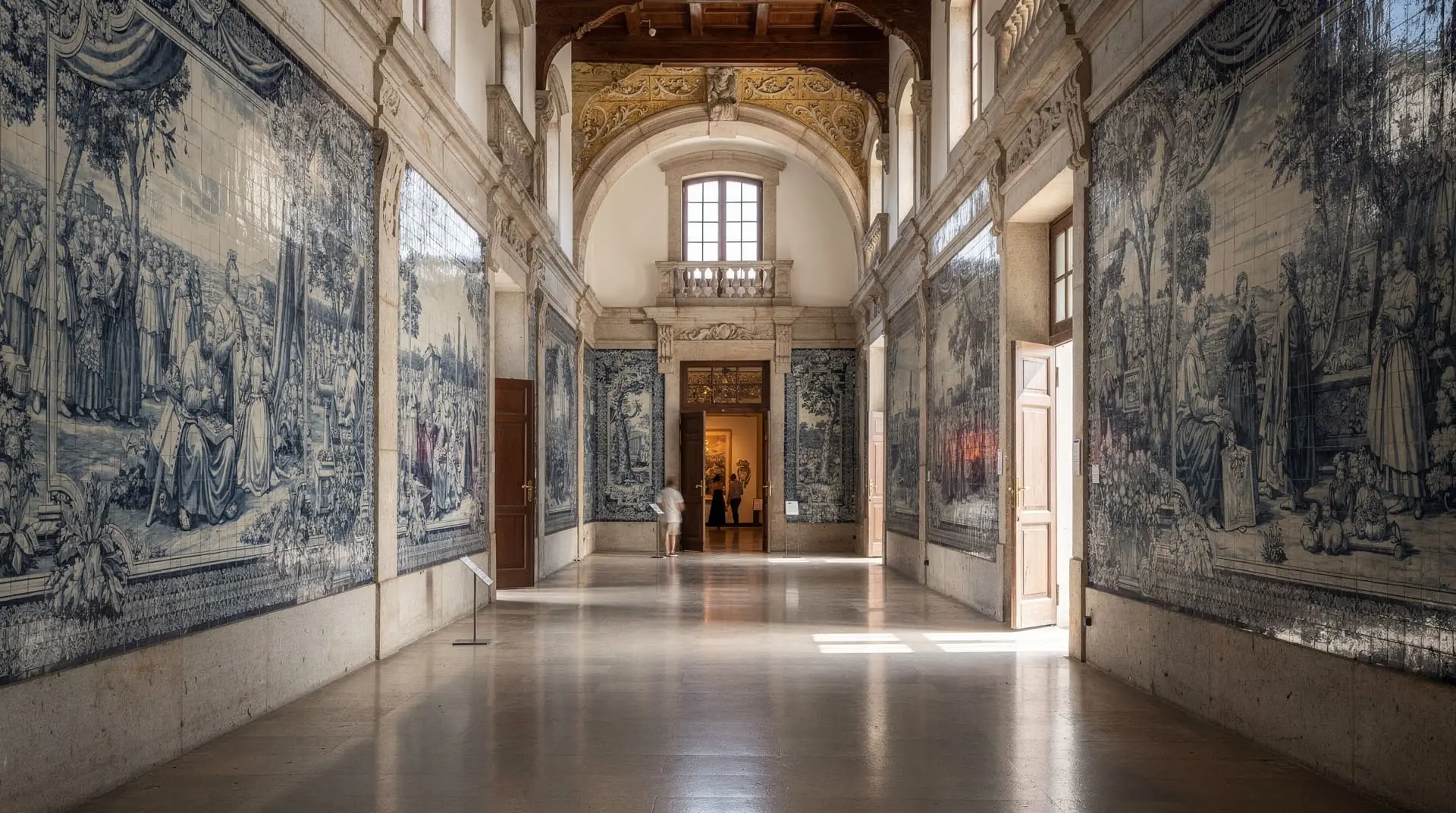
National Azulejo Museum — Lisbon's tile masterpiece
Guide to the National Tile Museum in Lisbon: the 23-metre Lisbon panorama tile panel, Madre de Deus convent, prices, how to get there from the centre.
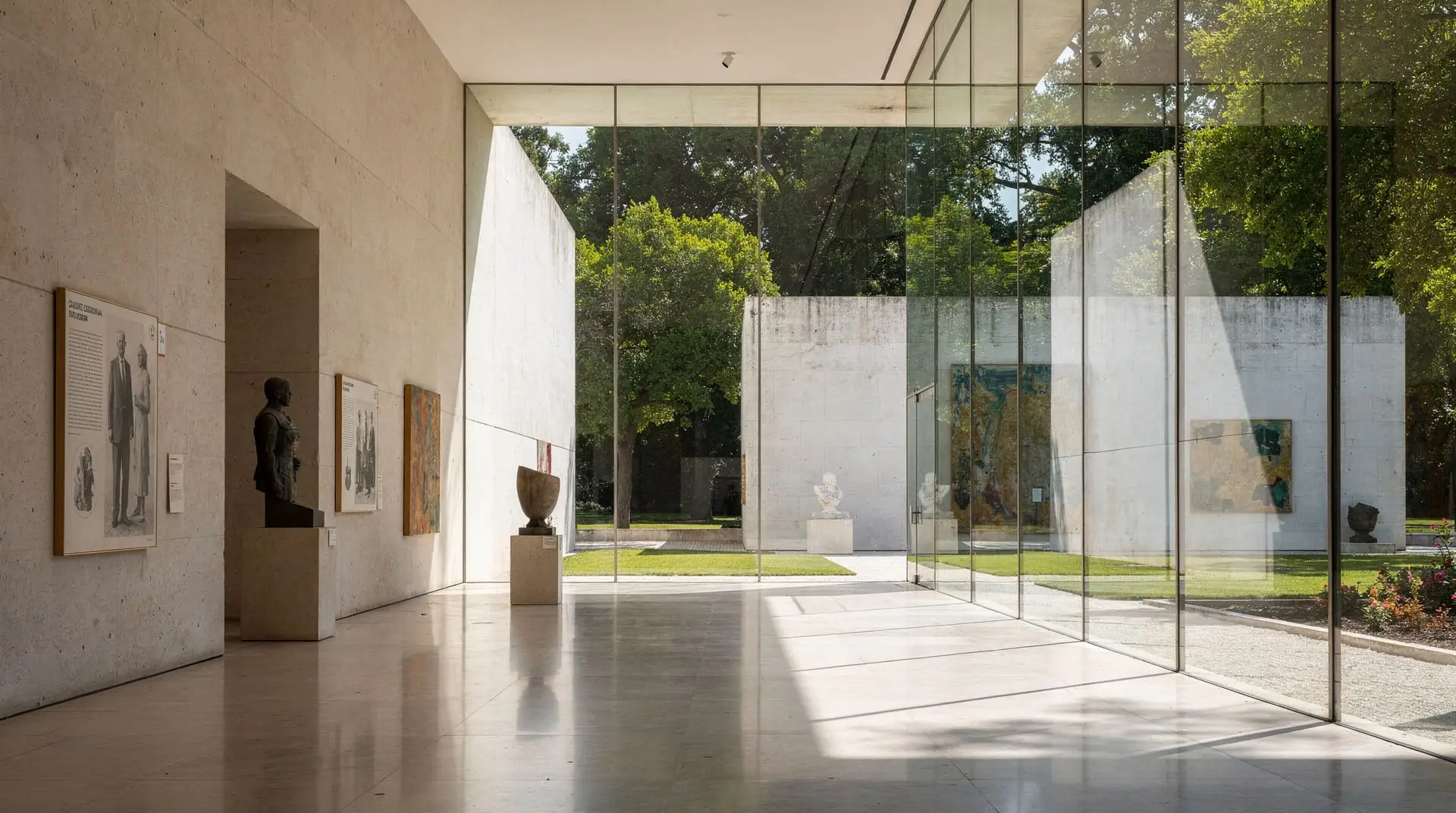
Calouste Gulbenkian Museum — the founder's collection
Complete guide to the Gulbenkian Founder's Collection in Lisbon: Egyptian antiquities to Art Nouveau, tranquil gardens, prices, and how to get there.
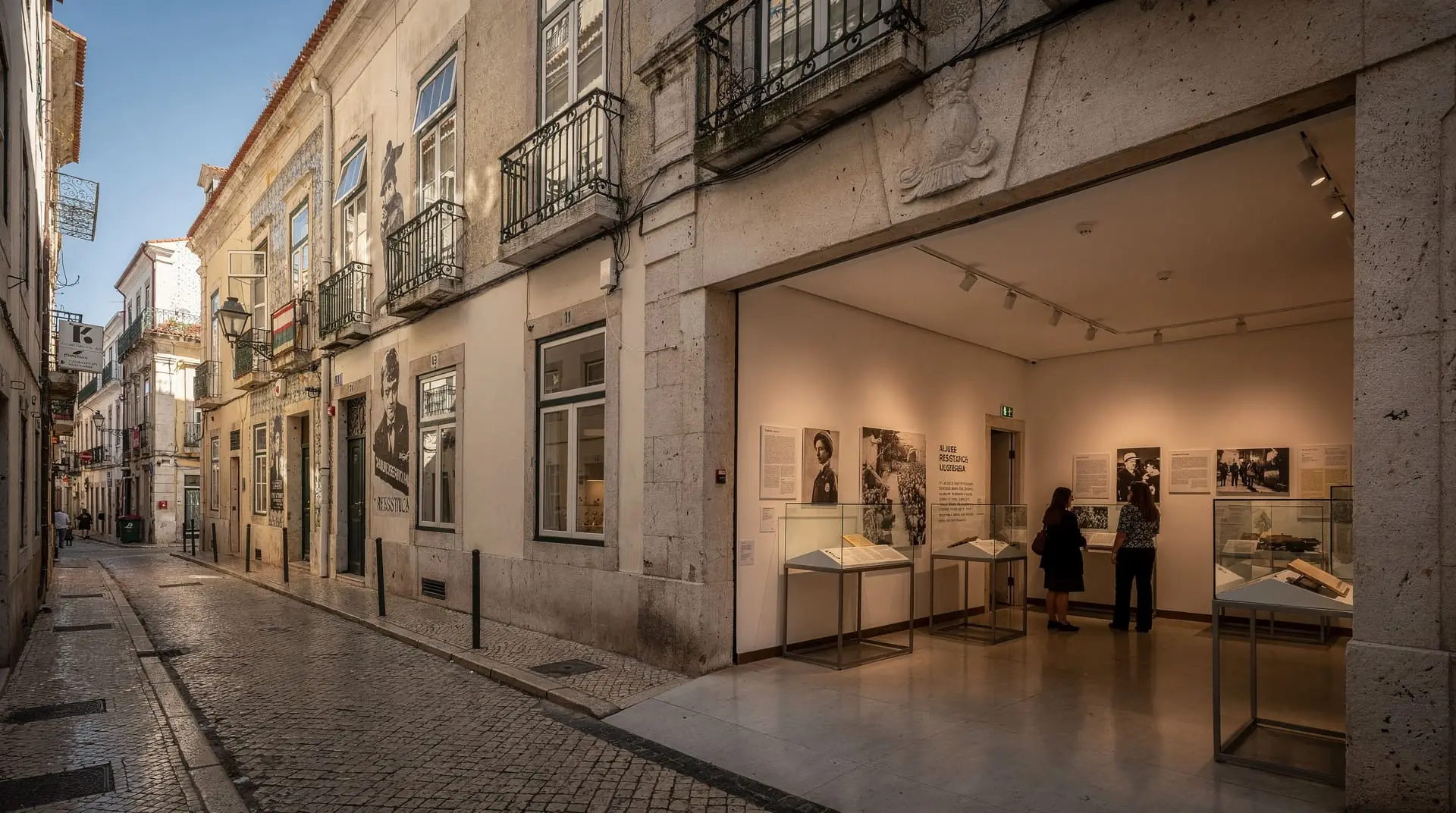
Aljube Resistance Museum — Lisbon's anti-fascist memorial
Guide to the Aljube Museum in Lisbon: the PIDE political prison near the Sé cathedral, the Estado Novo dictatorship, entry prices, and how to visit.
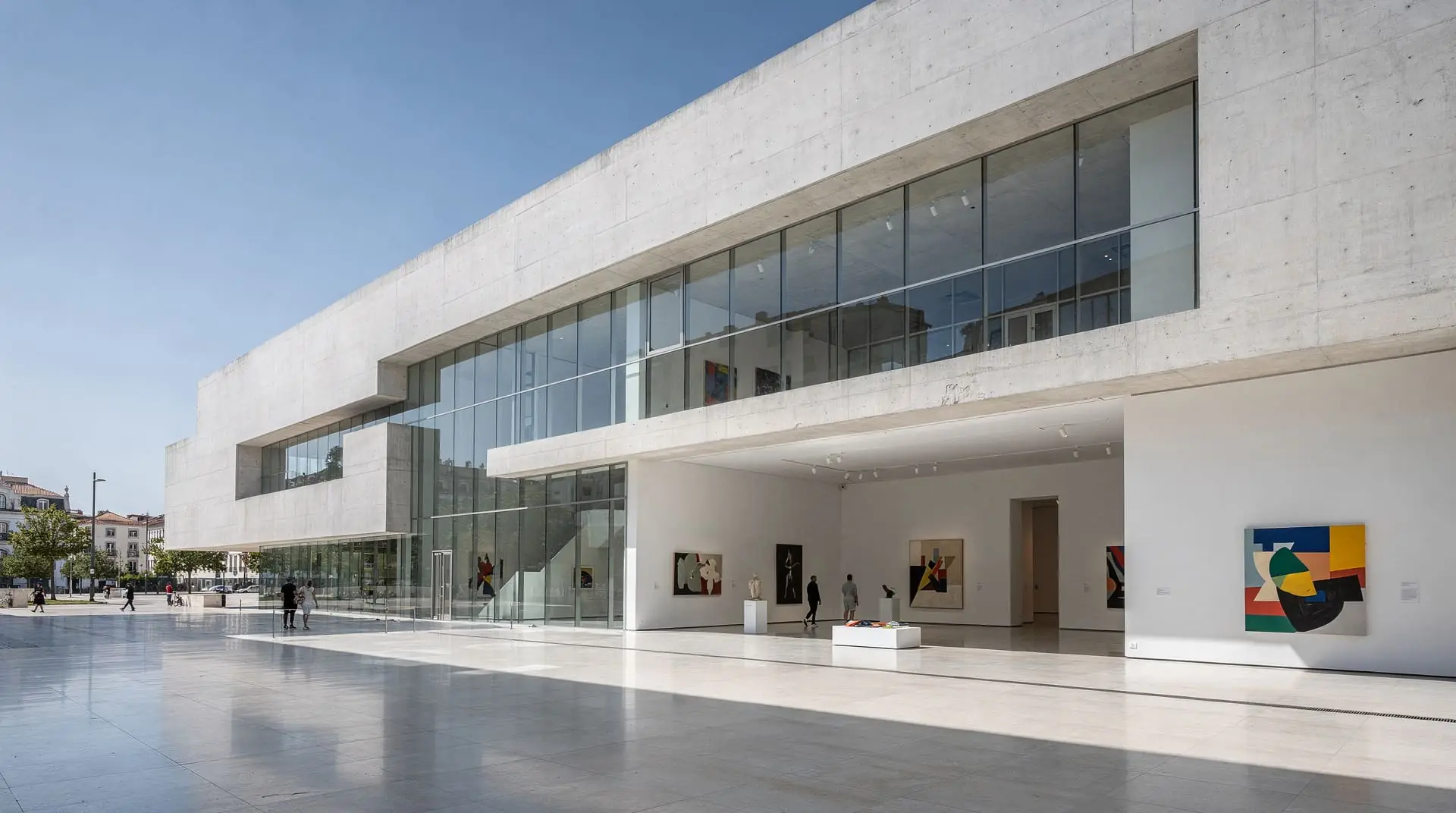
Berardo Collection at CCB — modern art in Belém
Guide to the Berardo Collection Museum in Belém: Picasso, Warhol, Bacon, free Saturdays, entry prices, and how to plan your visit alongside Jerónimos.
Ready to book? Top tours for this guide
We earn a small commission if you book through GetYourGuide — at no extra cost to you. Every tour is hand-picked and verified.

Lisbon: 48-Hour Hop-On-Hop-Off Bus Tour and Oceanarium Entry
Lisbon: MAAT Entry Ticket & Dolphin Watching Boat Tour
Lisbon: Alfama, Mouraria Walking Tour with Fado Night, Tapas
Lisbon: Hop-On Hop-Off Bus Tour
Lisbon: 1-or 2-Day Hop-On Hop-Off Bus Tour