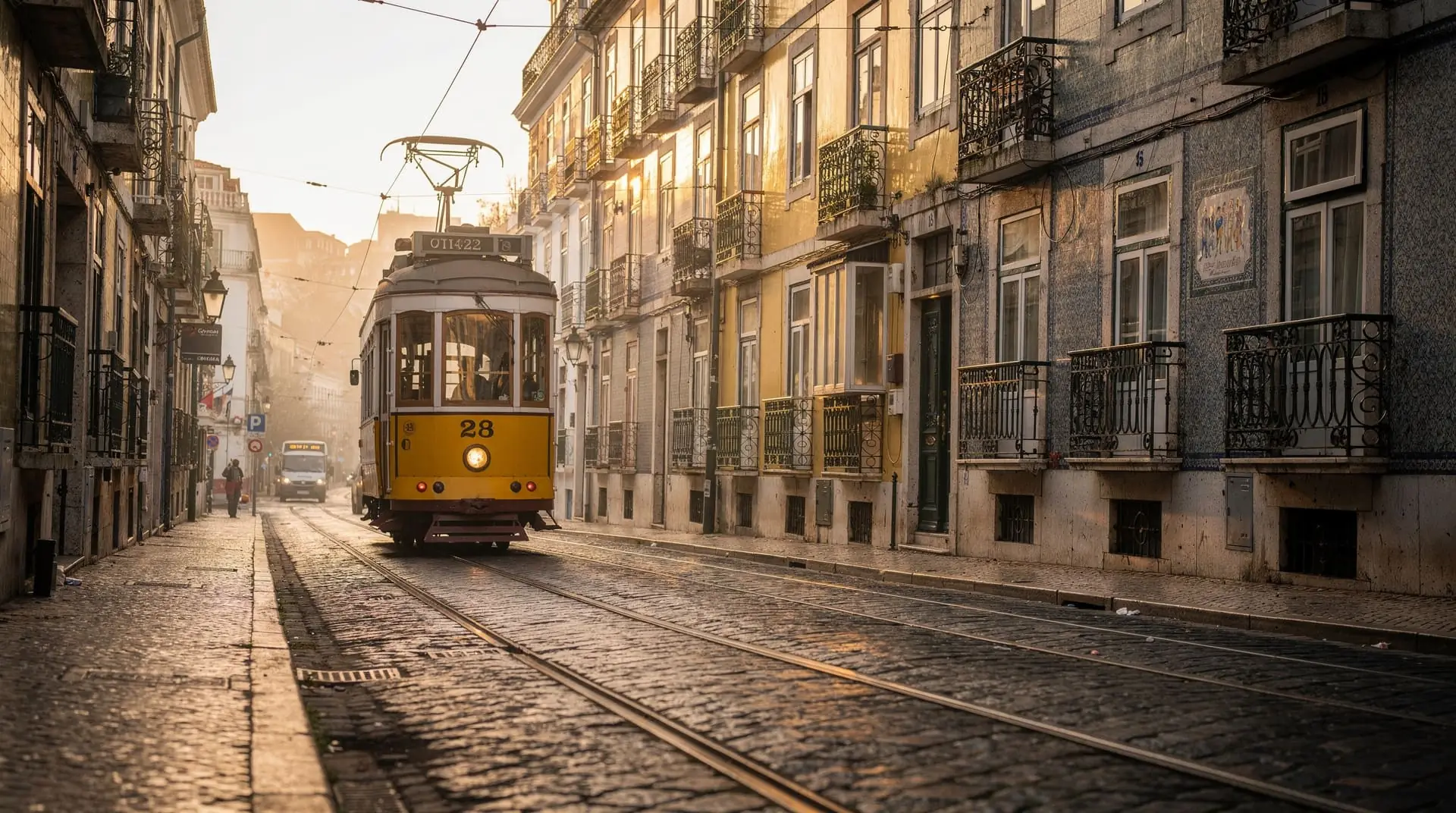
Tram 28 at dawn: the empty tram experience
Published
The alarm went off at 5:45. In September, Lisbon’s sunrise comes just before 7:00, which means if you want to ride tram 28 before it turns into a standing-room sardine tin, you have a window — a real one — between about 6:15 and 7:30. I’d been told this by three different Lisboetas and had not believed any of them until I tried it myself.
| Where | Martim Moniz to Campo de Ourique, full route |
| Cost | €1.80 per ride with Viva Viagem, or free with Lisboa Card |
| Time needed | 45-50 minutes end to end, plus stops |
| Best window | 6:00-7:30, before the tourist crowds arrive |
| Getting there | Metro to Martim Moniz (Green line) |
The plan
Tram 28 runs its full route from Martim Moniz (in the lower city, near Mouraria) down through the Baixa, up through Alfama, and terminates at Campo de Ourique in the west. Most tourists board somewhere in the middle — at Chiado or Largo Barão de Quintela — because those are the obvious stops. In the early morning, the whole logic of the route is different.
I walked from my apartment near Intendente down to Martim Moniz in the dark. The square, usually a hub of late-night activity and at other times a market, was empty except for a street cleaner and two pigeons. The tram depot is at the terminus — a wooden shed that belongs to another century — and the first tram of the day pulls out at 6:00.
I boarded at 6:15, paid with my Viva Viagem card (€1.80 per ride in 2022 — worth buying one rather than paying the driver cash), and found a seat by the window. There were four other passengers.
What you actually see
The thing about tram 28 that the photos don’t convey is the sound. The old Remodelado cars — built in the 1930s, restored but still thoroughly themselves — groan around corners with a metallic shriek that echoes off the tile-faced buildings. At 6:30 in the morning, with no traffic and no tourists, that sound fills the whole street.
The route from Martim Moniz climbs immediately, passing through the grid of streets below Mouraria. The Mouraria neighbourhood is barely stirring at this hour — a bakery with its lights on, a tabacaria opening its shutters. The tram slows to a near-stop at a corner so tight it seems geometrically impossible, then grinds through.
At Portas do Sol — the viewpoint stop — I got off for ten minutes. The Miradouro de Portas do Sol overlooks the Alfama rooftops and the Tagus in the distance, and at 6:45 in September the light was extraordinary: the sky still purple-grey above, the river catching the first orange. There were two people there. One was a woman with a dog. The other was me.
Back on the next tram (they run every ten to fifteen minutes in the early morning), continuing through Alfama. The tram passes Largo das Portas do Sol, dips into the tighter streets around Rua da Sé, then descends past the cathedral and into the Baixa flatlands.
A rough timeline, if you follow the same plan
| Time | Where you are |
|---|---|
| 5:45 | Alarm, walk to Martim Moniz |
| 6:00-6:15 | Board the first tram at the terminus |
| 6:30 | Climbing through Mouraria, near-empty streets |
| 6:45 | Portas do Sol viewpoint, ten-minute stop |
| 7:00-7:15 | Descending through Alfama toward the Baixa |
| 7:30 | Chiado — light changing, street cleaners out |
| 8:00+ | Campo de Ourique, coffee, tourists starting to appear on the earlier legs |
Times shift by season — in winter, sunrise is later, so the whole window slides forward by an hour or so.
The Chiado section
By the time the tram reaches Chiado — around Rua do Loreto and the stop near Largo do Calhariz — the light has fully changed. It’s now properly morning, and the street cleaners are out in force. Chiado’s azulejo-faced buildings glow pale blue in the early light. The Miradouro de São Pedro de Alcântara, just up from the stop, has its best light of the day at this exact moment.
I rode all the way to Campo de Ourique, which is a quiet residential district where nobody goes by accident. The market there opens early; I had a galão and a tosta mista at a café on Rua Coelho da Rocha for €3.20. The woman behind the counter asked in Portuguese if I was lost. I said no, I was riding the tram. She nodded in the manner of someone who has heard stranger explanations.
What to bring, and what to skip
Bring a Viva Viagem card loaded with a few euros — paying the driver cash costs more and slows boarding, which matters when the tram only stops briefly at empty-hour stops. Bring a light jacket regardless of season; even in September the tram interior is cool before the sun is properly up, and open windows add a breeze. Skip the tripod — the tram jolts constantly and a handheld phone or camera works better than you’d expect given the low light. Skip trying to photograph every stop; picking two or three (I’d suggest Portas do Sol and the Chiado run) gets better results than a frantic stop-to-stop scramble.
Why this actually works
Tram 28 by midday is a very different experience. Lines of thirty, forty, fifty people wait at the major stops. Inside, it’s shoulder-to-shoulder. Pickpockets are a genuine risk — the tram 28 safety guide covers this in detail, but the short version is: front pocket for your phone, clip your bag strap, stay aware at stops.
The dawn ride eliminates all of this. You ride in something approaching its natural state — unhurried, unhassled, the city going about its morning routine rather than performing for you.
The complete tram 28 guide covers the full route, all stops, and the history of the line. But if you want my single recommendation: set the alarm for 5:45, walk to Martim Moniz, and be on the first tram out. Bring a jacket — September mornings are cooler than you expect.
For a guided tram 28 experience with commentary, this walking and tram tour combines both wellThe alternative if early mornings aren’t your thing
If 6:00 is not a realistic proposition, there is another approach: take tram 28 in the final hour before its last run (around 22:00), when the tourist crowds have gone to dinner. It’s not as magical as dawn — the light is gone — but the tram is emptier, the city is lit up, and the route through Alfama by lamplight has its own quality entirely.
Either way, you’re choosing a different tram than the midday version. The midday version is fine — millions of people have enjoyed it, and I’m not going to be precious about it. But if you’re reading this blog, you probably want the real thing.
For the full Lisbon morning strategy — where to be at what time, which viewpoints hit their best light when — see our first-timer’s Lisbon guide and the one-day Lisbon itinerary.
Related guides

Overrated attractions in Lisbon: honest skip-if-tight list
The Santa Justa lift, Elevador da Bica, tram 28 mid-day — honest takes on which Lisbon attractions disappoint relative to their effort and cost.
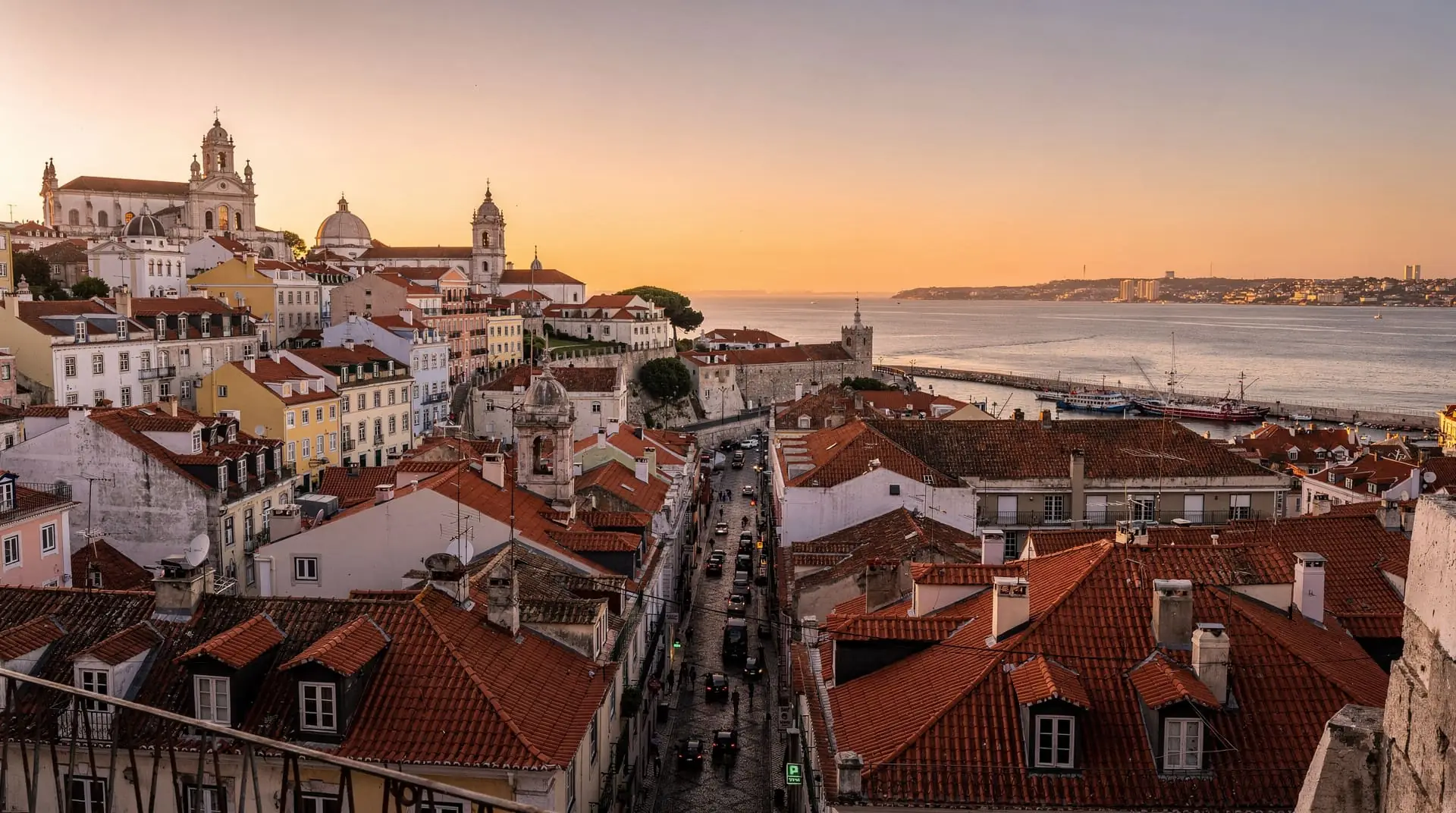
Miradouro das Portas do Sol — the iconic Alfama viewpoint
Guide to Portas do Sol viewpoint in Lisbon: tram 28 stop, Alfama rooftop views, ginjinha bars, best times to avoid crowds, and what to see nearby.
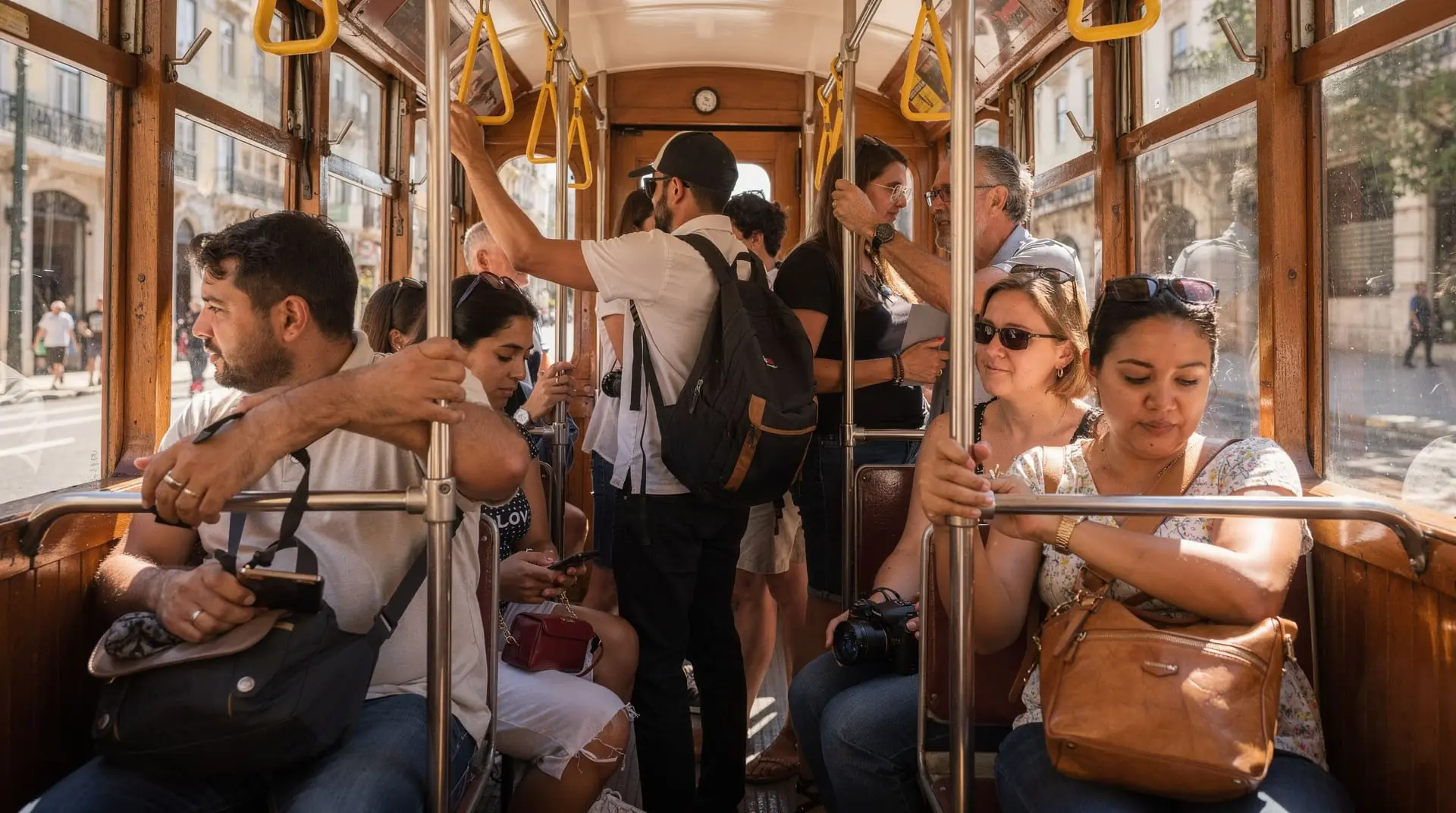
Tram 28 pickpockets: what actually happens and how to protect yourself
The honest guide to pickpocketing on Lisbon's tram 28: where it happens, how it works, realistic risk levels and exactly what to do to prevent it.
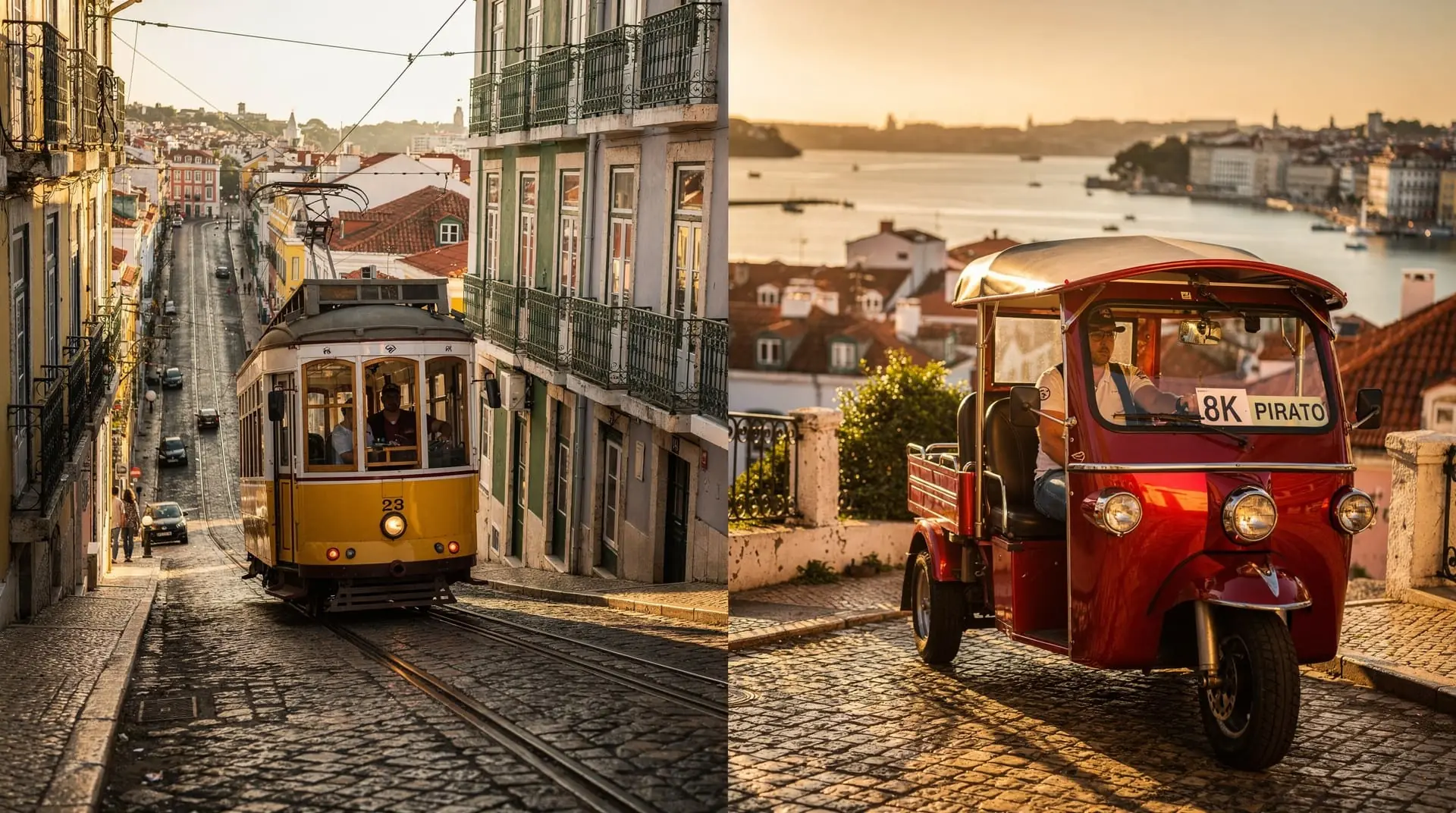
Tram 28 vs tuk-tuk in Lisbon: which is worth it?
Honest comparison: Tram 28 (cheap, iconic, pickpocket risk) vs tuk-tuk (flexible, guided, expensive). When each option makes sense.