Which fado house is actually good: five venues in one week
Published
I need to be clear about what I am not doing here: I am not naming specific venues and ranking them 1-5, because venue quality changes with the performers, and the fadista who moved me to something close to tears on a Tuesday night might not be performing on the Thursday you visit. What I can tell you is what I learned from attending five different types of fado venue over one week in August, and what that tells you about how to choose.
| Where | Alfama and Mouraria (traditional); Rossio/Baixa (tourist-facing) |
| Cost | €40-55/person dinner + show; free-ish at small vadio clubs (drinks only) |
| Time needed | An evening — shows typically start 20:30-21:30 |
| Booking | Recommended for Tier 1-2 venues; walk-in for vadio clubs |
| Best indicator | Ratio of Portuguese to tourists in the room |
The categories of fado venue in Lisbon
There is a spectrum, and understanding it is more useful than any specific recommendation.
Tier 1: Large dinner-show venues (100+ seats, fixed menu, tourist-facing)
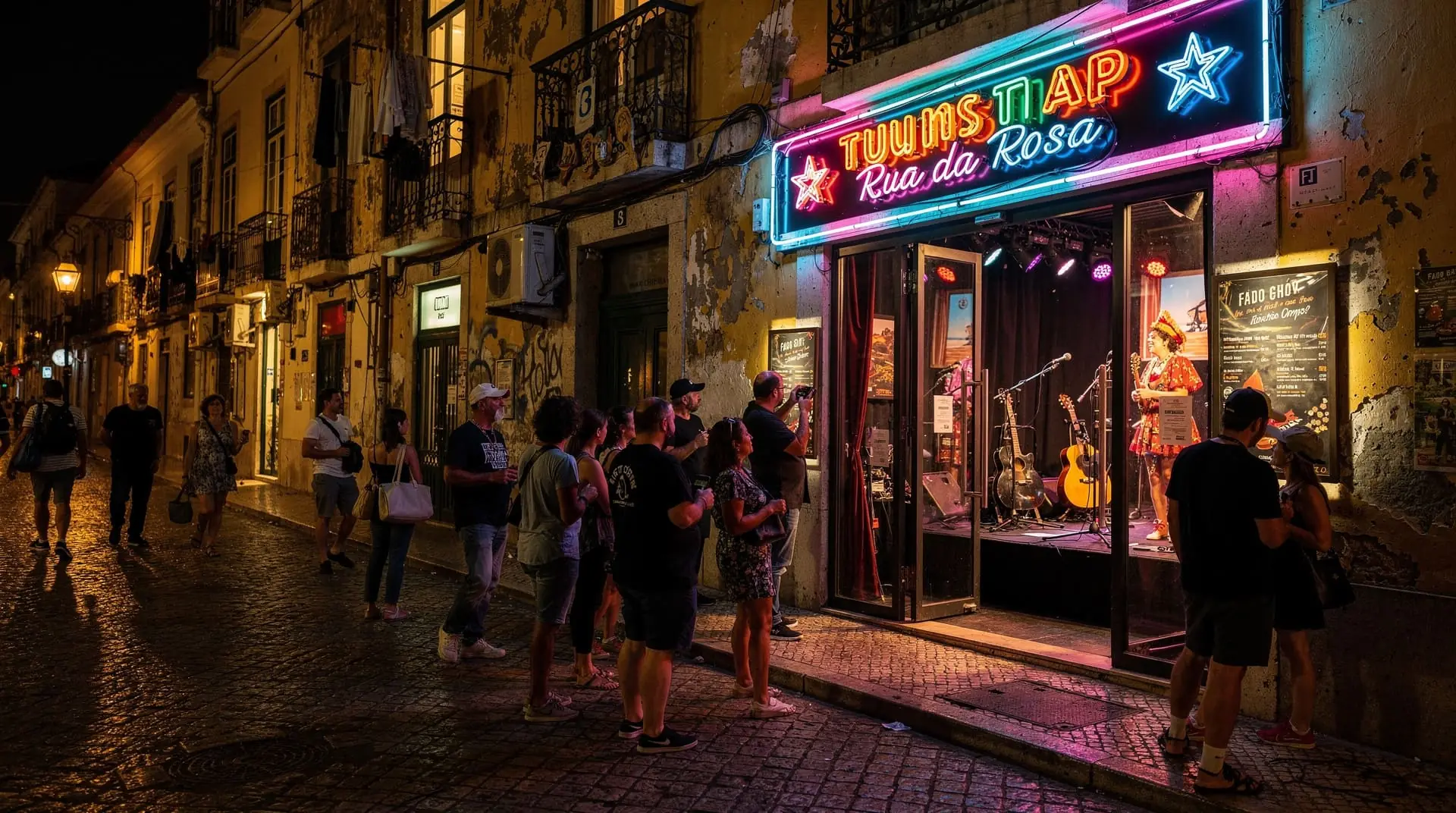
These are the fado operations near Rossio, on the main tourist drag, with laminated menus in eight languages and a sign outside showing which credit cards they accept. The food is Portuguese and edible. The fado performers are professional — this is important — and technically competent. But the atmosphere is a restaurant with a show attached to it, not a fado house in the traditional sense. The audience is almost entirely tourists. The performers are aware of this and perform accordingly.
I went to one of these venues on Monday (first night of my experiment). I paid €55 for dinner and the show. The food was adequate. The fadista was good technically. I felt almost nothing. The audience applauded at the wrong moments.
Tier 2: Mid-size Alfama fado houses (40-80 seats, dinner included or optional, mixed audience)
These are the venues most commonly recommended by decent guidebooks and by locals asked by tourists. They’re in Alfama, which helps, and they usually have a genuine connection to the neighbourhood’s fado history. The audiences are mixed — some tourists, some Portuguese families, some regulars. The performers may include established names and younger singers building reputation.
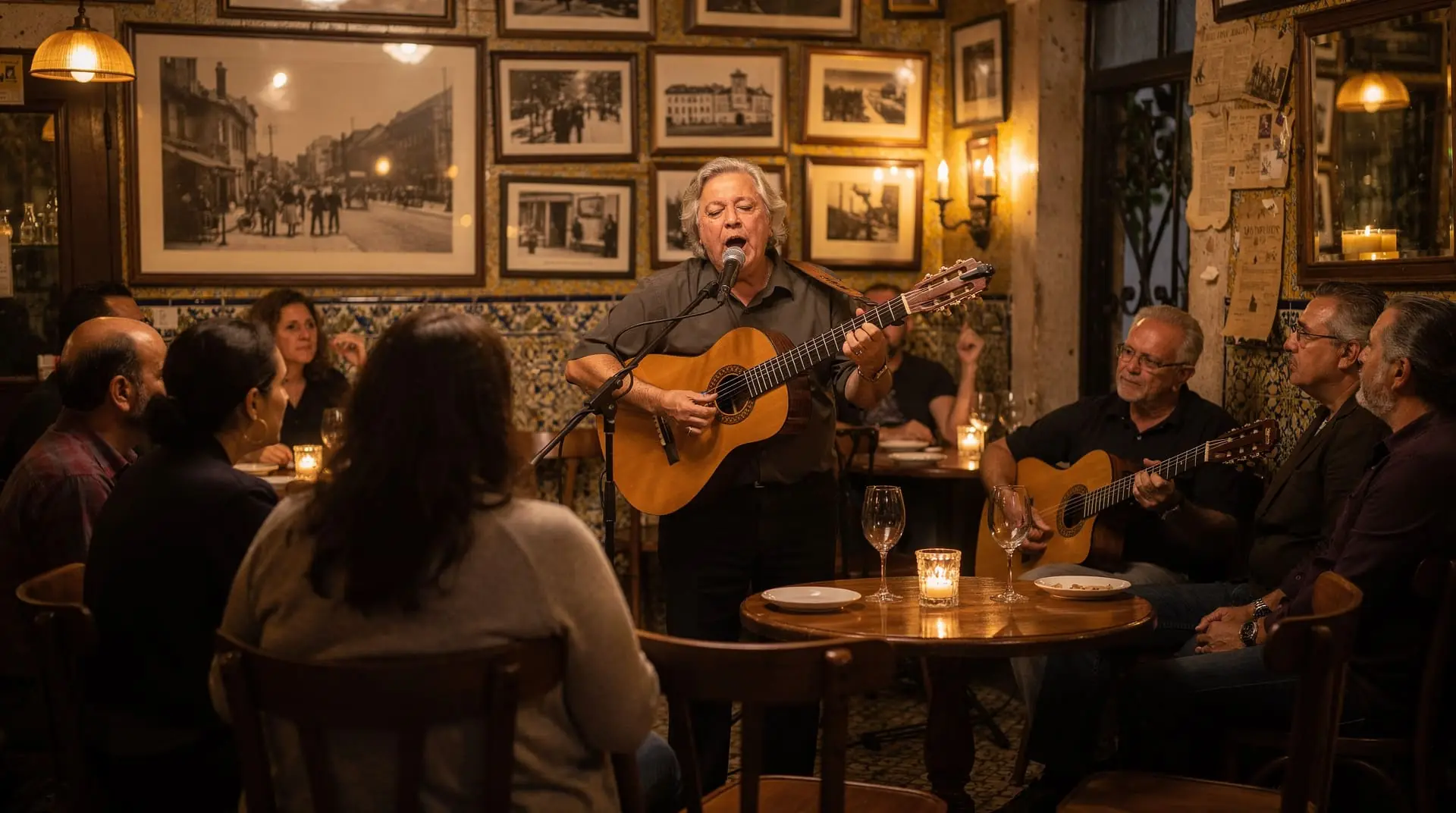
I attended two of these, on Tuesday and Thursday. Tuesday: the fadista was in her forties, sang fado corrido and fado menor with a guitar and bass guitar accompaniment, and at one point the whole room went silent in a way that didn’t feel organised. €40 for dinner and three performers. Thursday: slightly less memorable, though still genuinely good.
Book an evening at a typical fado house in Alfama — dinner plus three performers, smaller group than the tourist showsTier 3: Small fado vadio clubs (under 30 seats, no fixed menu, locals bring their own guitars)
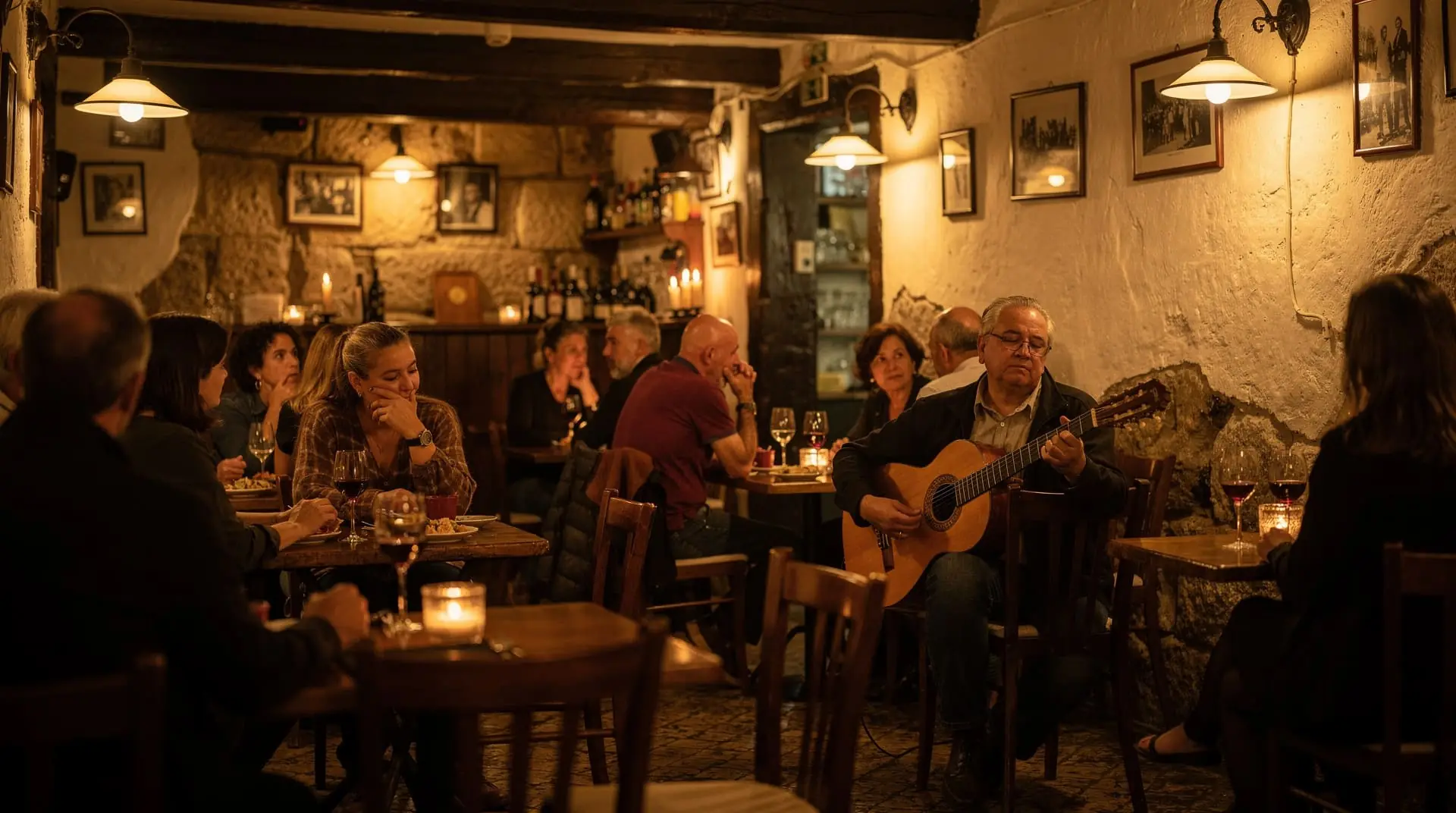
Fado vadio is fado in its original social form: amateur singers who may or may not have had a drink, performing for an audience of neighbours, friends, and occasional strangers. There are a handful of places in Alfama and Mouraria where this still happens — small rooms, bare tables, house wine, no menu beyond whatever’s chalked up.
Wednesday evening: I found my way to a spot recommended by a Lisboeta I met at a coffee bar. I am not naming it because places like this don’t need tourist attention; they need to remain what they are. The singing that night ranged from amateur to extraordinary — one woman, maybe sixty, stood and sang three songs without accompaniment (unusual) and the room did not make a sound for four minutes.
No tour operator will book you a table here. This is the point.
Tier 4: Contemporary fado in non-traditional venues
Friday: a contemporary fado performance at a cultural centre near Belém, featuring younger artists influenced by the tradition but working in a more self-consciously artistic mode. The venue was a concert hall. The audience was Portuguese-majority, younger, culturally engaged. The music was excellent and complex, but different from what I’d been hearing all week.
Not traditional fado, but genuinely interesting as a cultural form.
The four tiers at a glance
| Tier | Size | Audience | Price | Booking |
|---|---|---|---|---|
| 1: Dinner-show venues | 100+ seats | Almost entirely tourists | ~€55 | Book ahead |
| 2: Mid-size Alfama houses | 40-80 seats | Mixed tourists/locals | ~€40 | Book ahead |
| 3: Fado vadio clubs | Under 30 seats | Mostly locals | Drinks only, no cover | Walk in |
| 4: Contemporary venues | Concert hall | Portuguese-majority, younger | Ticketed | Book ahead |
If you only have one night in Lisbon and want the best odds of an authentic evening without needing a local contact, Tier 2 recommendations or a proper fado dinner show comparison are the practical starting points — Tier 3 genuinely requires a local tip-off, which is most of the reason it stays good.
What I learned about choosing
The best indicator of a fado venue’s quality is not the price, not the location on the map, and not how many reviews it has. It is the ratio of Portuguese to non-Portuguese in the audience.
A fado house that Portuguese people attend — because they enjoy the music, not because they’re entertaining visiting relatives who want to tick a box — will be better than one that exists entirely for tourism. Ask the staff who tends to come. Ask your hotel’s actual local staff (not the concierge working from a commission arrangement). Read in Portuguese on local forums.
The fado vadio tour with Portuguese tapas reaches smaller, more authentic venues than the main dinner showsThe full fado house comparison guide breaks down specific venue types in Alfama and how to find the right fit. The fado in Alfama guide covers the history and what to listen for. And if you want to understand why fado sounds the way it does, the history of fado is genuinely worth reading before you go.
The Saturday test
On Saturday I went back to the Tier 2 venue I’d attended on Tuesday. The same house, but a Saturday night — a different fadista, a fuller room, a different energy. The performance was fine but not at Tuesday’s level. Same house, same quality standards, different night.
This is the variable that no review can account for: who is singing on the specific night you go. The best strategy is to attend with reasonable expectations (fado houses in Alfama are generally more reliable than the tourist-facing venues on the main drag), go to a house with a genuine Alfama connection, and accept that sometimes you’ll hear something transcendent and sometimes you’ll hear a very good professional doing their job.
Both are worth experiencing. One is unforgettable.
If you’re planning a romantic evening around it
Fado, done right, is one of the better romantic evenings Lisbon offers — a Tier 2 Alfama house with dinner, wine, and three fadistas has the right combination of intimacy and spectacle without the theatre-tour feel of Tier 1. Pair it with a walk through Alfama’s lanes beforehand, when the neighbourhood is at its most atmospheric. The Lisbon romantic itinerary builds a full evening (or weekend) around this kind of pacing if you want the fuller plan, and the 48 hours in Alfama guide covers how to spend the rest of a stay in the neighbourhood around the fado houses themselves.
Related guides
Fado houses compared: which one should you book?
Side-by-side comparison of Lisbon's main fado venues: atmosphere, price, quality and tourist-trap risk. Honest picks for every budget.
Fake fado in Lisbon: how to spot it and where the real thing is
How to identify tourist-trap fado near Rossio and Restauradores — location, pushy doormen, set menus. Where authentic fado actually happens in Lisbon.
National Pantheon Lisbon: the Santa Engrácia dome and rooftop views
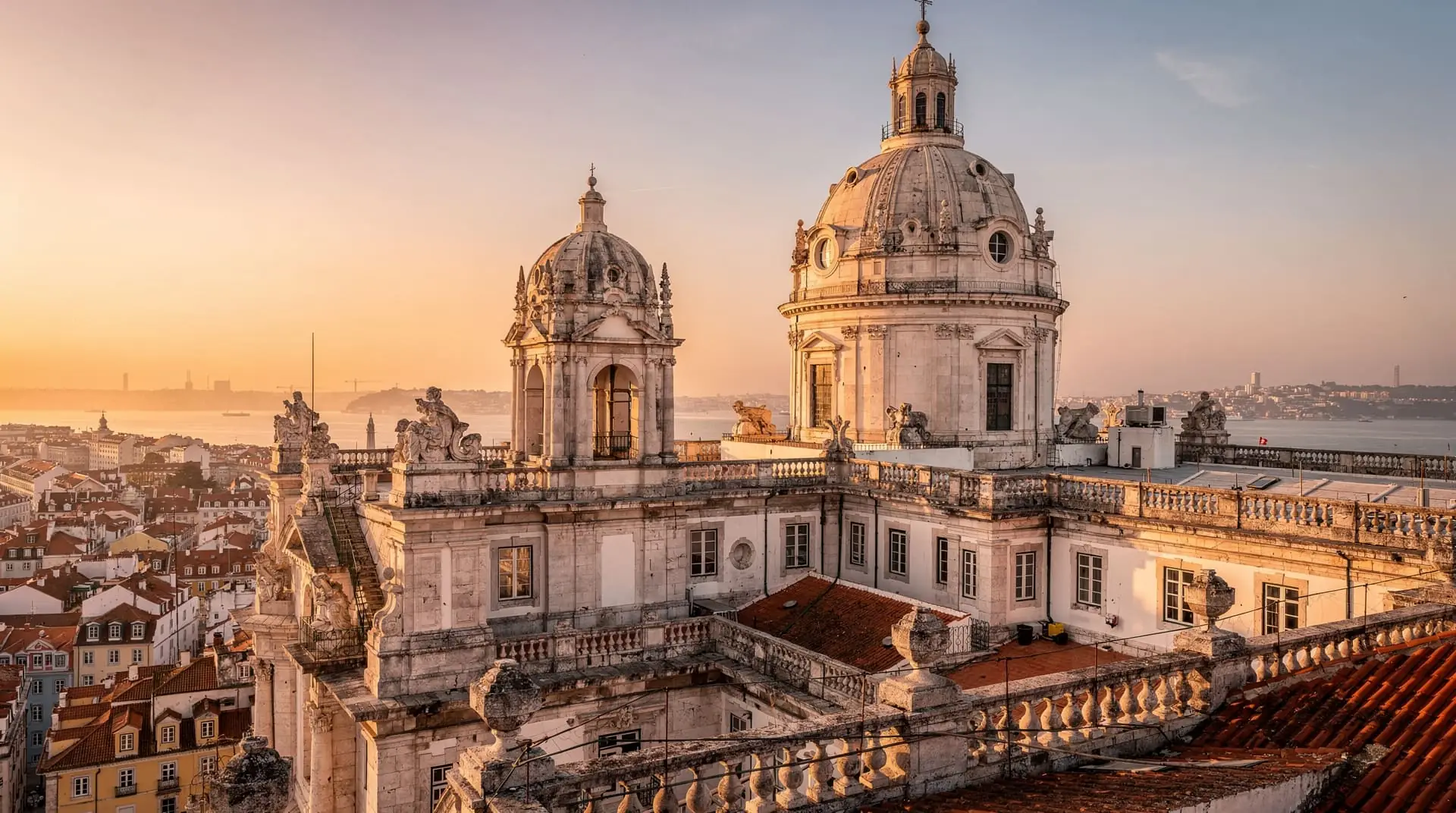
Lisbon's National Pantheon — Amália Rodrigues' tomb, the baroque dome, rooftop views over Alfama, and combining with the Feira da Ladra flea market.
What to do in Alfama: the complete walking guide
Explore Alfama on foot: fado houses, the Sé cathedral, miradouros, and tile-covered alleys. Real routes, honest tips, and no tourist traps.