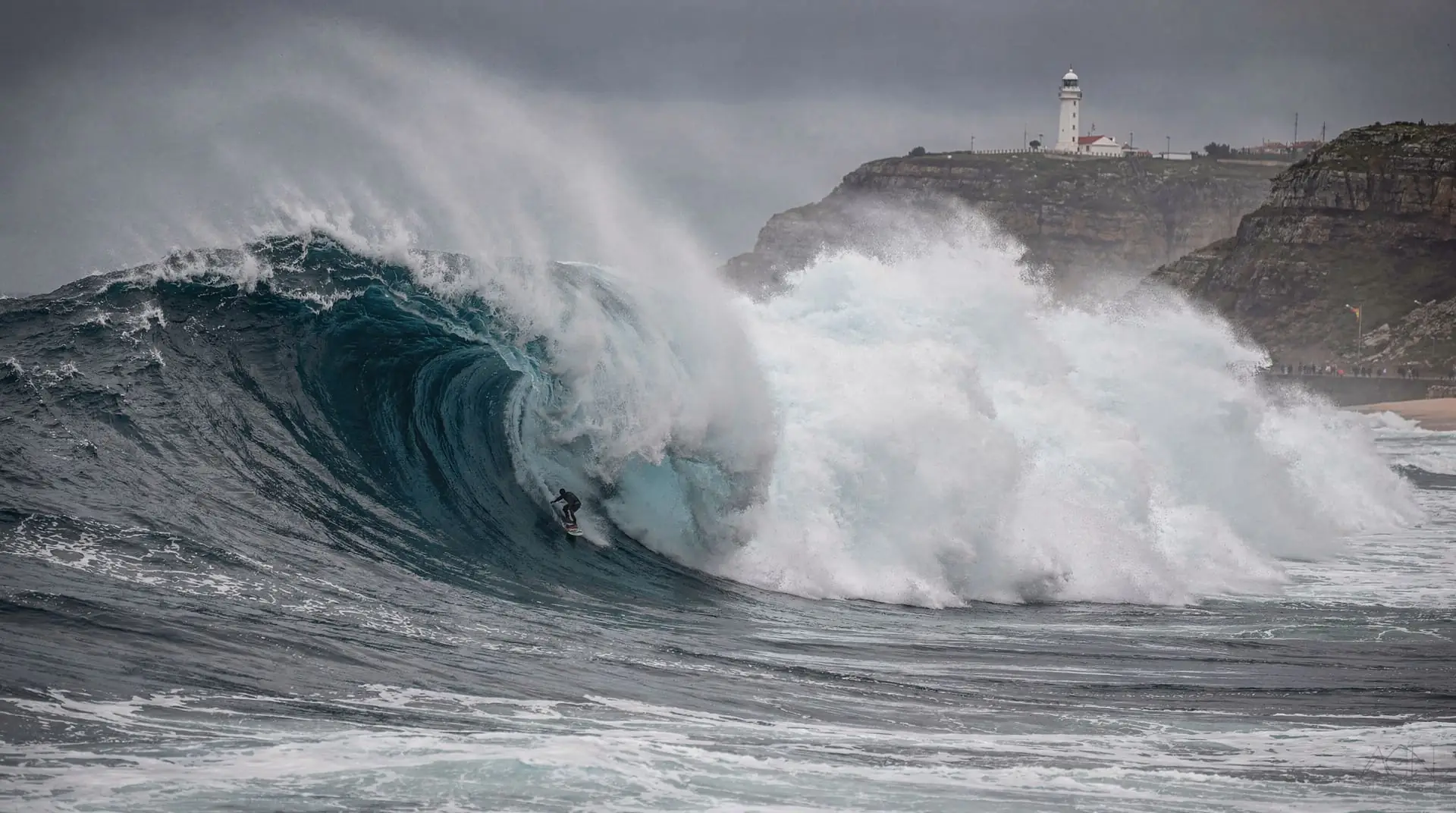
Winter waves at Nazaré: chasing big-wave season at Praia do Norte
Published
The WhatsApp message arrived at 7:15 on a December Tuesday: “North swell incoming, Praia do Norte could go XL tomorrow.” I had been loosely tracking big-wave season since October and this was the first alert that felt serious. I booked a bus ticket.
| Where | Praia do Norte, Nazaré — about 120km north of Lisbon |
| Cost | Bus €11-14 each way; the cliff viewpoint itself is free |
| Time needed | Full day from Lisbon (2hrs each way by bus) |
| Best time | November through February for big-wave chances |
| Getting there | Bus from Sete Rios, or a guided day tour |
Understanding what you’re actually chasing
The Nazaré big-wave phenomenon is real and genuinely extraordinary. The Nazaré Canyon — a submarine canyon 5 kilometres deep and 227 kilometres long — funnels Atlantic swell energy toward the beach in a way that produces waves significantly larger than the surrounding coastline would otherwise receive. In the right conditions, Praia do Norte sees waves that reach 20-30 metres in height, measured from trough to crest. The record, set by Rodrigo Koxa in 2017-18, stands at 24.38 metres.
This happens approximately 10-20 times per winter season, when swells from North Atlantic storms align with the canyon geometry. The peak months are November through February. It is not something you can guarantee seeing on any given day, and this is the honest thing anyone planning a winter trip to Nazaré needs to know.
The logistics from Lisbon
Bus from Sete Rios bus terminal (Lisbon) to Nazaré: approximately 2 hours, €11-14 depending on operator, roughly 5-6 departures per day. Rede Expressos is the main operator. Alternatively, the Nazaré and Óbidos day trips from Lisbon typically include coach transfer.
From Lisbon: guided big wave tour to Nazaré combining the cliffs and medieval ÓbidosDriving: 120 kilometres via A8 motorway, about 1 hour 20 minutes. Parking in Nazaré village is limited in summer; in December it’s fine.
I arrived by bus at 10:30. The Atlantic was visible before the bus stopped — white caps visible from the road above town, which is a promising sign.
For a full comparison of Nazaré against Lisbon’s other coastal and inland day trips, the which day trip from Lisbon guide and the day trip transport guide cover how this one stacks up logistically against Sintra, Cascais, or Óbidos alone.
Praia do Norte: the spot
Praia do Norte is not the main Nazaré beach (which is the broad, south-facing arc in front of the village). It’s north of the Sitio promontory — accessible either by walking around the headland (20-25 minutes) or driving around and parking at the lot above the beach.
The big-wave spot is best viewed from the Sitio cliff, 110 metres above the water. In December I stood on the observation platform with maybe 150 other people — mostly Portuguese, a few surfers watching and waiting, some families with children, some people clearly, like me, who had read about this and come to see.
The waves that day: big, but not historic. The swell was 5-6 metres out at sea, translating to waves I estimated at 10-15 metres on the face at Praia do Norte. No professional surfers were in the water — the tow-in teams that tackle the truly giant swells only launch when conditions reach a different level. But the waves were extraordinary by any normal measure. Each set arrived with a sound audible from the cliff — a deep, low boom — and the spray fountained thirty or forty metres in the air.
What to do if the waves aren’t big
This is the realistic scenario: you go to Nazaré in December and the waves are just… beach waves. Atlantic winter beach waves are still bigger than most people have seen, but it’s not the towering-walls-of-water phenomenon.
In that case, Nazaré the village is worth a half-day on its own merits. The old town up on the Sitio plateau (reached by funicular or a steep walk) has a 17th-century fortified chapel and one of the strangest fish-drying areas I’ve encountered — you can watch traditional dried fish preparation in the lanes around the church. The main beach is backed by coloured houses in a style specific to Nazaré, painted in bright primary colours that were used in the past to identify which families owned which fishing boats.
Combining with Óbidos — a medieval walled village 30 kilometres south — makes excellent logistical sense. The Óbidos day trip guide covers the village in detail. A single day can cover both: Nazaré in the morning, Óbidos in the afternoon, bus back to Lisbon.
If you’re a surfer rather than a spectator
Praia do Norte itself is not a beginner or intermediate surf spot in big-wave season — the tow-in teams working the giant swells are specialists with jet-ski support, not a scene visiting surfers join. But Nazaré’s main town beach and nearby spots have far more approachable waves outside the biggest swell windows, and the wider region — from Ericeira to Peniche — has Portugal’s best-known learner and intermediate breaks. The surfing near Lisbon guide covers where to actually get in the water, as distinct from where to watch.
Season by month: your odds
| Month | Big-wave odds | Village atmosphere |
|---|---|---|
| November | Building — first big swells arrive | Quiet, off-season prices |
| December-January | Peak — most reliable big-wave months | Cold but clear days common |
| February | Still strong, tapering by late month | Quiet |
| March-October | Low — the canyon effect needs winter storms | Warmer, better for the beach/village visit alone |
The honest probability assessment
Based on the available meteorological data and typical Atlantic storm patterns, a visitor spending one week in Nazaré between November and February has roughly a 40-60% chance of experiencing waves at or above the 15-metre threshold (where the big-wave surf teams typically mobilise). The 20+ metre swells that generate the record-breaking footage occur perhaps 4-8 times per season.
If you want to maximise your chances, follow the MagicSeaweed or Windguru forecasts for Nazaré, look for North Atlantic lows tracking east between Iceland and Scotland, and be prepared to move quickly. The big swells are typically forecastable 3-5 days out.
Half-day big wave tour to Praia do Norte from Lisbon — good for combining with Óbidos in the afternoonWhat I can tell you from December 3rd: even without a historic swell, standing on the Sitio cliff above Praia do Norte in winter and watching the Atlantic arrive is worth the two-hour bus journey. The scale is correct. The sound is real. And if you time it right, you see something genuinely unprecedented.
The Nazaré day trip guide has the complete logistics and what-to-see in the village, and the Nazaré destination guide gives the broader neighbourhood picture beyond a single big-wave-chasing day. For winter day trips in general — what works and what doesn’t in November-February — see Lisbon in winter.
Related guides
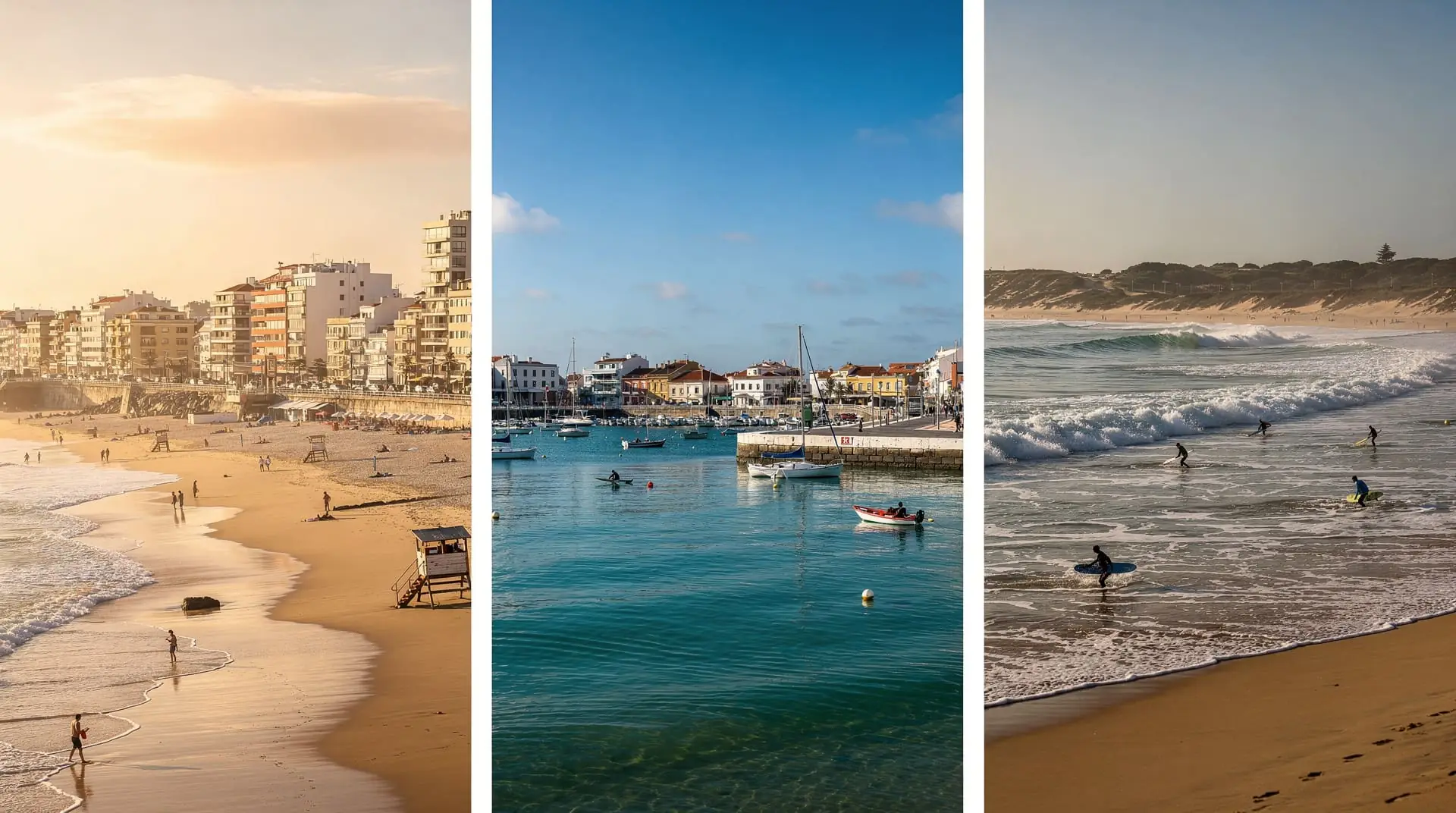
Best beaches near Lisbon — ranked by type and access
The 6 best beaches near Lisbon ranked: Caparica, Carcavelos, Cascais, Guincho, Arrábida, Comporta. By train, bus, and car with honest tips.
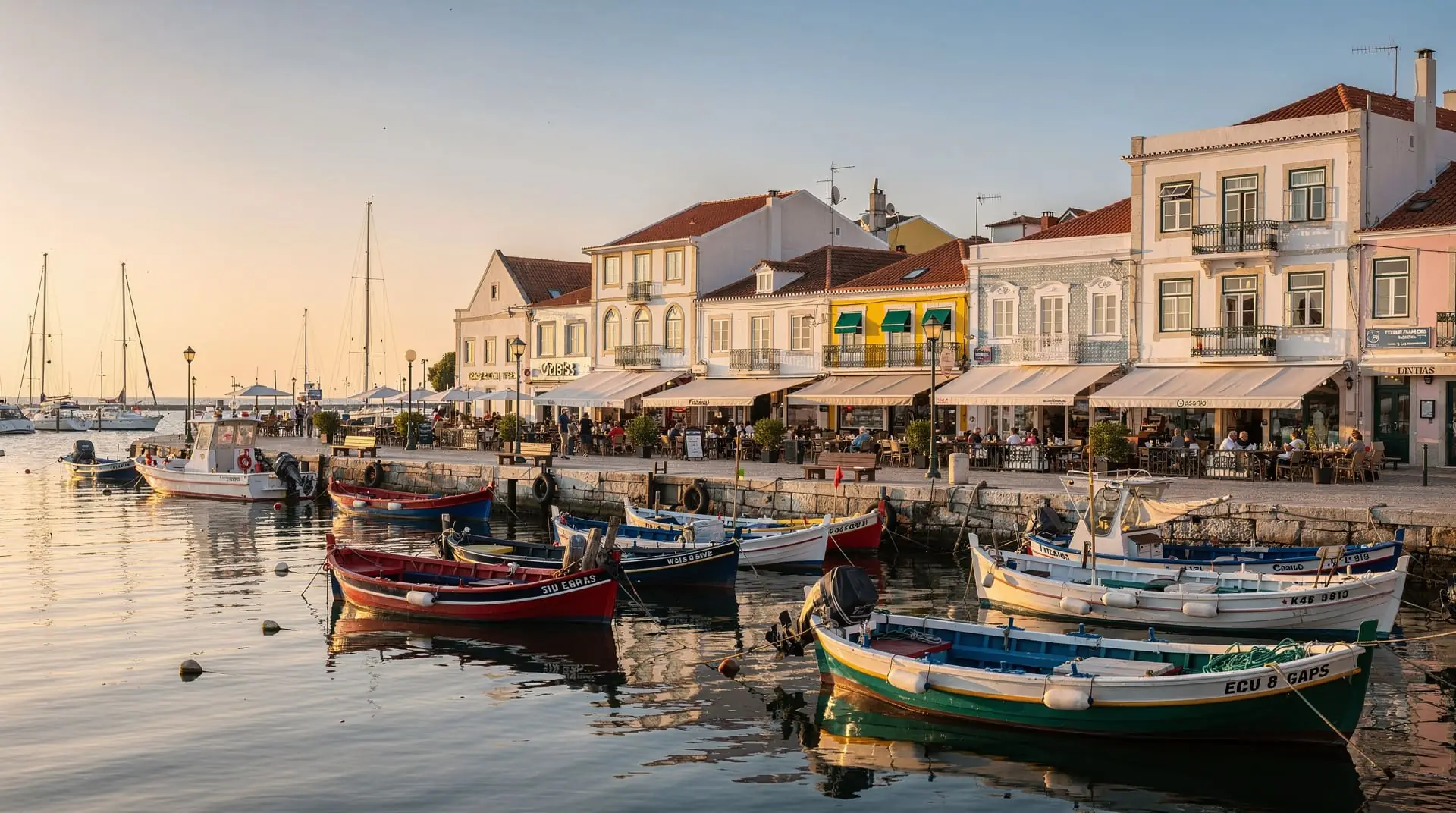
Cascais day trip from Lisbon: train, marina, Boca do Inferno and Guincho beach
How to do a Cascais day trip from Lisbon — 40-min train from Cais do Sodré, marina walk, Boca do Inferno, Guincho lunch, and the best time to return.

Sintra day trip from Lisbon: the definitive plan from the 7am train to sunset
The honest Sintra day trip guide: 7am Rossio train, Pena Palace first, Regaleira after lunch, ticket stack reality, crowds, and what to skip.
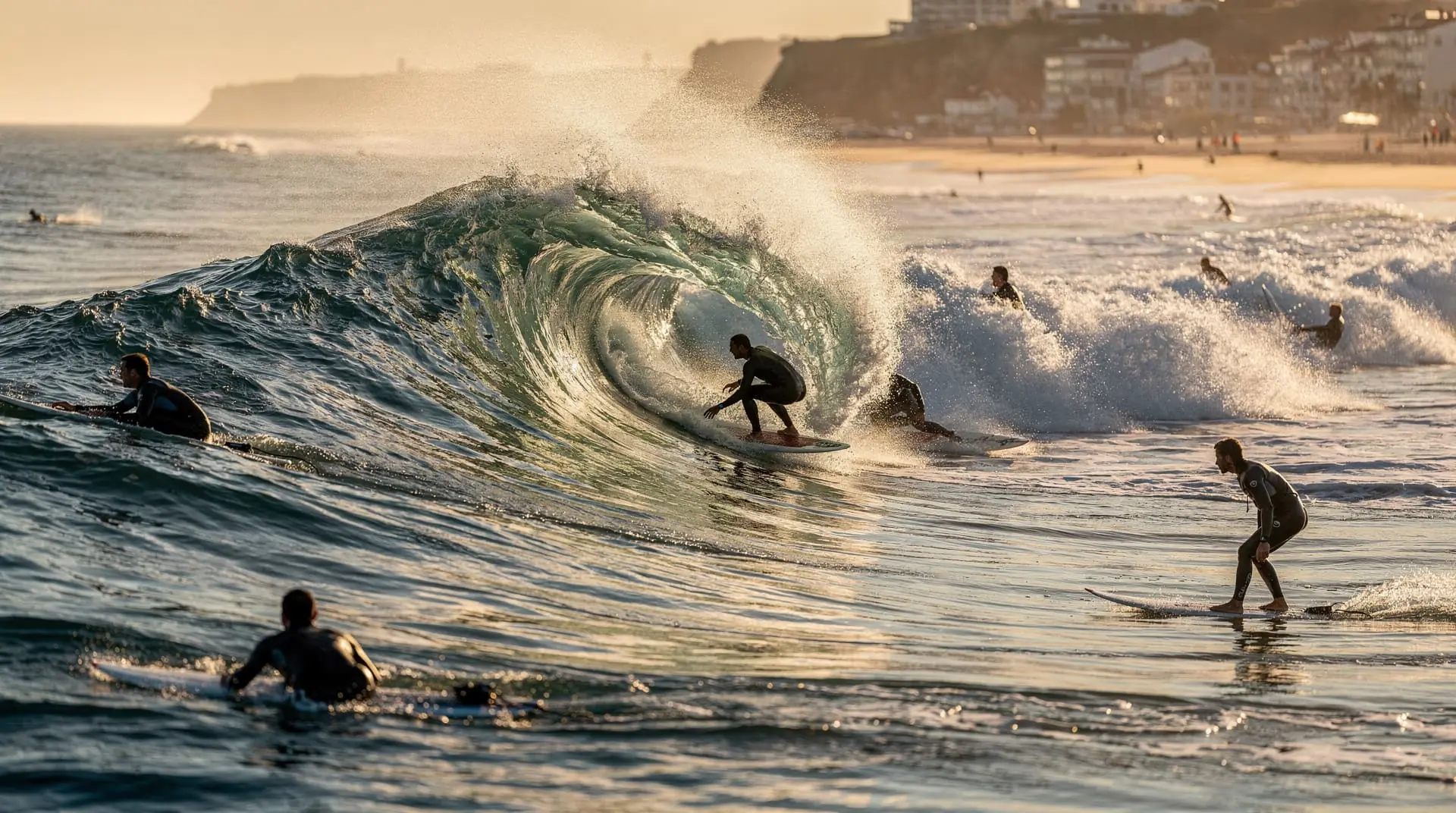
Surfing near Lisbon: Carcavelos, Caparica, Guincho and Ericeira
Best surf near Lisbon: beginner Carcavelos, consistent Caparica, advanced Guincho wind, and the Ericeira World Surfing Reserve.