Comporta
Comporta: wild Atlantic beaches, rice paddies, thatched palhotas, and Europe's wealthiest summer crowd. Nothing under €15 a cocktail — worth it anyway.
Quick facts
Top tours and experiences
We earn a small commission if you book through GetYourGuide — at no extra cost to you. Every tour is hand-picked and verified.

Évora: Megalithic Sites and Wine Tasting Tour
From Lisbon: Évora and Monsaraz with Alentejo Wine Tasting
Évora: Small group walking tour with Chapel of Bones
Roman Temple of Evora, Chapel of Bones & Cathedral of Evora
Montemor-o-Novo or Évora: One-Day Tour of Megaliths
Megalithic & Medieval tour on a sidecar Évora
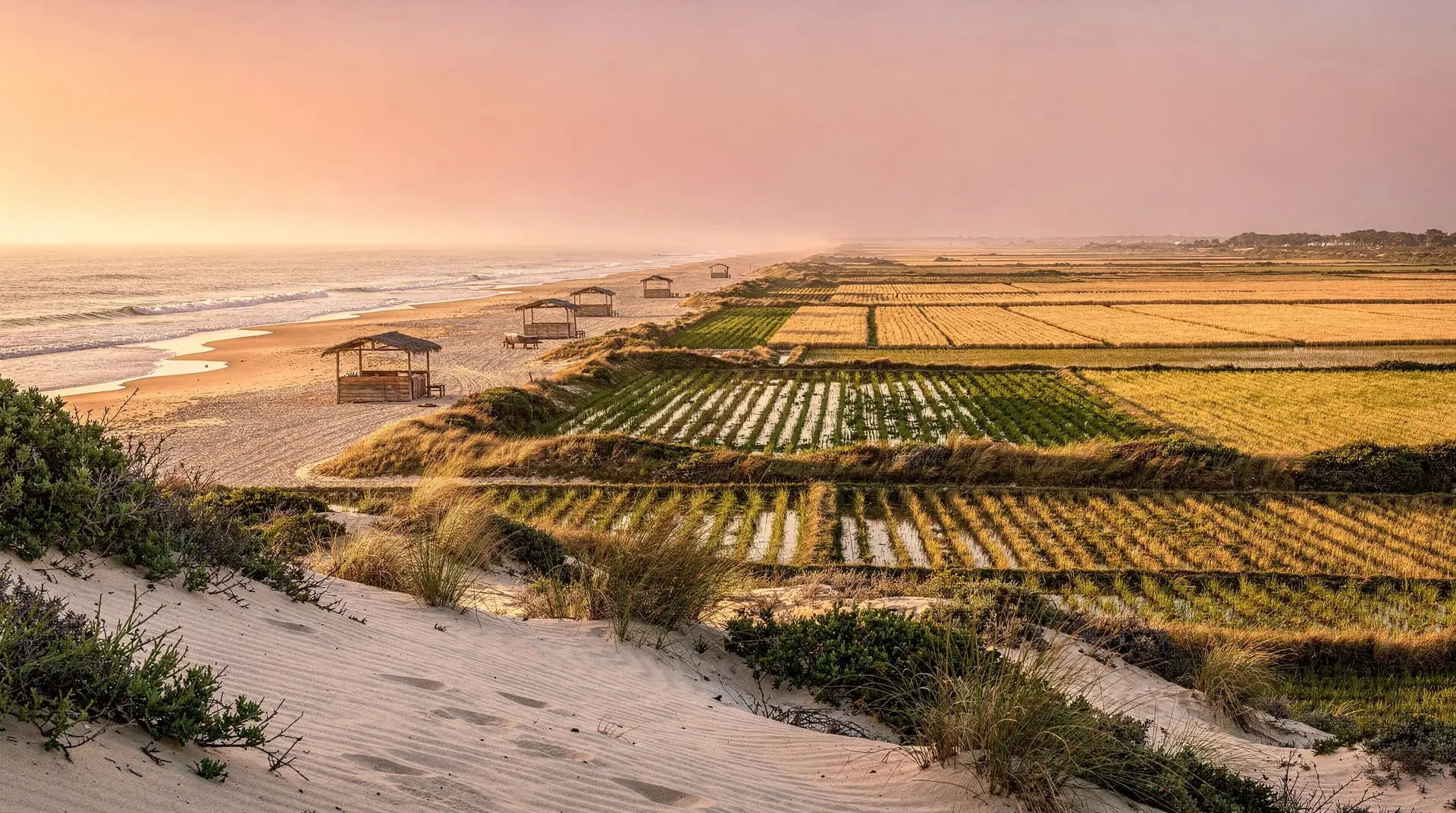
Comporta sits at the northern edge of the Alentejo coast, a landscape of rice paddies, umbrella pines, and flat Atlantic beaches that stretches 60 km south to Melides and beyond. It became internationally known in the 1990s when Madonna and other European celebrities began buying or renting the region’s traditional thatched-roof houses (the palhotas), which sit incongruously among the rice fields on stilts. Carla Bruni, Christian Louboutin, and various Portuguese and Spanish wealthy families followed. The result is a destination with rice-paddy landscapes that look like a corner of Southeast Asia, beaches of fine white sand that stretch to the horizon, and a restaurant scene where a cocktail costs €15 and a shared main dish for two costs €60.
This isn’t a place to visit on a budget. But it’s also one of the genuinely wild, unspoiled Atlantic coastlines within two hours of Lisbon — if you can absorb the prices, or you come in May or October when the scene calms down, Comporta rewards.
| Where | Alentejo coast, 120 km south of Lisbon |
| Cost | High-end; cocktails €15+, dinner €55–120/person |
| Time needed | 1–2 days (overnight recommended) |
| Getting there | Car (1h30) or ferry Setúbal–Tróia + bus |
| Best time | May–June and September for quieter, more affordable visits |
What Comporta actually is
Comporta village itself is tiny: a church, a main street (Rua do Comporta), a handful of shops, and a concentration of restaurants that punch far above the town’s size in terms of ambition and price. The surrounding landscape is protected — the rice paddies are part of a working agricultural system that has been cultivated here since the 16th century — and development has been tightly controlled, which is why Comporta still looks the way it does.
The beach (Praia de Comporta) is 8 km long, backed by sand dunes and pines rather than buildings. Access is via a sandy track from the village (passable in a normal car in dry weather but sometimes difficult after rain). The water is Atlantic — clear, often with a swell, cooler than the Algarve (18–22°C in summer). There are no wave-breaking reefs here, so the surf is consistent beach-break rather than dramatic, and the beach is popular with families and couples rather than surfers.
South of Comporta, the beaches continue through Carvalhal, Pego, and down to Melides — each accessible by sandy track, each progressively quieter. Melides has its own discreet luxury cluster and the superb Melides Art & Spa hotel.
Getting there
Comporta is awkward to reach without a car. The options:
By car (recommended): Take the A2 south from Lisbon, cross the Tagus on the 25 de Abril Bridge or take the Vasco da Gama Bridge to the A12 south. From the A2, exit at Alcácer do Sal and follow the N261 northwest through rice paddies to Comporta. Approximately 1 hour 30 minutes from Lisbon.
Via ferry to Tróia then south: Take the ferry from Setúbal to Tróia (30-minute crossing, every 30–60 minutes, ~€3 per person or €15–20 for car + driver). From Tróia, drive south 20 km through the dunes to Comporta. Picturesque and slightly slower than the direct road route. Bus connections from Tróia to Comporta exist but are infrequent.
By organised tour: Several tours from Lisbon combine Comporta with Arrábida or the Setúbal wine region.
Private Arrábida and Comporta tour with wine tasting from LisbonWhat to see and do
The beach
Praia de Comporta is the main event — wide, long, Atlantic, and backed by dunes rather than concrete. Arrive before 11am in July–August to find parking and space. The beach has no infrastructure beyond a few seasonal bars (beach bars set up from June); bring water and supplies, as the beach kiosks charge resort prices (€6 for a 500ml bottle of water).
The beach bars operate from June through September. Comporta Beach Club is the most prominent — sunbeds for hire (€30–40 per day for two), drinks menu with the predictable €15 cocktails, fish dishes at lunch. The setting is genuinely lovely; the price-to-value ratio is not.
The rice paddies
The paddies surrounding the village are cultivated from May through October. In July and August the water-filled paddies reflect the sky and look startlingly tropical. White storks nest on every available post and rooftop (Comporta has one of the highest concentrations of breeding storks in Europe). The best time to see the paddies is early morning, when the light is low and the storks are active.
Comporta village
The village is small enough to walk in 20 minutes. The main attraction is the cluster of restaurants and design shops along Rua do Comporta — interiors shops selling linen and rattan furniture, a few art galleries, the concept-store-cum-café. The church (Igreja de Nossa Senhora do Amparo) is simple and worth a brief stop.
Herdade da Comporta is a wine estate and restaurant complex on the edge of the village — their wine, produced from vines on the sandy Alentejo coastal soil, is genuinely interesting (aromatic whites, earthy reds). The estate offers tastings.
Herdade da Comporta wine tasting experienceHorse riding on the beach
Several operators offer horse riding on the beach and through the rice paddies — one of the more distinctive experiences in the region. Prices run €60–90 per person for 1–2 hour sessions. Book in advance in summer.
Horse riding on the beach in Melides with wine tastingWhere to eat
Sem Porta is consistently rated the best restaurant in Comporta proper — a converted warehouse-style space with open kitchen, sharing plates, exceptional fresh fish, and a natural wine list strong on Alentejo and Setúbal producers. Sharing plates €18–32; budget €55–75 per person with wine. Book 2–4 weeks ahead in July–August.
Comporta Café on the main street is the most accessible option — rice dishes (arroz de tomate, rice with clams), salads, fresh-caught fish. Mains €20–30. The terrace is shaded; arrive early for a table.
Sublime Comporta (at the luxury hotel of the same name) has an excellent restaurant open to non-guests — Portuguese seasonal menu, organic produce from the estate, Alentejo wines. Expensive (€80–120 per person), but the quality is there. Dinner reservations essential.
Nothing in Comporta is budget-friendly. If you’re looking for a €15 lunch, drive 20 km north to Alcácer do Sal and eat at any of the local restaurants around the castle.
Where to stay
Sublime Comporta is the reference property — 20 villas in a pine forest setting, organic farm, two pools, spa. Rates from €400 per night in low season, €700+ in August. Extraordinary in every respect except the price.
Casas na Areia is a collection of thatched-roof palhotas converted to boutique accommodation — the authentic Comporta experience, at rates from €250 per night.
Carrasqueira Guesthouse is the most affordable option in the area — a working estate with simple rooms, away from the design-hotel bubble. Doubles from €100. No pool.
Honest tips
Nothing is cheap. The cocktail-at-€15 figure in this page’s quick facts is accurate. A casual lunch for two at the beach bar runs €60–80. A nice dinner for two at Sem Porta with wine is €150+. This is the Hamptons of the Alentejo coast. Plan your budget accordingly or visit in May/October when prices are slightly more human and the scene is quieter.
The sandy tracks to the beach. The access roads to Praia de Comporta and the southern beaches are unsurfaced sand. A normal car manages in dry weather, but after rain they can be soft. If in doubt, park at the main approach and walk the last 500 metres. Rental-car insurance typically does not cover sand-related damage.
Mosquitoes near the paddies. The rice-paddy landscape is beautiful but the still water breeds mosquitoes in summer, particularly at dawn and dusk. Bring repellent if you’re near the paddies in the evening or staying at a rural property.
The summer crowd. July–August brings the Portuguese and international wealthy, the magazine photographers, and the general scene. If that’s what you want, go then. If you want Comporta’s landscape and beaches without the social performance, May, June, September, and October are significantly quieter and the beaches are uncrowded.
A horse-riding warning: Several informal operators on the beach work without permits. For horse riding, use a licensed operator (Herdade Vale dos Pombos, Melides horse riding) who provides helmets and has insurance.
How Comporta fits an itinerary
Comporta works as an overnight from Lisbon — leave Saturday morning, beach and dinner Saturday, return Sunday afternoon. It also combines naturally with the Arrábida Natural Park (30 km north via Tróia) for a coastal day that covers both the developed wildness of Arrábida and the flat Atlantic coast of Comporta.
In a 5-day Lisbon itinerary, assign day 4 or 5 to the southern coast: Arrábida in the morning, ferry Setúbal–Tróia, drive south to Comporta for afternoon and dinner. The day-trip matcher can help sequence this with your other planned stops.
See also the Alentejo wine day trip guide and the Setúbal and Arrábida guide.
Comporta vs Tróia vs Melides
Visitors planning a stretch of the Alentejo coast often can’t decide which stop to prioritise. Here’s the honest comparison:
| Comporta | Tróia | Melides | |
|---|---|---|---|
| Character | Boho-luxury, design shops, rice paddies | Resort peninsula, marina, casino | Quieter Comporta, fewer crowds |
| Beach | 8 km, dunes, no development | Wide, sheltered on the estuary side | Long, wild, undeveloped |
| Prices | High (€15+ cocktails) | Mid-to-high, resort pricing | High but slightly calmer scene |
| Best for | Design-conscious travellers, food | Families, golf, easy ferry access | Escaping Comporta’s crowds |
| Getting there | Car or ferry + bus | Ferry from Setúbal (30 min) | Car only; 15 km south of Comporta |
Tróia works well as a half-day add-on if you’re already taking the ferry route to Comporta — the peninsula has its own long beach and a casino resort, useful if the group wants variety. Melides is the honest answer for “I want Comporta without the Comporta crowd” — same landscape, same architecture style, noticeably fewer people even in August.
Comporta with a car vs without
Most of what makes Comporta rewarding — the sandy beach tracks, the rice-paddy back roads, the ability to continue south to Melides for a quieter beach — assumes a car. Without one, you are limited to the village itself and whichever beach is walkable from where you’re staying. If you’re relying on the ferry-and-bus route from Setúbal, budget the full day for the journey alone and accept that the southern beaches (Carvalhal, Pego, Melides) are effectively out of reach. Renting a car for the Comporta leg of a longer Alentejo trip, even for just 24 hours, opens up meaningfully more of the coast than arriving without one. The Alentejo wine day trip guide covers the driving routes if you’re combining Comporta with inland wine estates on the same trip.
Frequently asked questions about Comporta
How do I get from Lisbon to Comporta without a car?
Without a car it’s awkward. The most practical public-transport option is the ferry from Setúbal to Tróia (accessible from Lisbon by train + bus or taxi), then an infrequent bus south to Comporta — but the bus schedule is limited and doesn’t align well with beach visits. An organised day tour or a rental car from Lisbon is much more practical.
Is Comporta worth visiting on a budget?
Comporta is one of the most expensive beach destinations in Portugal. Restaurants, beach bars, and accommodation run 50–100% above Lisbon prices. The beach itself is free and the landscape is free, but eating and drinking there is genuinely costly. Consider visiting for the day without eating at the beach bar — bring a picnic — and you can experience the landscape without the full financial impact.
What are the beaches like at Comporta?
Long, flat, backed by dunes and pine trees, Atlantic-facing, with no shade (bring an umbrella), cold-ish water (18–22°C in summer), and a consistent beach-break swell. The beach runs for 8 km with no buildings in sight in either direction. July and August see a thin scatter of umbrellas from the beach bar concession; outside those months, the beach can be almost empty.
When should I visit Comporta?
May–June and September–October offer the best combination of warm weather, manageable prices, and uncrowded beaches. July and August bring the full summer scene — beautiful but expensive and more populated. The landscape (particularly the rice paddies with storks) is best in June–July when the paddies are flooded.
What is a palhota?
A palhota is a traditional thatched-roof house on stilts, originally built by rice farmers as field shelters in the Comporta plain. The style — low, thatched, wooden — became fashionable in the 1990s when wealthy buyers began converting and building palhotas as vacation homes. They’re the architectural signature of Comporta and appear frequently in design magazine coverage of the region.
Is Comporta suitable for families with children?
Yes, with caveats. The beach is excellent for families — long, flat, easy access — and the landscape is beautiful. But the high prices mean meals for a family add up quickly, and there are very few child-specific amenities (no playgrounds, no entertainment infrastructure, no budget options). Families with older children who are happy on the beach will be fine; families with toddlers needing facilities will find it easier at a more infrastructure-heavy resort.
How does Comporta compare to Tróia or Melides?
Comporta has the best-known village and restaurant scene; Tróia is a resort peninsula reached by ferry, better for families wanting infrastructure; Melides, 15 km south, has the same wild-coast character as Comporta with noticeably fewer people. If Comporta’s summer crowds put you off, Melides is the honest alternative rather than trying to “do” Comporta off-season.
Can I visit Comporta as a day trip without a car?
It’s difficult but not impossible. The ferry from Setúbal to Tróia followed by an infrequent bus south is the only public-transport route, and it eats most of a day each way. A car or an organised tour from Lisbon is strongly recommended if you only have one day — otherwise you’ll spend more time travelling than at the beach.