Nazaré
Nazaré is Portugal's big-wave capital — Praia do Norte, the Sítio clifftop, fish drying on the beach, and traditional fisherwomen in bright bloomers.
Quick facts
Top tours and experiences
We earn a small commission if you book through GetYourGuide — at no extra cost to you. Every tour is hand-picked and verified.
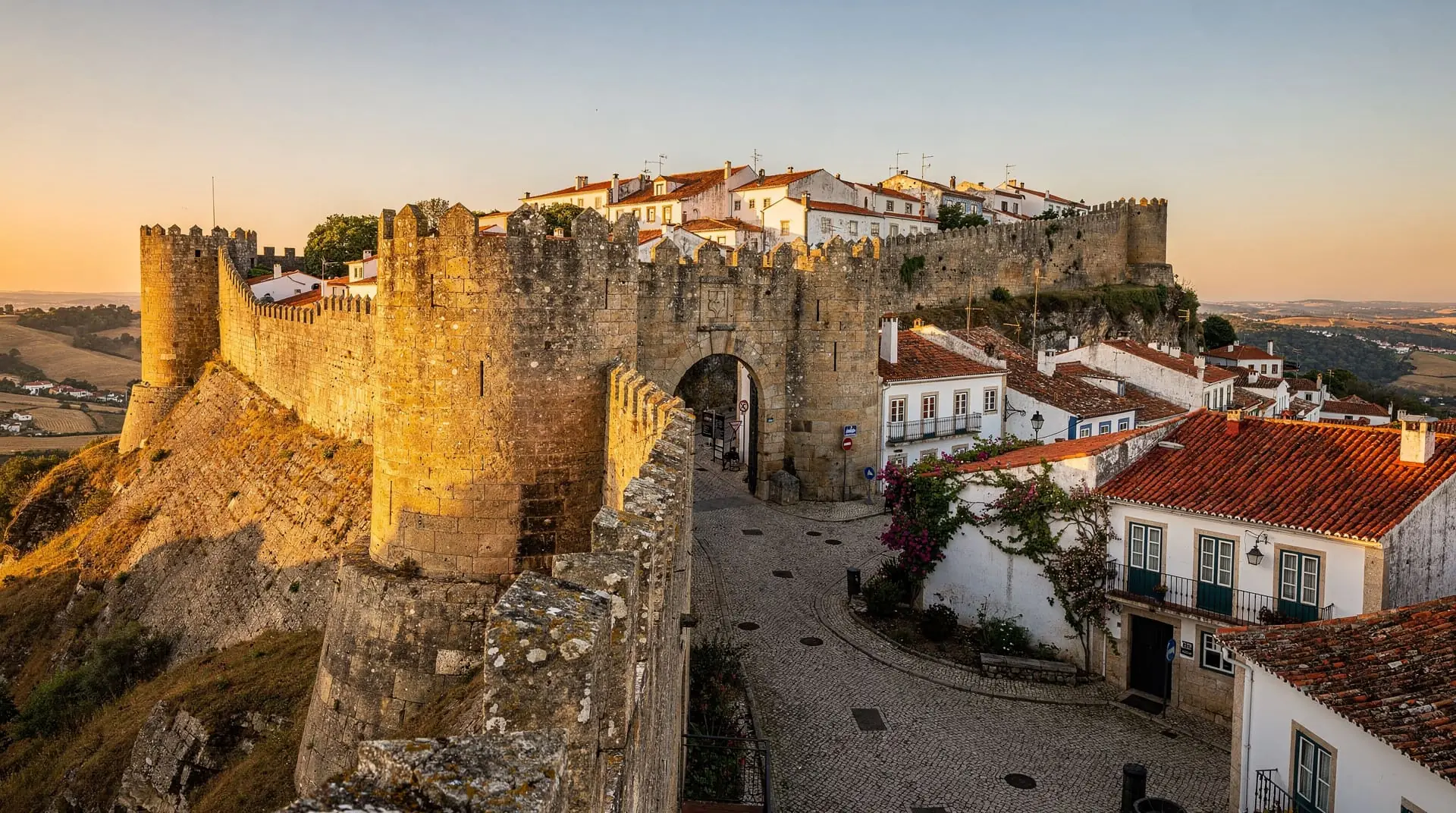
From Lisbon: Budha Eden, Obidos & Nazaré Private Day Trip
From Lisbon: Nazaré, Batalha, Óbidos, and Peniche Day Trip
Óbidos: Medieval Tales & Secrets Spots Guided Walking Tour
Óbidos (Medieval Town): Half-Day Private Tour from Lisbon
Óbidos & Nazaré Private Tour
From Lisbon: Óbidos and Nazaré Private Half-Day Tour
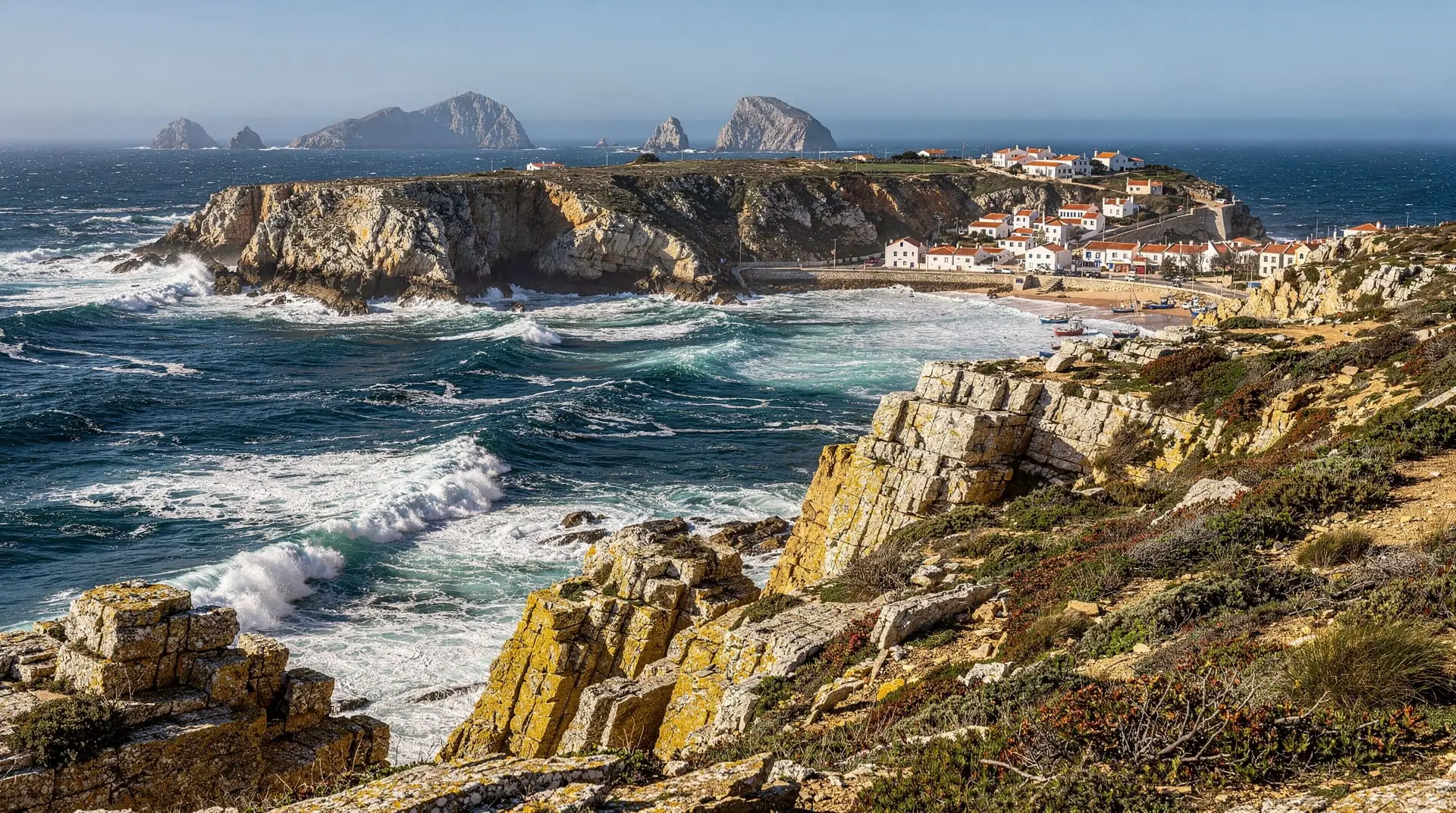
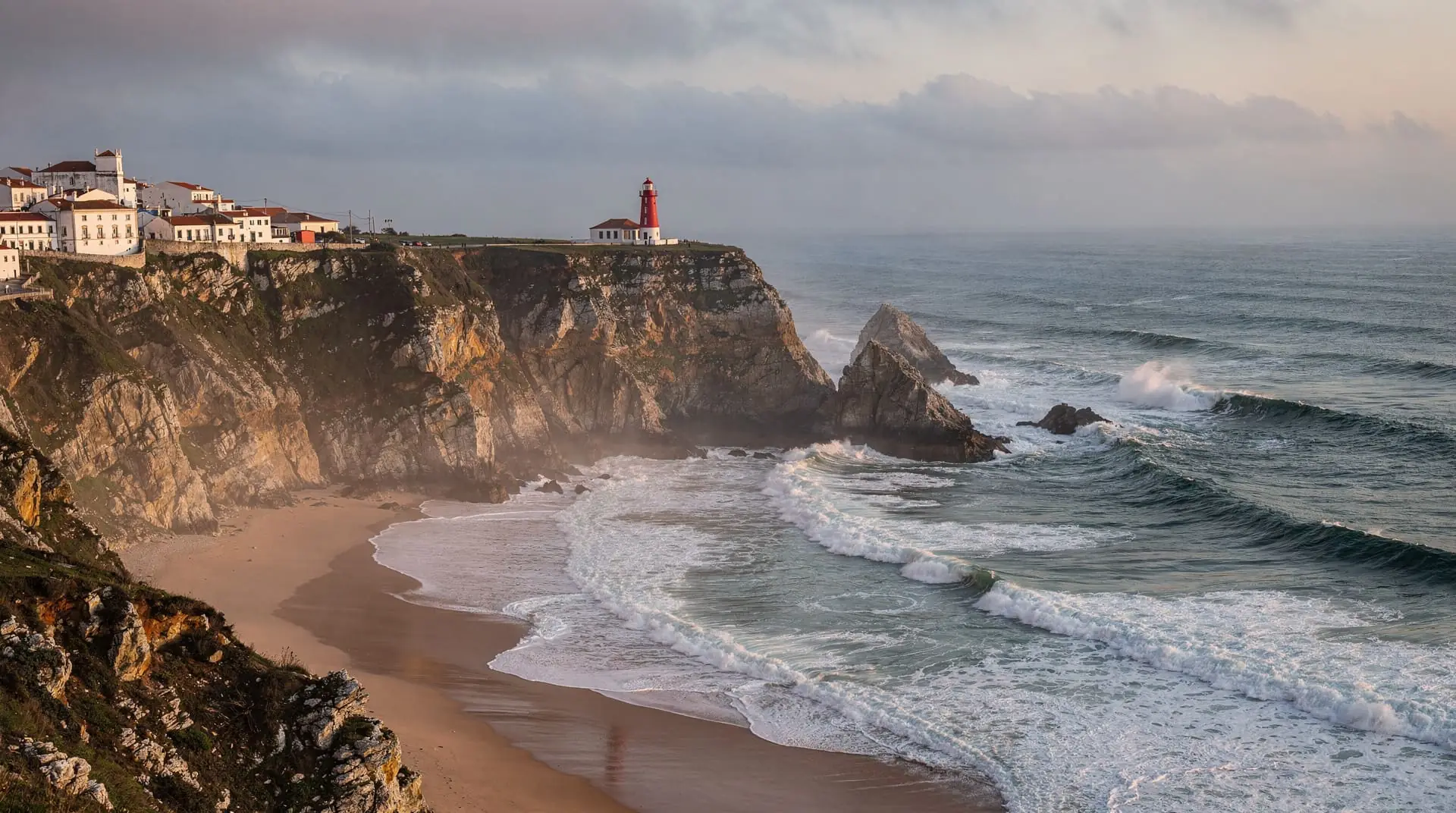
Nazaré is two towns stacked on a cliff. Below, the Praia spreads along a 3-km Atlantic beach where fishing boats used to be dragged out of the surf by oxen and women in seven petticoats carried the catch on their heads to market. Above, the Sítio perches 110 metres up on the clifftop, reachable by a funicular that has been running since 1889, and beyond Sítio the headland called Praia do Norte drops into the deep Atlantic canyon that creates the most famous big waves in surfing history.
Garrett McNamara rode a 23.77-metre wave here in 2011 and then broke his own record in 2013. Rodrigo Koxa surfed a 24.38-metre wave in 2017. Sebastian Steudtner set the current record of 26.21 metres in 2020. Those numbers are hard to visualise until you stand on the fort at the edge of Praia do Norte in November and watch the sets arrive from deep water, accelerate over the underwater canyon, and stand up into walls that dwarf anything else on Earth. Even on a moderate swell day in October, the waves are extraordinary.
But Nazaré is much more than surf spectacle. It’s a working fishing village with a distinct culture, good seafood restaurants, and a beach that functions as a family resort from June through September. The combination makes it one of the most interesting day trips on the Silver Coast.
The two neighbourhoods
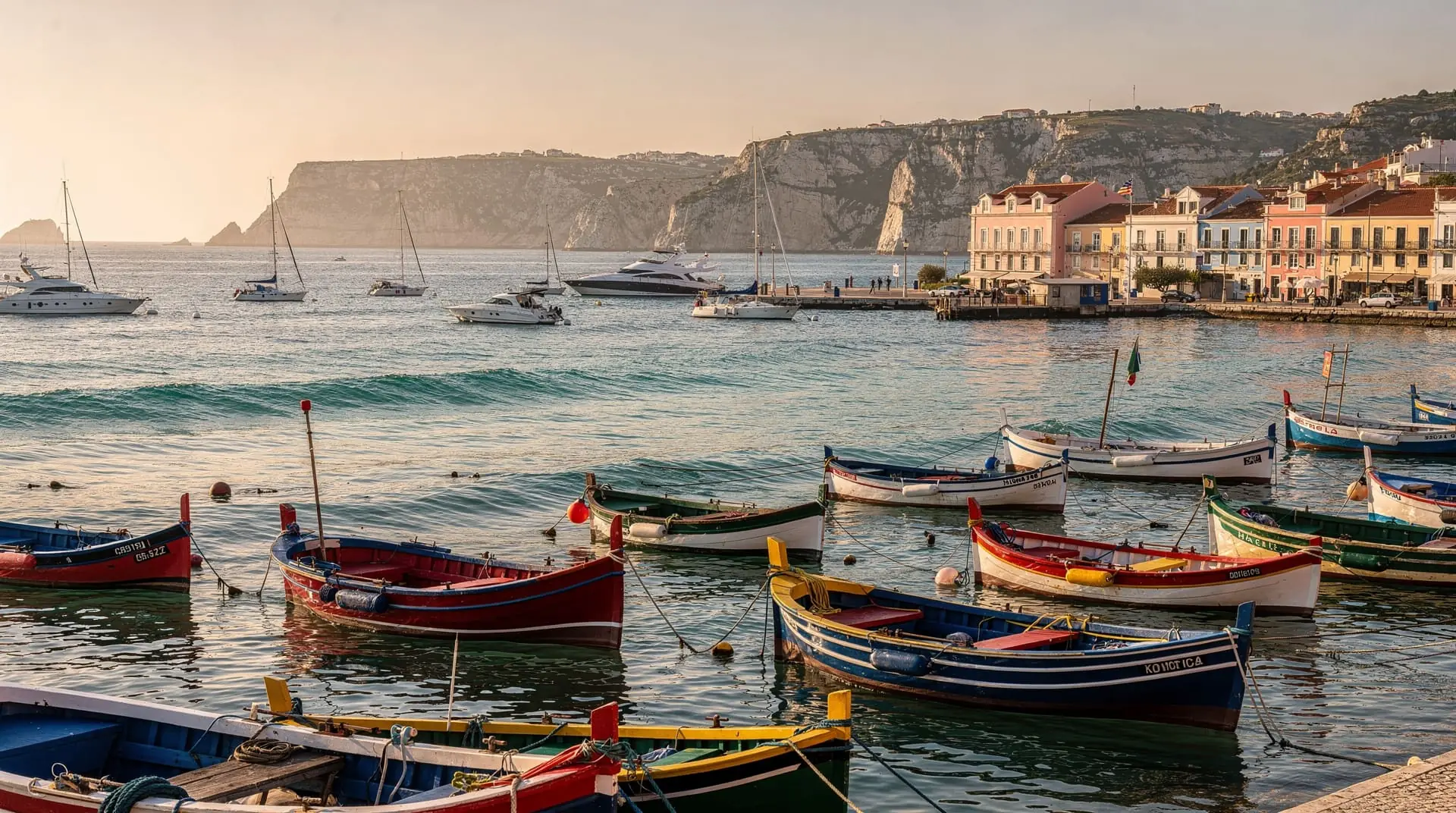
Praia (the lower town) is where most visitors base themselves. The beach is wide, the esplanade is lined with restaurants and cafes, and the fish market at the northern end operates from early morning. The architecture is unremarkable — Nazaré was rebuilt in the 20th century — but the energy is genuine. Women in traditional dress (seven-layered skirts in bright colours, black headscarves) still sell dried fish and souvenirs on the promenade; this is partly cultural persistence, partly tourist economy, but the tradition is real.
Sítio (the upper town) is where Nazaré’s history lives. The Santuário da Nossa Senhora de Nazaré dominates the main square — a pilgrimage church that draws thousands on 8 September (the feast day) and throughout the year. The square itself is pleasant: café tables, a miradouro over the ocean, and a small chapel (Ermida da Memória) marking the site where a 12th-century miracle is said to have occurred when a knight was saved from riding his horse off the cliff by a vision of the Virgin.
Praia do Norte is the surf headland, accessed from Sítio by a 15-minute walk west. The Forte de São Miguel Arcanjo, a small fort on the point, is where surf photographers set up during big-wave season. There’s a small free museum about the waves inside.
Getting there from Lisbon
By bus: Rede Expressos runs coaches from Sete Rios terminal (Jardim Zoológico metro, blue line) to Nazaré several times daily. Journey time is approximately 2 hours; tickets cost around €12 each way. The bus drops you at the edge of Praia town, a 5-minute walk from the beach.
By car: Take the A8 north from Lisbon to Caldas da Rainha, then the A17 north. The drive is approximately 1 hour 40 minutes without traffic. Parking in summer is difficult near the beach — use the paid car parks on the northern edge of Praia rather than circling the esplanade.
Combined with Óbidos: Many visitors stop at Óbidos in the morning (43 km south of Nazaré via the N8) and continue to Nazaré for lunch and the afternoon — a satisfying full-day route.
Surf tour from Lisbon: see Nazaré’s giant Atlantic wavesWhat to see and do
Praia do Norte and the big waves
The waves arrive November through February (occasionally October and March), driven by Atlantic storms. The Forte de São Miguel Arcanjo viewpoint gives the best angle. Go on a day with forecast swell of 5 metres or more at the Leixões buoy — the surf forecasting sites (Windguru, Surfline) publish Nazaré forecasts. On big days, access to the beach itself may be restricted by the coastguard; the fort viewpoint is always accessible.
Outside big-wave season, Praia do Norte is quiet — just beach and cliff. But Sítio and the views are worthwhile regardless of season.
The funicular
The Elevador da Nazaré has been connecting Praia and Sítio since 1889. A single ticket costs €1.60; a return is €2.60. The cars are small — queues form in summer — but the 3-minute ride up the cliff face is part of the Nazaré experience. You can also walk up via the steep path that parallels the tracks (about 20 minutes).
Fish drying on the beach
One of the most photographed images in Portugal: rows of fish (mostly polvo — octopus — and various bream species) laid out on racks or flat surfaces on the beach to dry in the sun and wind. The practice is genuine, not staged for tourists. The dried fish is sold in the market and in restaurants throughout central Portugal. Best seen in the mornings on the northern end of the beach.
Sítio and the sanctuary
The Santuário de Nossa Senhora de Nazaré is a pilgrimage basilica with a baroque interior. The adjacent Ermida da Memória is a tiny 12th-century chapel; you can see the marks in the stone wall where, according to tradition, Dom Fuas Roupinho’s horse stopped miraculously on the cliff edge. The miradouro next to the sanctuary gives the best panoramic view of the beach and town below.
The beach itself
From late June through August, the 3-km beach at Praia operates as a full resort: lifeguards, beach rentals, snack bars. The water is cold (Atlantic, 18–20°C in summer) and sometimes rough. The northern end near the fish market is less crowded than the central esplanade section.
Nazaré big wave tour from Lisbon with Óbidos includedWhere to eat
A Tasquinha on Rua Adrião Batalha is the best-value traditional restaurant in Nazaré — caldeirada de peixe (fish stew), arroz de lingueirão (razor clam rice), grilled sea bass caught that morning. Mains €14–22. Book ahead or arrive before 12:30pm.
Casa O Pescador on the promenade is more tourist-facing but the fish is genuinely fresh. Good sardines June–September (the only time to order them). Mains €16–24.
O Casalinho in Sítio (uphill, near the sanctuary) serves simpler food at lower prices — sandwiches, caldo verde, grilled chicken — and has a terrace with views. Main dishes €9–14.
Avoid any restaurant displaying photos of the food in the window on the main esplanade — these are oriented toward coach-tour groups rather than quality.
Where to stay
Hotel Miramar Sul occupies one of the better seafront positions in Praia — doubles from €90 low season, €160 in August. Good breakfast, friendly staff.
Maré Hotel is newer, a few blocks back from the beach, with a small rooftop pool — doubles from €80 low season. Good option in summer when sea-view hotels charge a premium.
For surf season visitors, the guesthouses and surf camps in Sítio and north of Praia offer better access to Praia do Norte and a quieter atmosphere than the esplanade hotels.
How long to spend
A full day is the minimum to do Nazaré justice. Arrive by 10am: funicular to Sítio, sanctuary and miradouro, walk to Praia do Norte, back down for lunch in Praia, afternoon on the beach or market. If you’re combining with Óbidos (morning stop), you’ll arrive in Nazaré around lunchtime — which still gives you a satisfying afternoon.
An overnight stay adds the evening dimension: Nazaré’s esplanade is lively until midnight in summer, the sunset from Sítio is excellent, and the fish market opens at 7am.
Honest tips
Big waves are seasonal. November through February is the peak window. If you come in July hoping to see the famous waves, you won’t — the summer sea is calm. The September–October shoulder period occasionally produces interesting swells, but it’s not reliable. Check surf forecasts before booking specifically for the waves.
Summer crowds. July and August bring the full Portuguese and Spanish domestic tourism wave. The esplanade restaurants run long waits, the beach is dense, and the funicular has 30-minute queues. The beach is still enjoyable but it’s not the atmospheric fishing village of the off-season.
Parking in summer. Street parking near the esplanade disappears by 9am in August. Use the Parque de Estacionamento Norte on the northern edge of town (signposted) rather than circling the beach road.
The seven petticoats. The traditional costume worn by some of the older women selling fish and souvenirs on the promenade is the real deal — a cultural inheritance from the fishing community. It’s appropriate to buy from them; it’s not appropriate to photograph them without asking.
How Nazaré fits an itinerary
Nazaré is 120 km from Lisbon — far enough to justify a full day rather than a quick stop. In a 5-day Lisbon itinerary, it works best paired with Óbidos (morning) or as a stand-alone overnight. The Óbidos, Nazaré and Fátima tour covers the three main Silver Coast/Centro destinations in a single long day, though one night in Nazaré is far more satisfying than a rushed afternoon stop.
Peniche (40 km north, for the Berlengas archipelago) and Óbidos (43 km south) are the natural pairings. See the Silver Coast day trips guide and use the day-trip matcher to plan the logistics based on your transport.
Nazaré big waves and Óbidos small group tour from LisbonFrequently asked questions about Nazaré
When are the big waves at Nazaré?
The giant waves form reliably from November through February, driven by North Atlantic winter storms. October and March occasionally produce large swells. Summer (June–September) is calm — the beach is for swimming, not spectacle. Check surf forecast sites (Windguru, Surfline) for specific swell predictions if you’re visiting in October or March.
How do I get from Lisbon to Nazaré?
Rede Expressos runs coaches from Sete Rios terminal (Jardim Zoológico metro, blue line) several times daily. Journey time approximately 2 hours, tickets around €12 each way. By car via the A8 and A17 the drive takes about 1 hour 40 minutes.
What is Sítio and how do I get there?
Sítio is the clifftop neighbourhood 110 metres above the beach, where the pilgrimage sanctuary and the best viewpoints are located. The funicular (Elevador da Nazaré) runs from Praia and costs €1.60 single or €2.60 return. You can also walk up via the footpath alongside the tracks (about 20 minutes).
Can I see the waves if I’m not a surfer?
Yes. The Forte de São Miguel Arcanjo viewpoint at the edge of Praia do Norte is accessible to everyone and gives a clear view of the waves. On big wave days in winter, crowds of spectators line the fort. No surfing experience required.
Is Nazaré good for families?
Yes, in summer. The long beach at Praia has lifeguards, calm sections near the south end, and plenty of beach-side facilities. The funicular ride is popular with children. Outside the summer months, the main draw shifts to the waves (not suitable for young children on the beach) and the cultural town.
Can I combine Nazaré with Óbidos in one day?
Yes — this is one of the most popular Silver Coast day-trip combinations. Spend the morning in Óbidos (43 km south of Nazaré) and drive or take a local bus to Nazaré for lunch and the afternoon. Several organised tours from Lisbon cover both in one day, sometimes adding Fátima.