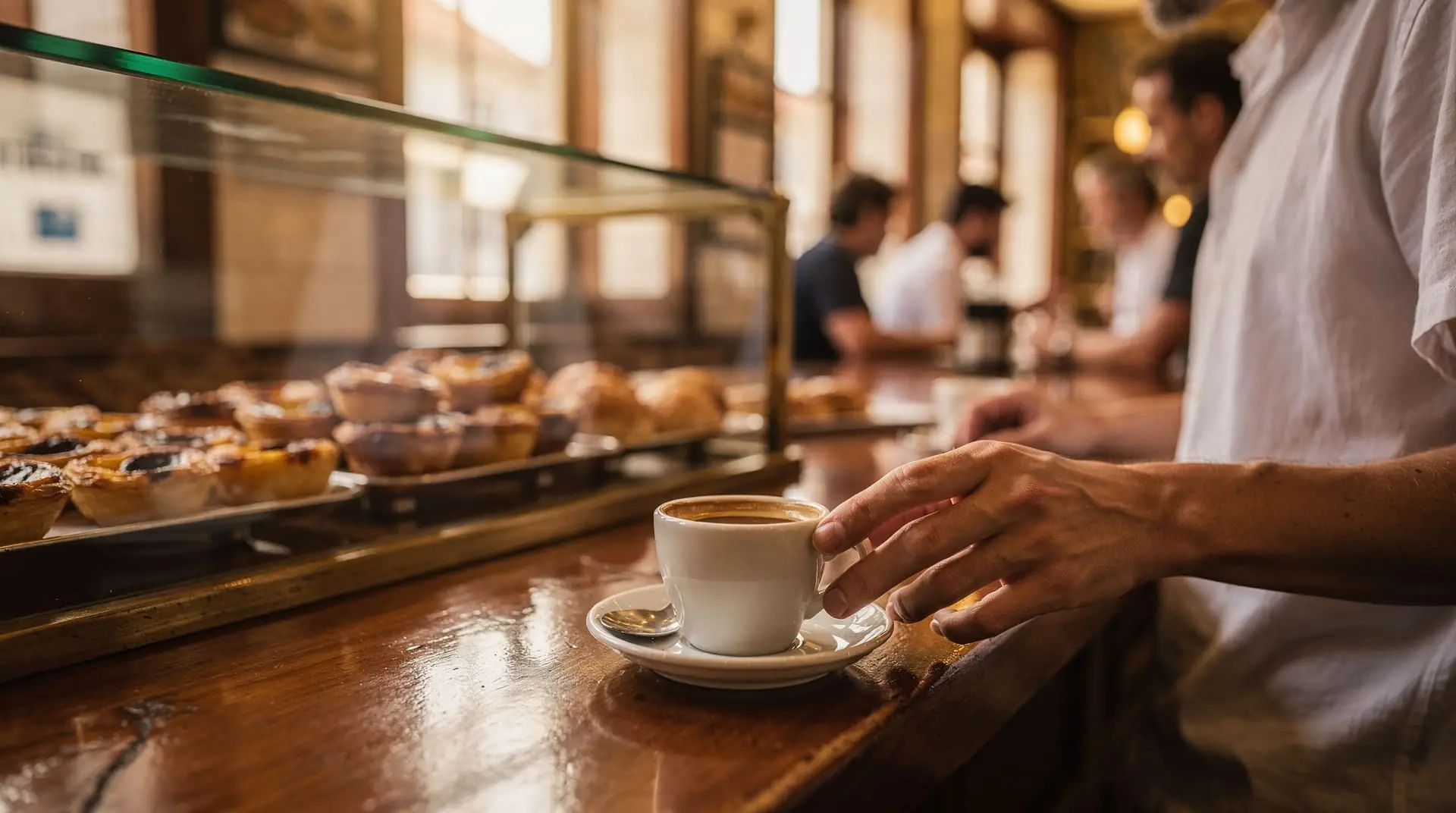
Coffee culture in Lisbon: bica, galão, and the specialty wave
Last reviewed
What is a bica and how do I order coffee in Lisbon?
A bica is Lisbon's word for espresso — a short, strong shot served in a small ceramic cup, usually with a sachet of sugar alongside. It costs €0.80–1.20 at most cafés. A galão is a tall, milky coffee similar to a latte. A meia de leite is a half-and-half milk and coffee, closer to a flat white.
Coffee culture in Lisbon runs deep and operates on its own vocabulary. A tourist who walks into a café and orders “a coffee” will receive a bica — a short, dark espresso shot — and may be surprised by its intensity. Knowing the terminology gives you access to one of the cheapest and most pleasant rituals in the city.
Lisbon also has a genuine specialty coffee scene that has developed rapidly since 2014, concentrated in Príncipe Real and Chiado, using third-wave technique and single-origin beans alongside traditional Portuguese café culture. Both worlds are worth knowing.
| Where | Chiado, Príncipe Real, and every neighbourhood pastelaria |
| Cost | A bica around €0.80–1.20 standing at the counter, more at a table |
| Time needed | 5 minutes at a counter, an hour or more at a specialty café |
| Getting there | On foot — Lisbon’s coffee culture is a walkable, neighbourhood thing |
| Best time | Morning or after lunch, when the daily bica ritual actually happens |
The coffee vocabulary
Bica: Lisbon’s term for espresso. Short, dark, strong, served in a ceramic cup slightly larger than Italian espresso. The name supposedly comes from the acronym “Beba Isto Com Açúcar” (drink this with sugar), though this is likely a backronym. Price: €0.80–1.20.
Cimbalino: Porto’s term for the same drink. You will hear this if you travel north, but in Lisbon say bica.
Café: Generic term for coffee; in a traditional café, ordering “um café” will get you a bica.
Café duplo: Double espresso, rare in traditional cafés but available at specialty shops.
Café curto / café cheio: Shorter pull (stronger, less water) or longer pull (weaker, more water) of a standard bica. Useful if the house espresso is too intense or too dilute.
Galão: A tall glass (approximately 200ml) of espresso diluted with hot foamed milk — similar to a latte or café au lait. Served in a cylindrical glass. Slightly sweet from the milk. €1.20–1.60.
Meia de leite: “Half milk” — essentially a flat white or café latte in a standard cup, half coffee and half steamed milk. Smaller than a galão, stronger ratio. €1.00–1.40.
Abatanado: An espresso lengthened with hot water, similar to an Americano. Not common in traditional cafés; used in specialty coffee shops. €1.50–2.50.
Descafeinado: Decaffeinated — increasingly available in traditional cafés, though the quality is variable.
Pingado: Espresso with just a drop of milk (“pingado” = dripped). The stiffest milky option.
Garoto: A small milky coffee, stronger than a galão and weaker than a pingado. Somewhere between a macchiato and a cortado.
A Brasileira: the historic café
Address: Rua Garrett 120, Chiado Hours: Daily 08:00–00:00 Price: €2.20–3.50 for coffee (significantly above neighbourhood prices)
A Brasileira is Lisbon’s most famous café, opened in 1905 and frequented by Fernando Pessoa — the bronze statue of the poet sits at an outdoor table and provides one of the most photographed tourist moments in Chiado. The café is beautiful: Art Nouveau interior, mirrored walls, dark wood panelling, and original azulejo panels.
The honest assessment: A Brasileira is a tourist attraction that also serves coffee. The coffee itself is not exceptional. The price is approximately double what you would pay at any neighbourhood café. The queue for a table in summer can be 30 minutes. The service varies.
Go once, have a galão or a bica at the outdoor terrace, appreciate the Pessoa statue and the room, and do not make it your daily coffee stop. There are better options within 200 metres.
Traditional pastelaria vs specialty café: which to choose
| Traditional pastelaria | Specialty café | |
|---|---|---|
| Price | €0.80–1.60 | €2.20–3.80 |
| Vibe | Local, fast, unpretentious | Slow, third-wave, design-conscious |
| Best for | The daily ritual, cheap and quick | Filter coffee, single-origin, lingering |
| Where | Every neighbourhood | Chiado, Príncipe Real, Mouraria |
Neither is “better” — they serve different moments in a day. A well-rounded Lisbon coffee routine uses both: a standing bica at a counter bar for the quick daily ritual, and a slower specialty stop when there’s time to sit.
The specialty coffee wave
Starting around 2012–2014, a generation of Portuguese baristas who trained in Australia, the UK, and Scandinavia brought third-wave coffee culture back to Lisbon. The result is a cluster of excellent specialty cafés in Príncipe Real, Chiado, and Mouraria that treat coffee with the same seriousness that wine bars treat wine.
Copenhagen Coffee Lab
Address: Rua Nova da Piedade 10, Príncipe Real (main); also Rua dos Fanqueiros 58, Baixa Hours: Mon–Fri 08:00–19:00; Sat–Sun 09:00–19:00 Price: €2.20–3.80 for specialty drinks
Founded by a Danish expat and his Portuguese partner, Copenhagen Coffee Lab brought third-wave technique to Lisbon with a focus on single-origin filter coffee and seasonal espresso blends. The Príncipe Real location is the original — small, minimalist, with serious equipment and trained baristas who can explain the origin of every bean. The flat white and pour-over options are genuinely excellent.
Hello Kristof
Address: Rua Actor Taborda 72B, Campo de Ourique Hours: Mon–Fri 08:00–18:00; Sat 09:00–17:00; closed Sunday Price: €2.20–3.50
A Budapest-meets-Lisbon café run by a Hungarian barista who has been in Lisbon since 2015. The coffee programme focuses on light-roast filter coffee alongside well-made espresso drinks. The pastries are homemade and substantially better than the average café offering. A neighbourhood institution for Campo de Ourique residents who want something beyond the standard bica.
Fábrica Coffee Roasters
Address: Rua das Flores 63, Chiado Hours: Mon–Fri 08:00–19:00; Sat–Sun 09:00–19:00 Price: €2.00–3.50
Fábrica is both a roastery and a café, which means you can often taste very fresh beans roasted on site. The espresso menu follows Brazilian and specialty-world conventions; the filter coffee changes weekly. Located on Rua das Flores — the same street as Taberna da Rua das Flores — making this an ideal pre-lunch stop before petiscos.
Wish Café
Address: Rua Rodrigues de Faria 103, LX Factory, Alcântara Hours: Mon–Fri 08:00–19:00; Sat–Sun 10:00–19:00 Price: €2.00–3.50
Inside LX Factory, Wish has a nice terrace in the former industrial complex and good single-origin filter options. More relaxed than the Chiado cafés; the surrounding LX Factory buildings make it interesting to browse after coffee.
Traditional café culture: what you are missing if you only go specialty
The neighborhood café — the pastelaria — is a distinct and valid institution. A pastelaria opens at 07:00, serves workers having a bica and a pastel de nata before starting their day, and runs until 20:00 or 22:00. The coffee is a standard commercial blend, usually darker roasted than specialty cafés, and served in a consistent, unpretentious way.
Good neighbourhood pastelarias:
Pastelaria Versailles (Av. da República 15A, Avenidas Novas): Grand 1920s interior, excellent pastry, and a room full of older Lisboans having coffee in the way they have for decades. A bica here costs €1.00. Worth a visit for atmosphere.
Confeitaria Nacional (Praça da Figueira 18B, Baixa): The oldest pastelaria in Lisbon, open since 1829. Not fancy; just reliable and old.
Pastelaria Alfama (Rua dos Bacalhoeiros 8, Alfama): A working neighbourhood café at the bottom of Alfama’s hill. Coffee for €0.90, pastéis de nata for €1.30. Zero tourists before 10 am.
Coffee prices and the honesty check
A standard bica at a neighbourhood café: €0.80–1.10 standing at the counter; €1.20–1.50 at a table.
A galão or meia de leite: €1.10–1.60 at a traditional café; €2.50–3.20 at a specialty café.
At tourist cafés near Praça do Comércio and along Rua Augusta: €2.00–3.00 for a bica. The coffee is not better. You are paying for the location.
The rule: if the menu is in English only, the coffee is probably overpriced.
When to drink coffee
Portuguese culture has clear coffee rhythms. A bica after lunch (almoço) is near-universal — this is the true daily ritual, not the morning espresso. After dinner, another bica. At breakfast, a galão or meia de leite with a croissant or toast. Between meals, a bica at a counter bar is a 5-minute pause in the day.
The standing-at-the-counter culture is worth experiencing: many Portuguese workers have their daily bica standing at the zinc bar, pay, and leave in less than 3 minutes. You can do the same. This is the cheapest version (saving €0.30–0.50 vs sitting at a table) and the most authentic.
Coffee to take home
Espresso machine coffee: Delta Cafés (the main Portuguese commercial brand, used in most traditional cafés) sells packaged beans and pods widely at supermarkets. A 250g bag of ground coffee costs €3–5.
Specialty: Fábrica Coffee Roasters bags are available in the café (€12–15 per 250g), as is Copenhagen Coffee Lab’s own house blend.
Instant coffee: Nicola is the traditional brand; it makes a better filter coffee than most international instant brands.
The café as social institution
The pastelaria serves a social function that is harder to quantify than the coffee itself. In a neighbourhood pastelaria, particularly in working-class districts like Mouraria, Intendente, and Alcântara, the café is where people catch the news, argue about football, discuss neighbourhood politics, and sit for an hour with a single coffee without anyone asking them to leave. The table has been occupied since 1977 — the regulars have not changed, only aged.
This is not a tourist experience in the conventional sense. You cannot book it or curate it. But sitting at the counter of a neighbourhood café at 7:30 am, drinking a bica alongside people who have been doing the same thing for 30 years, is one of the more grounding things you can do in Lisbon.
How to do it: Choose a café in a residential neighbourhood — Mouraria, Intendente, Campo de Ourique, Alcântara. Arrive before 9 am on a weekday. Order at the counter (“um café, por favor”). Pay immediately (the tradition is to pay when you order, not at the end). Drink standing. The exchange will take 3 minutes and cost under €1.
The specialty coffee map
For visitors who want to build their own specialty coffee itinerary in Lisbon, the key addresses are clustered in a walkable arc from Chiado to Príncipe Real:
- Fábrica Coffee Roasters (Rua das Flores 63) — starting point, excellent espresso, roasts on site
- Copenhagen Coffee Lab (Rua Nova da Piedade 10) — 10 minutes’ walk uphill through Príncipe Real; best filter coffee in the city
- Comoba (Rua Maria Andrade 12, Mouraria) — natural wine bar that also does serious coffee; unusual combination that works
- Hello Kristof (Campo de Ourique) — requires a bus or tram ride (758 from Cais do Sodré) but worth it for the quality and the neighbourhood
An afternoon covering Fábrica and Copenhagen Coffee Lab, with a detour through Príncipe Real for the independent boutiques and Embaixada shopping, makes a coherent half-day.
Water: tap vs bottled
A small practical note: Lisbon’s tap water is safe to drink. It has a distinctive mineral taste (the municipal supply passes through limestone) that some people find pleasant and others find slightly chalky. Most restaurants serve bottled water (still or sparkling, ask: “água sem/com gás”) but will not object if you ask for tap water (água da torneira).
At specialty coffee shops, water is usually provided alongside espresso — a small glass of still water is the correct accompaniment to an espresso shot. At traditional cafés, water is rarely provided without asking.
If you specifically want sparkling water with your coffee, ask for “água com gás” — traditional cafés will have a bottled option even if it’s not automatically offered. Some visitors also ask for tap water alongside a coffee purely out of habit; it’s an unusual but not unwelcome request, and staff will generally oblige if asked politely.
The café pastry circuit
Portuguese café pastry goes well beyond the famous pastel de nata. A full morning at a good pastelaria should include at least one unfamiliar item:
Croissant de amêndoa: Almond croissant filled with almond cream (frangipane). Available at most pastelarias. €1.50–2.50.
Mil folhas: Portuguese millefeuille — puff pastry with vanilla custard and icing. More restrained in sweetness than the French version. €2–3.
Bola de Berlim: A Portuguese doughnut: fried, sugar-coated, filled with a thick vanilla custard (crème pâtissière). Sold at cafés and from beach vendors in summer. €1.50–2.50.
Queijada: A small tart made with fresh cheese (queijo fresco or requeijão) and eggs. Similar to a small cheesecake in texture. Originally from Sintra; available in Lisbon pastelarias. €1.50–2.50.
Palmier (Palha italiana): Thin puff pastry palmiers, sometimes filled with egg custard. The standard accompaniment to a morning galão. €0.80–1.50.
The pastéis de nata guide covers the most famous pastry in full detail. For the full café-culture eating picture, combine with the cheap eats guide and the bifana and petiscos guide.
Café etiquette: things to know
Paying: In traditional cafés, you pay when you leave at the main counter, not at the table. The waiter brings your bill when you catch their eye. In specialty cafés, the format varies — often you order and pay at the counter and bring your drink to the table.
Tipping: Rounding up is customary; leaving 10% is generous. At a counter bar where you ordered and paid immediately, no tip is expected.
Lingering: Perfectly acceptable at traditional cafés. No table time limits. Specialty cafés in small spaces sometimes ask for a “no laptop” policy during peak hours.
Standing or sitting: Standing at the counter (balcão) is cheaper and quicker. Sitting at a table (mesa) costs more (€0.30–0.50 per drink, typically) but is unhurried. Outside tables (esplanada) cost a further small premium.
A morning in Lisbon through coffee
A well-paced Lisbon morning might look like this: Arrive at a neighbourhood café at 7:30 for a bica and a pastel de nata (€2.50 total). Walk to the markets or the day’s first monument. Around 10:30, a second bica at a counter bar — this one standing, paying immediately, drinking in 2 minutes (€1.00). Lunch. Post-lunch bica — essential — at whatever café is nearest (€0.90). This is how the city actually moves.
Lisbon food tour: 10+ tastings including coffee stops with a local guideFor the complete Lisbon eating picture, pair this guide with pastéis de nata (the coffee companion), bifana and petiscos, and ginjinha. The cheap eats guide covers more counter-bar culture. If you’re mapping out a broader food itinerary, the Baixa-Chiado guide and where to eat in Lisbon both have coffee stops folded into wider neighbourhood plans.
Coffee for those with dietary needs
Oat and soy milk are now widely available at specialty cafés (ask for “leite de aveia” or “leite de soja”); traditional pastelarias increasingly stock at least one alternative, though the selection is narrower than in Lisbon’s specialty scene. Decaf (“descafeinado”) is common but quality varies — specialty cafés generally use a proper decaf bean rather than instant. If you have a dairy allergy rather than a preference, double-check preparation, since some traditional cafés use a shared steaming wand across dairy and non-dairy milk.
FAQ
Do Lisbon cafés serve coffee to go? Yes, though “para levar” (to take away) is less central to the culture than in many countries — most Portuguese drink their bica standing at the counter rather than walking with it. Specialty cafés are more used to takeaway cups; traditional pastelarias can do it but may need to be asked.
Is it rude to linger for hours at a Lisbon café? Not at a traditional pastelaria — lingering is culturally normal and tables aren’t turned over aggressively. Small specialty cafés with limited seating sometimes discourage laptop use or long stays during peak hours; look for a posted policy or ask if unsure.
Related guides
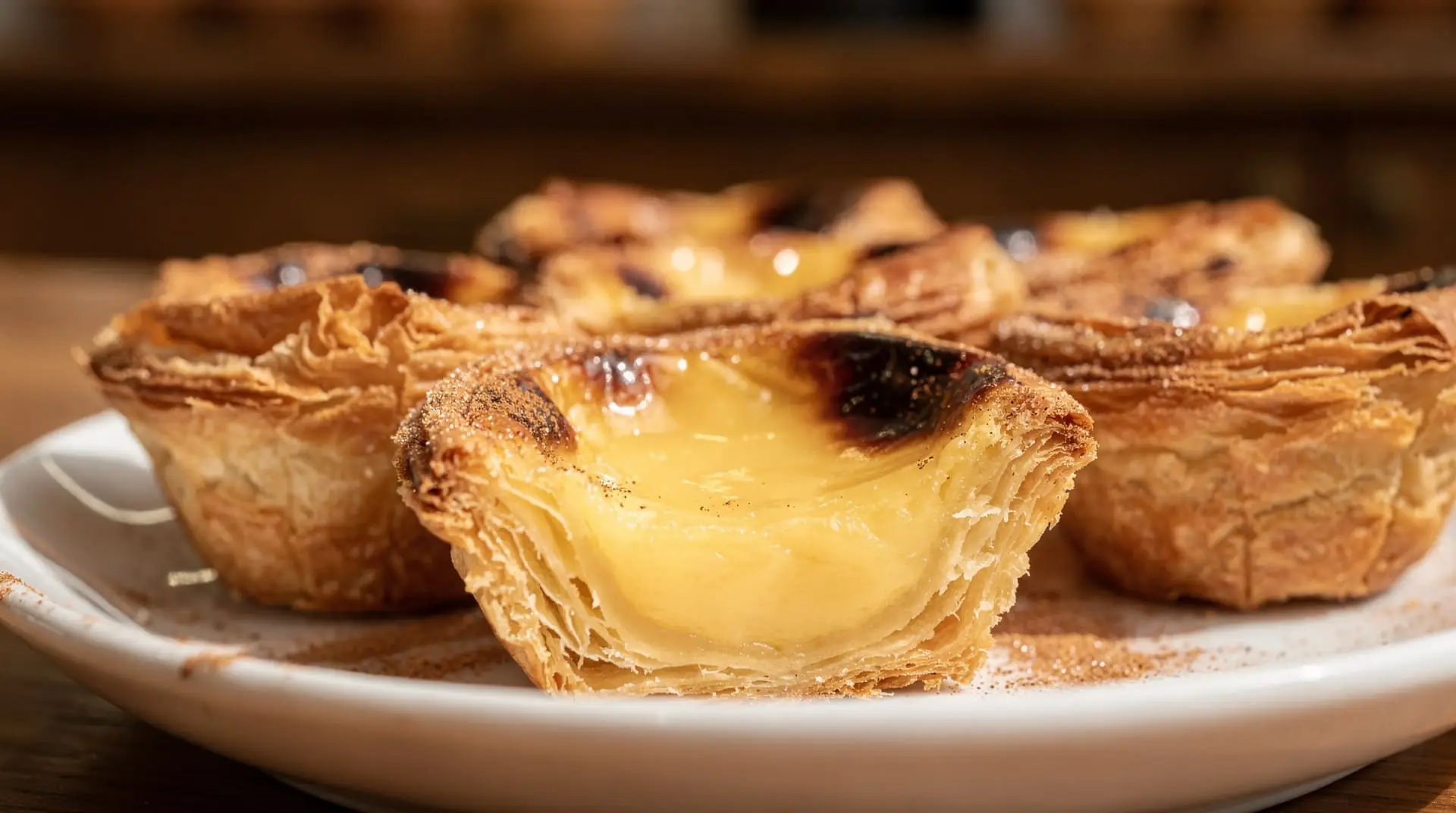
Pastéis de nata: where to eat the best in Lisbon
The honest guide to Lisbon's iconic custard tarts — Pastéis de Belém vs Manteigaria, Aloma, Castro and Fábrica da Nata, with queue strategies.
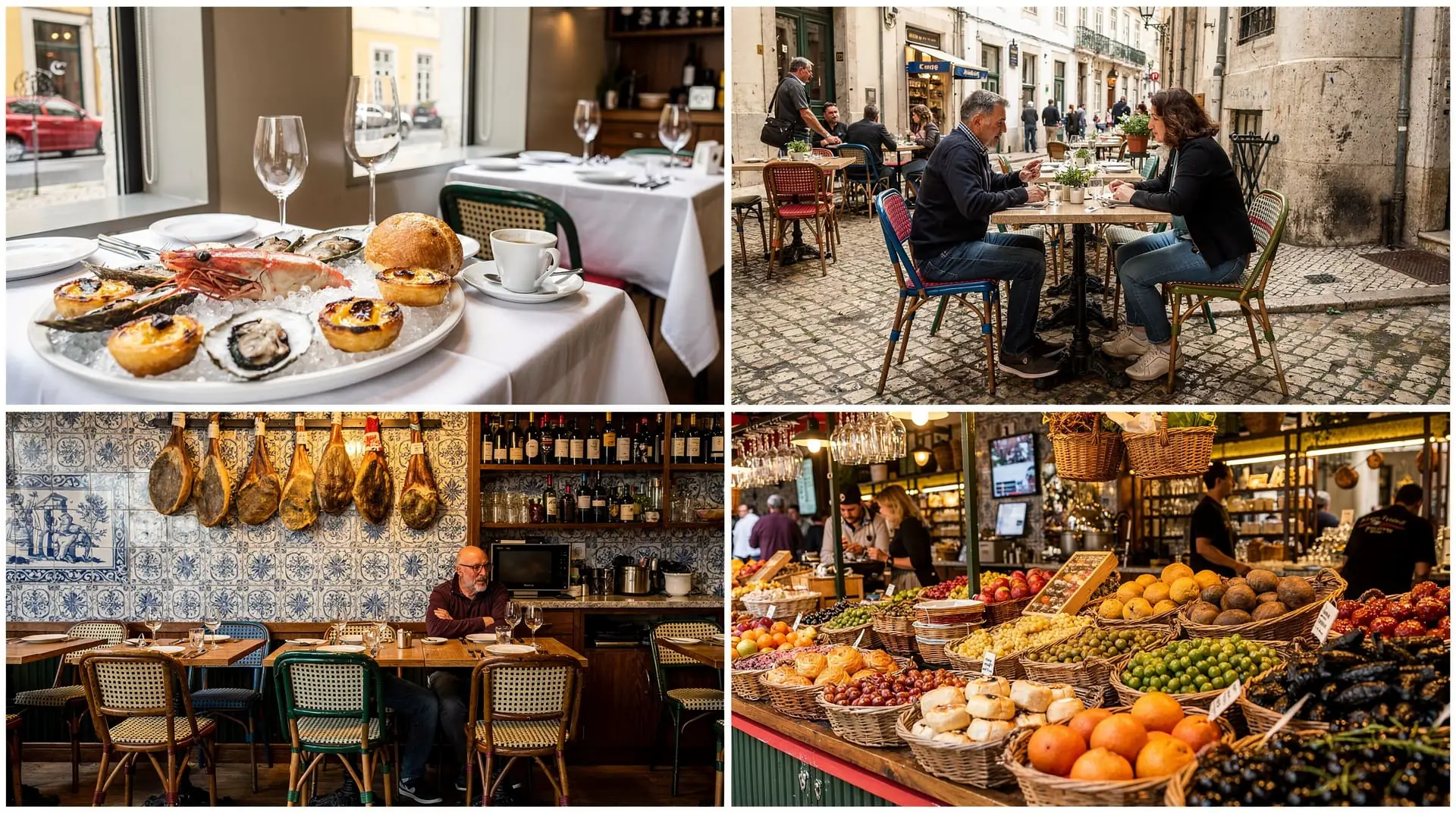
Where to eat in Lisbon: the honest restaurant guide
Tascas, marisqueiras, and Michelin stars — the best restaurants in Lisbon by neighbourhood, with honest tips on prices and what to avoid.
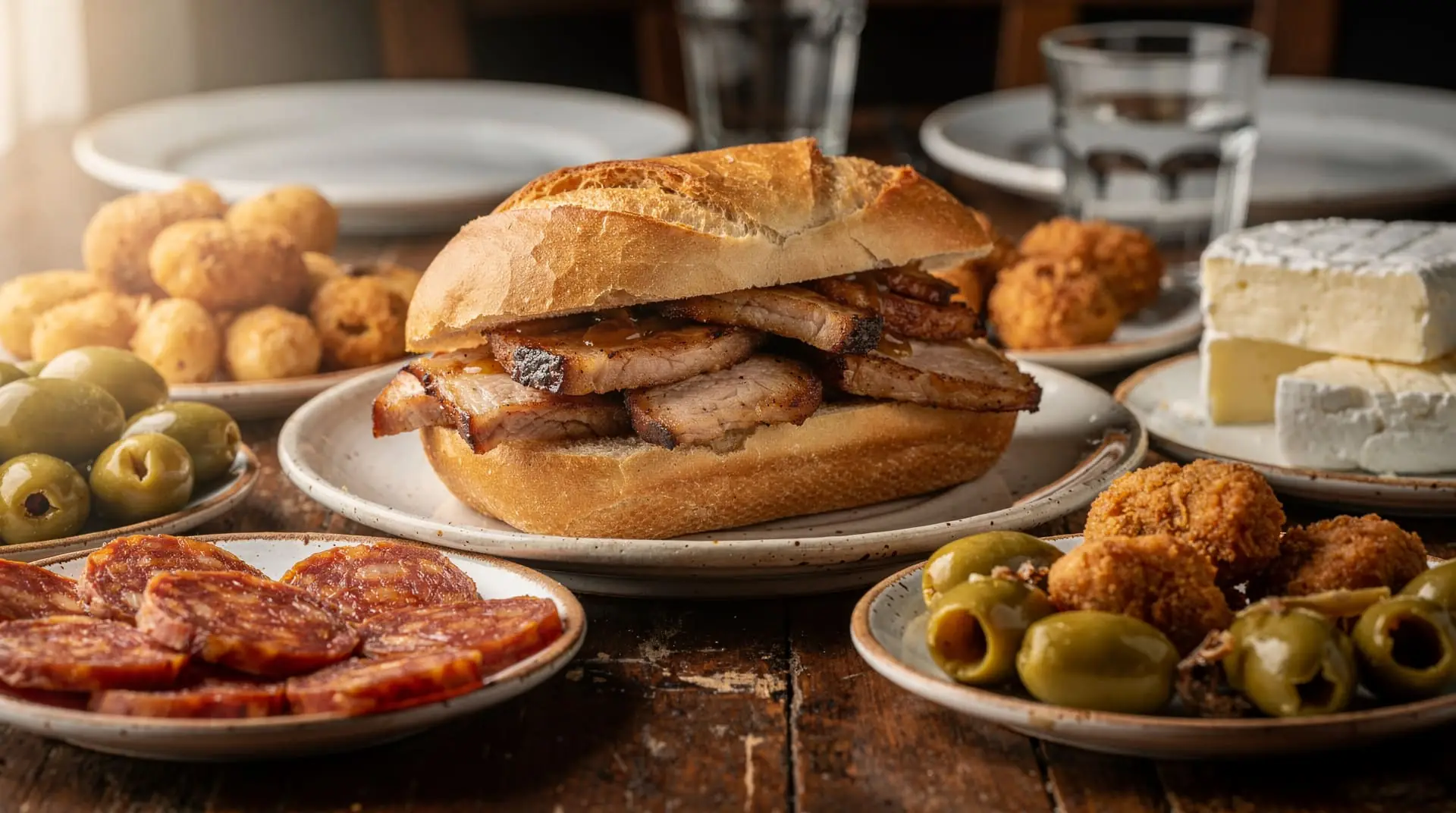
Bifana, petiscos, and Portugal's essential small plates
The best bifanas, peixinhos da horta, pataniscas, and petiscos in Lisbon — where to find them, what they cost, and why they matter.
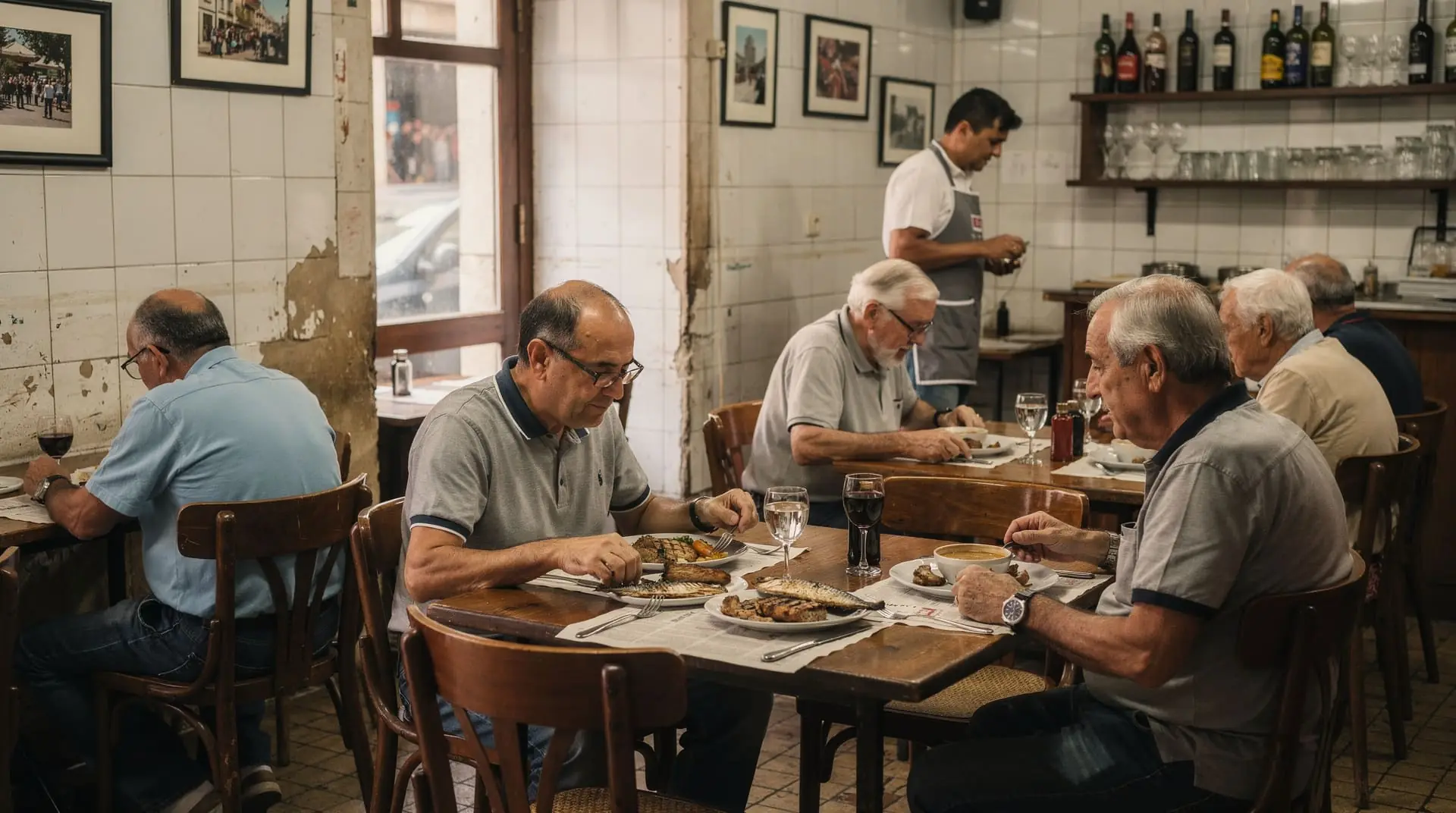
Cheap eats in Lisbon: tascas and lunch under 15 euros
Best cheap eats in Lisbon — tascas under €15 for lunch: Zé dos Cornos, Tasca do Chico, O Trevo bifanas, and Casa Independente. Real prices for 2026.
Ready to book? Top tours for this guide
We earn a small commission if you book through GetYourGuide — at no extra cost to you. Every tour is hand-picked and verified.
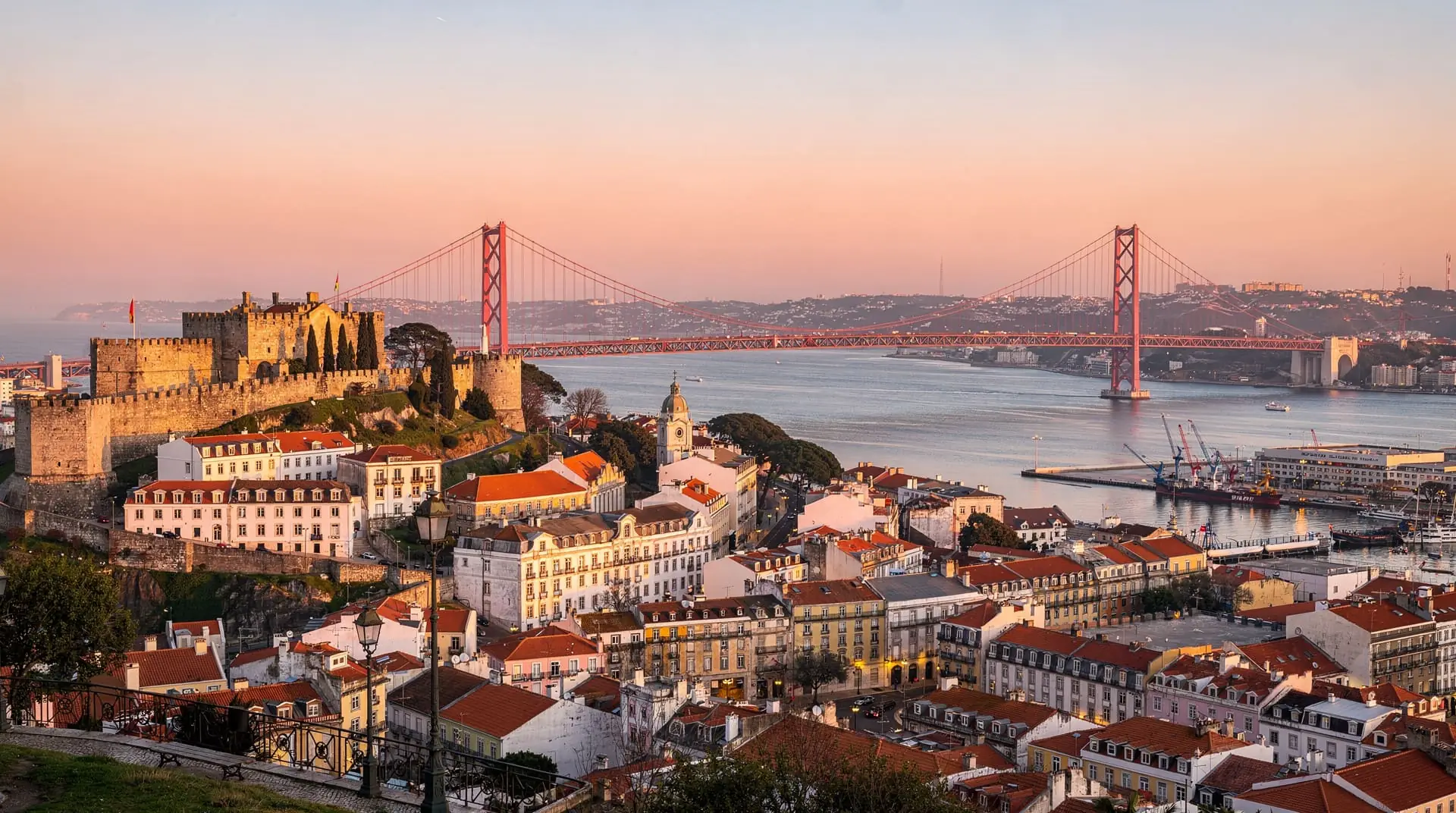
Lisbon: 48-Hour Hop-On-Hop-Off Bus Tour and Oceanarium Entry
Lisbon: MAAT Entry Ticket & Dolphin Watching Boat Tour
Lisbon: Alfama, Mouraria Walking Tour with Fado Night, Tapas
Lisbon: Hop-On Hop-Off Bus Tour
Lisbon: 1-or 2-Day Hop-On Hop-Off Bus Tour