
How I plan a 4-day Lisbon trip: my personal template
Published
Four days in Lisbon is the sweet spot. Long enough to feel unhurried, short enough that you’re making real choices rather than just doing everything available. I’ve planned this trip — for myself, for family, for friends who asked — enough times that I have a template. Here it is.
| Structure | 1 city day (Alfama), 1 day trip (Sintra), 1 city day (Belém/Chiado), 1 flex day |
| Base | one hotel, central (Baixa/Chiado, Alfama, or Bairro Alto) |
| Cost | see the Lisbon travel budget guide for a full daily breakdown |
| Best for | first-timers who want the highlights plus one day trip, unhurried |
| Booking | Sintra tickets and a fado table ahead; everything else can stay loose |
The underlying logic
Before the day-by-day, the principles that shape it:
Stay in one place. Lisbon is small enough that a central base — Baixa/Chiado area, or Alfama, or Bairro Alto — serves as a workable hub for everything. Don’t move hotels between days.
Do the big stuff early in the trip. Sintra on day four means if you have a bad day (tired, rain, delayed) you’ve missed your main day trip. Sintra on day two means you have margin.
Don’t plan the evenings too tightly. Lisbon’s best evenings are unplanned ones — you end up at a bar on a square somewhere, or you find a fado house that has a table, or you eat too much at a restaurant you stumbled on and spend the rest of the night on a viewpoint. Leave the evenings 80% open.
One museum per day maximum. This is personal but I think it’s right. Lisbon has excellent museums, but museum fatigue is real, and the best way to experience this city is outdoors.
Where you sleep matters more than what’s in the room. A central base — walking distance to Baixa/Chiado, Alfama, or Bairro Alto — saves more time and money on taxis than a marginally nicer room further out ever earns back. The where to stay guide breaks down the neighbourhoods by trade-off.
Day-by-day at a glance
| Day | Focus | Pace |
|---|---|---|
| 1 | Alfama, castle, fado dinner | Full day, evening fixed |
| 2 | Sintra day trip | Early start (8:00), long day |
| 3 | Belém, Chiado, Tagus, viewpoints | Full day, flexible order |
| 4 | Flex — second day trip, a museum, or a neighbourhood you missed | Open |
Day 1: Alfama and the castle
Morning: Arrive, check in, walk to Alfama. If you have energy, São Jorge Castle — buy the ticket in advance. The São Jorge Castle skip-the-line option saves the queue and includes the audio guide.
Afternoon: Walk down through Alfama to the Sé (cathedral — free to enter the nave), continue to Largo das Portas do Sol viewpoint. From there, narrow lanes in any direction for an hour. The Alfama neighbourhood guide has the fuller route if you want structure rather than wandering.
Evening: Fado in Alfama. Book a table at a mid-range fado house the day before you travel — the good ones fill up. The fado house guide gives the criteria for choosing, and the fake fado warning is worth a read before you pick a venue based on its street-facing photo alone.
São Jorge Castle skip-the-line ticket — buy before you arrive, saves 30-45 minutes of queuingDay 2: Sintra day trip
The golden rule: Leave Lisbon by 8:00. Train from Rossio at 8:05 or 8:20. Arrive Sintra 8:45-9:00. Walk or take bus 434 to Pena Palace, arriving at open (9:00 or 9:30 depending on season). See the palaces in the first two hours before the tour groups arrive.
Ticket logistics: Pena Palace entry must be pre-booked. Quinta da Regaleira also benefits from pre-booking. Both are on the Parques de Sintra website.
Afternoon: Return to Sintra village by 14:00, have lunch there (the restaurants near the National Palace are fine and reasonably priced), then train back to Lisbon or onward to Cascais via bus 403 (1 hour, scenic, via Cabo da Roca).
The Sintra day trip guide and Sintra without a car guide have the full logistics.
Day 3: Belém, Chiado, Tagus
Morning: Belém district. Jerónimos Monastery opens at 9:30 — book in advance. Torre de Belém, a five-minute walk west, can be seen from outside if queues are long (the interior doesn’t add much beyond the view, which you can get from the esplanade). Pastéis de Belém next door — arrive before 10:30 to avoid the worst queues, or get them to go and eat on the waterfront.
Midday: Tram 15E or bus 728 back east to Chiado (or taxi/Uber, about €8). Lunch in Chiado or the Time Out Market (touristy but genuinely good for a quick cross-section of Lisbon food).
Afternoon: Walk from Chiado to Bairro Alto. The Miradouro de São Pedro de Alcântara has one of the city’s best views at this hour, with the castle visible in the distance. The LxFactory is a converted industrial complex on the Alcântara riverfront that’s worth an hour on weekends (Sunday market is the main event).
Evening: Sunset from a viewpoint — Portas do Sol, São Pedro de Alcântara, or Senhora do Monte if you’re feeling adventurous. Then dinner somewhere in Chiado or Príncipe Real.
Day 4: What you didn’t get to yet
Day 4 is the flex day, and that’s intentional. By this point you know what the city has been holding back on you.
Some candidates:
- A Tagus cruise — the 2-hour sunset version is particularly good in summer
- The Tile Museum (Museu Nacional do Azulejo) in the eastern city — often underrated and genuinely extraordinary
- A neighbourhood you haven’t spent time in (Mouraria, Graca, Parque das Nações)
- A second day trip: Cascais if you didn’t combine it with Sintra; Évora if you have the energy for a longer train
The tools that help
The 4-day Lisbon itinerary converts this framework into a complete day-by-day programme with specific timing. The Lisboa Card calculator helps you figure out whether the card is worth buying for your specific planned activities. The budget calculator gives you a cost projection before you leave.
The main thing I’ve stopped doing: planning too many specific things into each day. The best moments on any Lisbon trip are the ones you didn’t plan, and leaving room for them is not laziness — it’s correct travel planning.
What I’d change for a shorter or longer trip
Three days: drop the flex day, keep Alfama and Sintra, compress Belém and Chiado into a single tighter afternoon. See the how many days in Lisbon guide for the fuller version of this trade-off across trip lengths.
Five-plus days: add a second day trip (Cascais or Évora), and let one day have genuinely no agenda at all — Lisbon rewards unstructured time more than most cities its size.
Local-guide city walking tour — a good way to orient yourself on day one before you start planning soloRelated guides
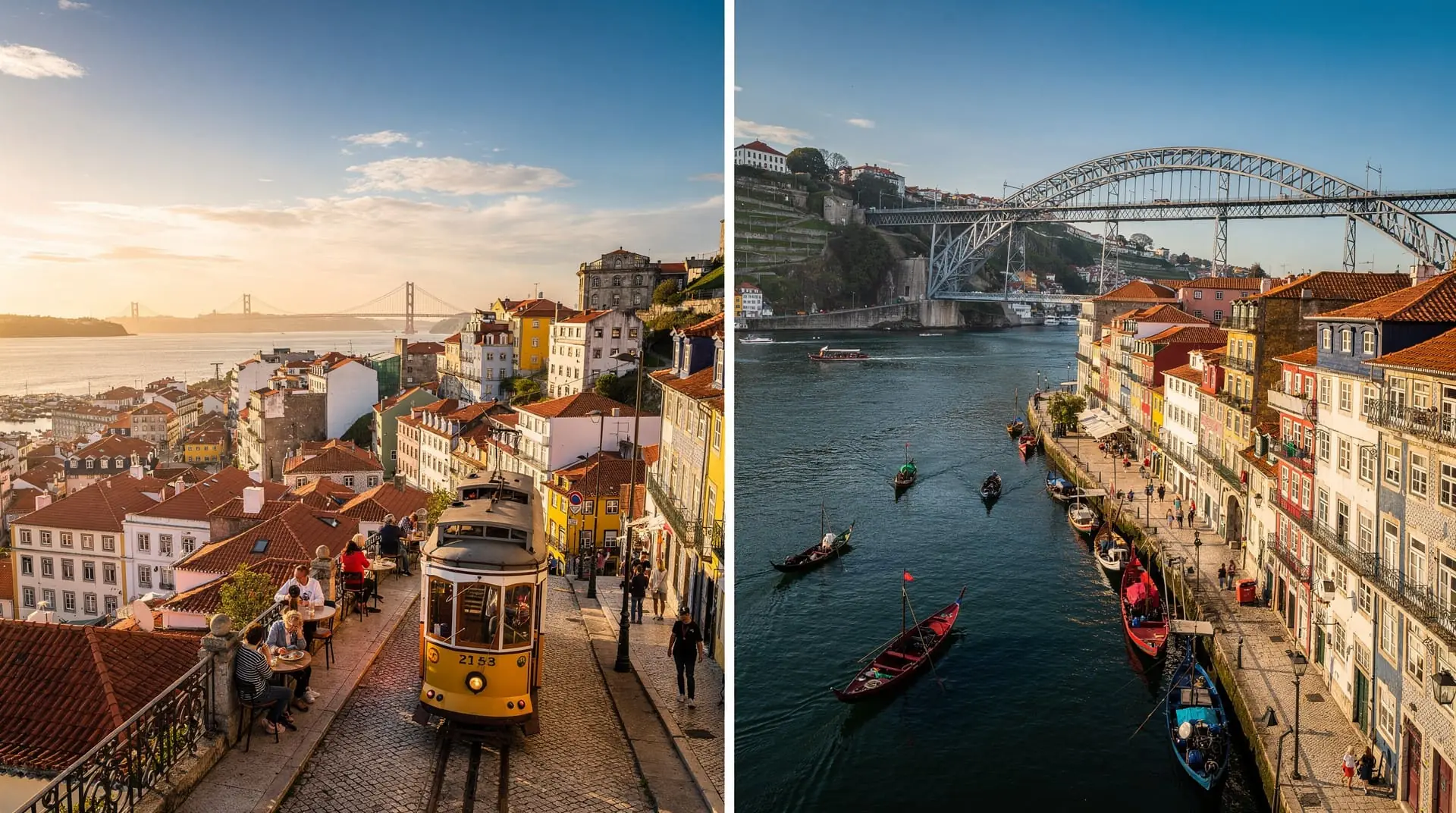
Lisbon vs Porto: which Portuguese city should you visit?
Honest head-to-head: vibe, weather, food, wine, day-trips and budget. Which city wins for your trip — and when to visit both.
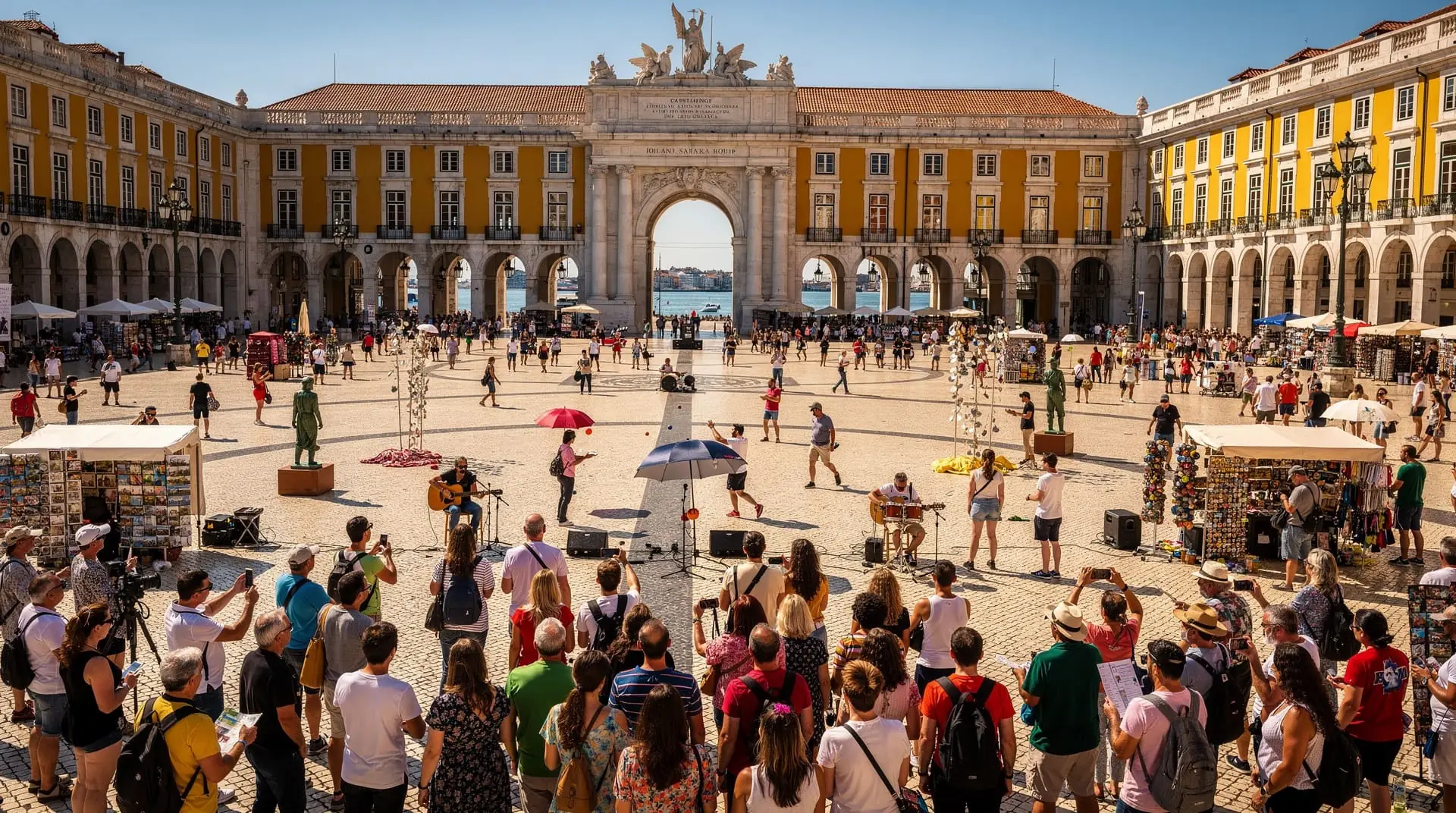
Lisbon tourist traps: the master list (and how to avoid each one)
The complete honest guide to Lisbon's tourist traps: couvert scam, fake fado, tram 28 pickpockets, airport taxis, Belém queues and more. Real advice.

Sintra vs Cascais: which day-trip should you pick?
Sintra offers palaces and hills but costs time and crowds. Cascais offers beaches and a marina and half the effort. Pick the right one for your trip.
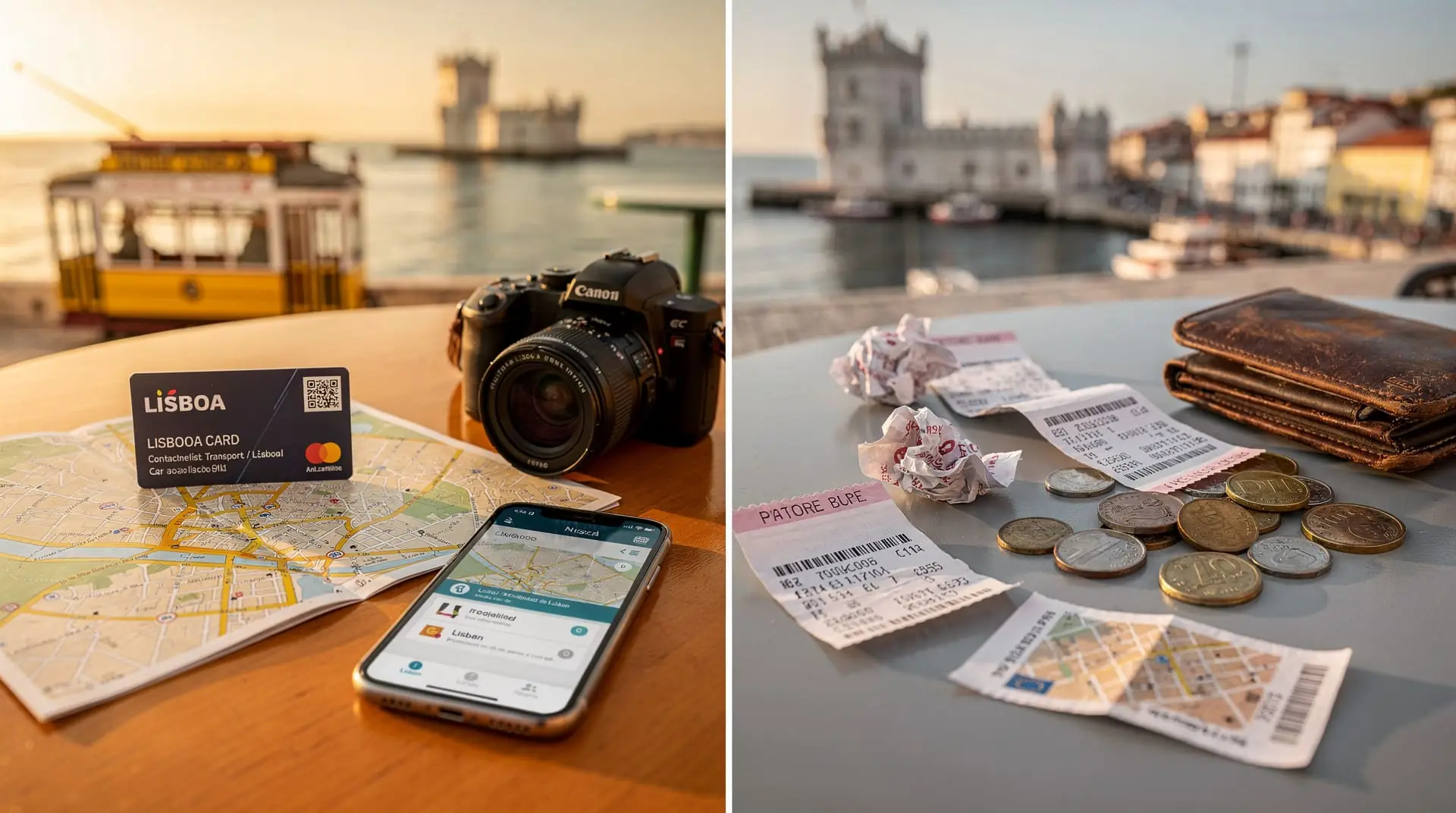
Lisboa Card vs paying separately: is it worth it?
Worked break-even examples for 1, 2 and 3-day Lisboa Cards. Honest verdict: who saves money and who pays more.