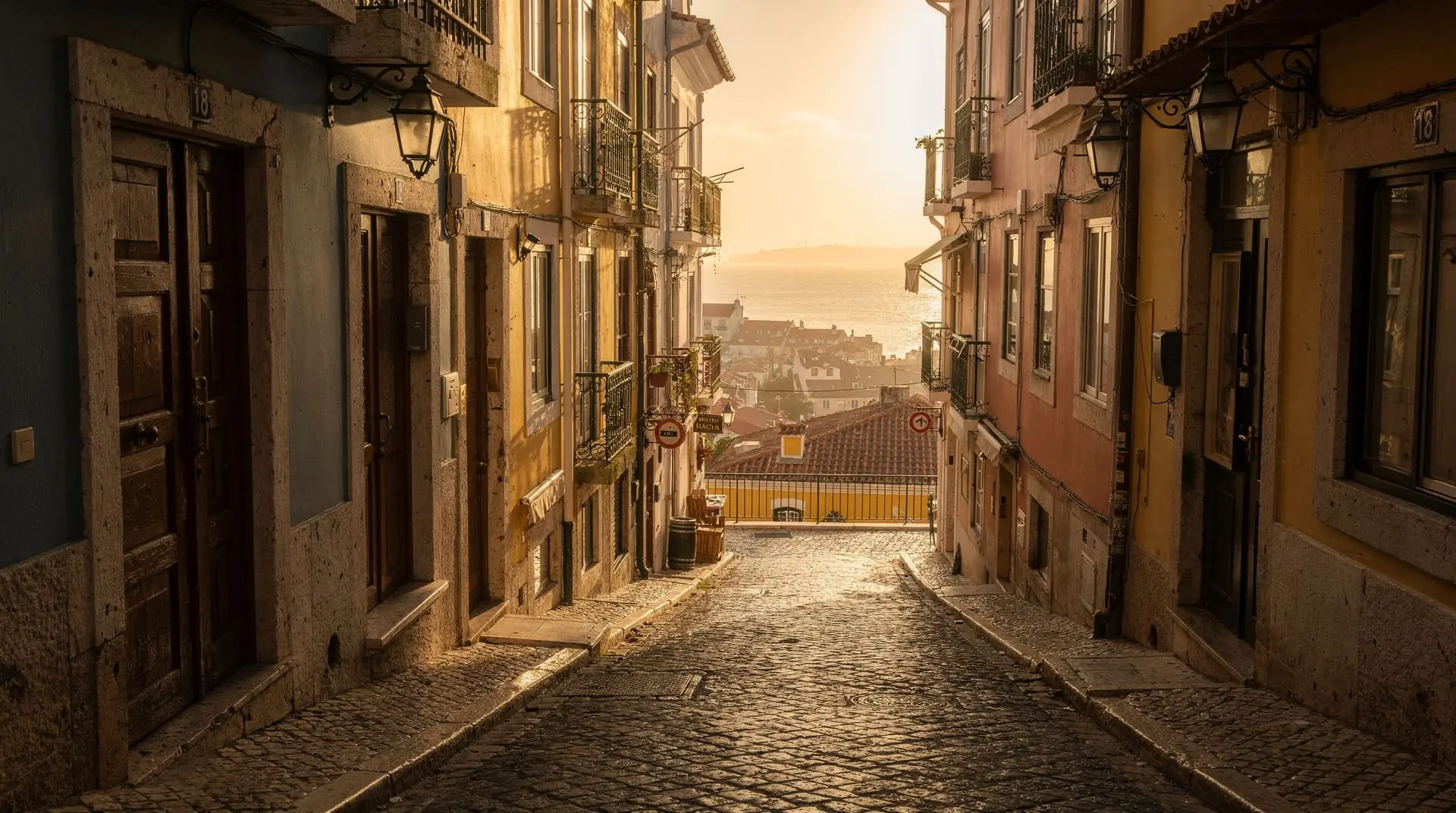
48 hours in Alfama: fado, viewpoints, and pastéis at dawn
Published
Friday night. I stepped off the metro at Terreiro do Paco and turned uphill, following the sound of something I couldn’t quite name — a voice, maybe, or just the wind through a narrow lane. By the time I reached Alfama, I understood. This district doesn’t welcome you so much as absorb you.
I had forty-eight hours, a small bag, and a booking at a guesthouse wedged between two pastel-yellow buildings on Rua dos Remédios. What follows is not a checklist. It’s what actually happened.
| Where | Alfama, Lisbon’s oldest district, east of the castle hill |
| Base cost | around €60-200/night depending on room type |
| Getting there | Metro to Santa Apolónia or Terreiro do Paço, then uphill on foot |
| Best time | early morning or Sunday before 9:00, when the crowds haven’t arrived |
| Pace | slow — this is a wandering weekend, not a checklist |
Friday evening: the slow climb
Alfama is Lisbon’s oldest surviving neighbourhood, one of the few that the 1755 earthquake left more or less intact. The Moors built it, the Portuguese kept it, and somehow it never became the sanitised tourist district it probably should have turned into by now. There are souvenir shops, yes — I won’t pretend otherwise — but step half a block off the main drag and you’re in a working neighbourhood where laundry dries between buildings and old men play cards outside the tabacaria.
I arrived too hungry to do anything sensible, so I followed a smell of charcoal to a tiny grill on Rua do Recolhimento. No menu in English, no website, a handwritten board outside. I had grilled chicken with arroz de tomate and a glass of house red for €9.50. It was exactly right.
Afterwards, I walked up to Miradouro de Santa Luzia — the viewpoint draped in bougainvillea overlooking the Tagus. At dusk on a Friday in early May, there were maybe fifteen people there. A couple sharing a beer on the wall. A photographer with a tripod. The light going orange over the water. I sat on the bench for longer than I planned.
Saturday morning: the tram, the castle, the pastry
I was at the tram 28 stop on Rua da Conceição by 7:15. The tram arrives packed from Martim Moniz and empties somewhat by Alfama — go early and you might actually get a seat. The ride up through the district, the tram groaning around corners so tight it seems impossible, takes about twelve minutes to Largo das Portas do Sol. Worth it exactly once, done correctly. See our guide to tram 28 for the full strategy on avoiding the worst of the crowds.
São Jorge Castle opens at 9:00 and if you’re there at that time, the keep is almost quiet. I bought my ticket at the gate (€15 in 2022, check current prices) and spent an hour walking the battlements with maybe forty other people. By 11:00, when I left, the tour groups had arrived and the queue stretched back to the ticket booth. That two-hour difference matters enormously.
Book your São Jorge Castle e-ticket with audio guide in advanceFrom the castle, I walked down through Mouraria to the Mercearia do Manel on Rua do Terreirinho — a small grocery that sells excellent cheese, chouriço, and local wine by the glass. I ate a small plate of petiscos standing at the counter. €6.
Pastéis de nata came later, from Manteigaria on Rua do Loreto in Chiado — a short walk from Alfama, worth the detour. The ones at Pastéis de Belém are famous, but the queue at Belém on a Saturday morning can hit forty minutes. Manteigaria makes them continuously, you can watch through the glass, and the line moves fast. Two pastéis and a bica: €2.80.
Saturday afternoon: the grid of alleyways
The best thing you can do in Alfama on a Saturday afternoon is have no plan at all. I climbed from Largo do Salvador toward Graça, took wrong turns, found dead-ends, backtracked. I came across the Convento da Graça almost by accident — a 13th-century monastery that most visitors walk past because it’s not on the main route. The courtyard was empty. A cat slept on the stone.
The Miradouro da Graça sits just above the convent and gives you a view of the castle from above, which most viewpoints don’t offer. Less photographed than Portas do Sol, and at 3pm on a Saturday it was quiet enough to think.
I lost another hour in the Feira da Ladra — Lisbon’s famous flea market, which runs on Tuesday and Saturday mornings in Campo de Santa Clara, just above Alfama. It was winding down by 3pm but the vendors who remain late are often the ones willing to deal. I found a set of azulejo tiles from a demolished building, blue and white, for €12. They are now on my kitchen wall.
For the afternoon’s serious walking, the Alfama neighbourhood guide has a more systematic breakdown of what to see and in what order, including the hidden staircase at Beco do Carneiro that almost nobody finds.
What I skipped, and don’t regret
Two hours in, I made a call I’d make again: I skipped the Museu do Fado, even though it sits right at Largo do Chafariz de Dentro and every guidebook says to go. Not because it isn’t good — by most accounts it is — but because I only had one afternoon of wandering time and I wanted the neighbourhood itself, not an exhibit about it. If you have a third day, put it back on the list. If you have two, I’d still choose the alleys.
I also didn’t do a guided walking tour, though several run through Alfama and Mouraria together and get good reviews from people who want the history explained rather than stumbled into. There’s no wrong answer here — it depends whether you want context or accident.
Guided Alfama walking tour, if you’d rather have the history explained than guessed atSaturday night: fado, properly done
This is where I have to be honest with you, because a lot of what’s sold as fado in Alfama is not fado as the locals experience it.
The fado houses clustered around Rua do Capelão and near Largo do Chafariz de Dentro exist on a spectrum. At one end: expensive dinner-show operations where the performers are technically proficient but performing for an audience who cannot tell good fado from adequate fado. At the other end: small houses where the singers are locals, the audience includes people who actually care, and the atmosphere is the thing itself.
I had booked a table at a house on the edge of Alfama — not one of the famous names, but recommended by the guesthouse owner, who was Alfama-born. Dinner was a fixed menu (€38, including wine), three fadistas performed over two and a half hours, and by the end I genuinely understood something I hadn’t before. The Portuguese guitarist in the corner barely moved. The viola baixo player watched the singer’s face. The fadista herself sang with her eyes closed and hands still.
Experience the best fado and food in Alfama on a guided eveningIf you want the full context for choosing a fado house — what to look for, what to avoid, and which nights are better than others — read our guide to fado houses in Alfama.
Sunday morning: the empty streets
Alfama on Sunday morning before 9:00 is a different city. The tourist groups don’t arrive until mid-morning, the restaurants and shops are mostly shut, and the streets belong to the cats (there are many cats) and the occasional resident heading to the bakery.
I woke at 7:00 and walked the length of Rua de São Miguel down to the river. At Largo do Chafariz de Dentro, a small fountain square that most visitors don’t find, a woman was hanging laundry across the narrow lane above. The Tagus glinted two blocks away. A man pushed a cart of vegetables uphill.
I bought a croissant and a galão from a café on Calcada do Duque — €2.20 — and ate it sitting on the steps of a church whose name I never found. This is the thing about Alfama: you stop needing to know the names of things. You just sit with what is.
The practical side
Getting there: Metro to Santa Apolónia (Blue/Green line) or Terreiro do Paço (Blue/Green line). Taxis and Uber drop you at the bottom of the hill — Alfama’s streets are too narrow for most vehicles higher up.
Staying: I paid €85/night for a double room in a small guesthouse. There are now more options, from budget rooms around €60 to boutique hotels nudging €200. The where to stay in Lisbon guide covers the full range.
Watch for: Tram 28 is infamous for pickpockets. Keep your phone in a front pocket, not a back one, and be especially alert at the Martim Moniz terminus where the tram is most crowded. The honest Lisbon guide covers this and other things you need to know.
Money: Alfama is cheaper than Chiado but not as cheap as it used to be. Budget €30-40 for dinner with fado, €10-15 for lunch without it. For a wider sense of what a Lisbon weekend actually costs beyond one neighbourhood, the Lisbon travel budget guide breaks it down by category.
The two-day Lisbon itinerary builds a similar structure into a full programme if you want something more systematic. But honestly? Alfama rewards wandering more than planning. Bring comfortable shoes, leave the agenda loose, and follow the music.
If I only had one day, not two
People ask me this a lot, so: cut Sunday morning (as lovely as it is, it’s the most skippable part), keep Friday evening and Saturday whole. The castle-at-9:00 trick and the fado dinner are the two things I wouldn’t cut under any circumstance. Everything else — the flea market, the second viewpoint, the aimless Saturday afternoon — is genuinely optional, however much I enjoyed it. If you’re combining Alfama with the rest of the city, our first-timer guide has the fuller balancing act between neighbourhoods.
Related guides
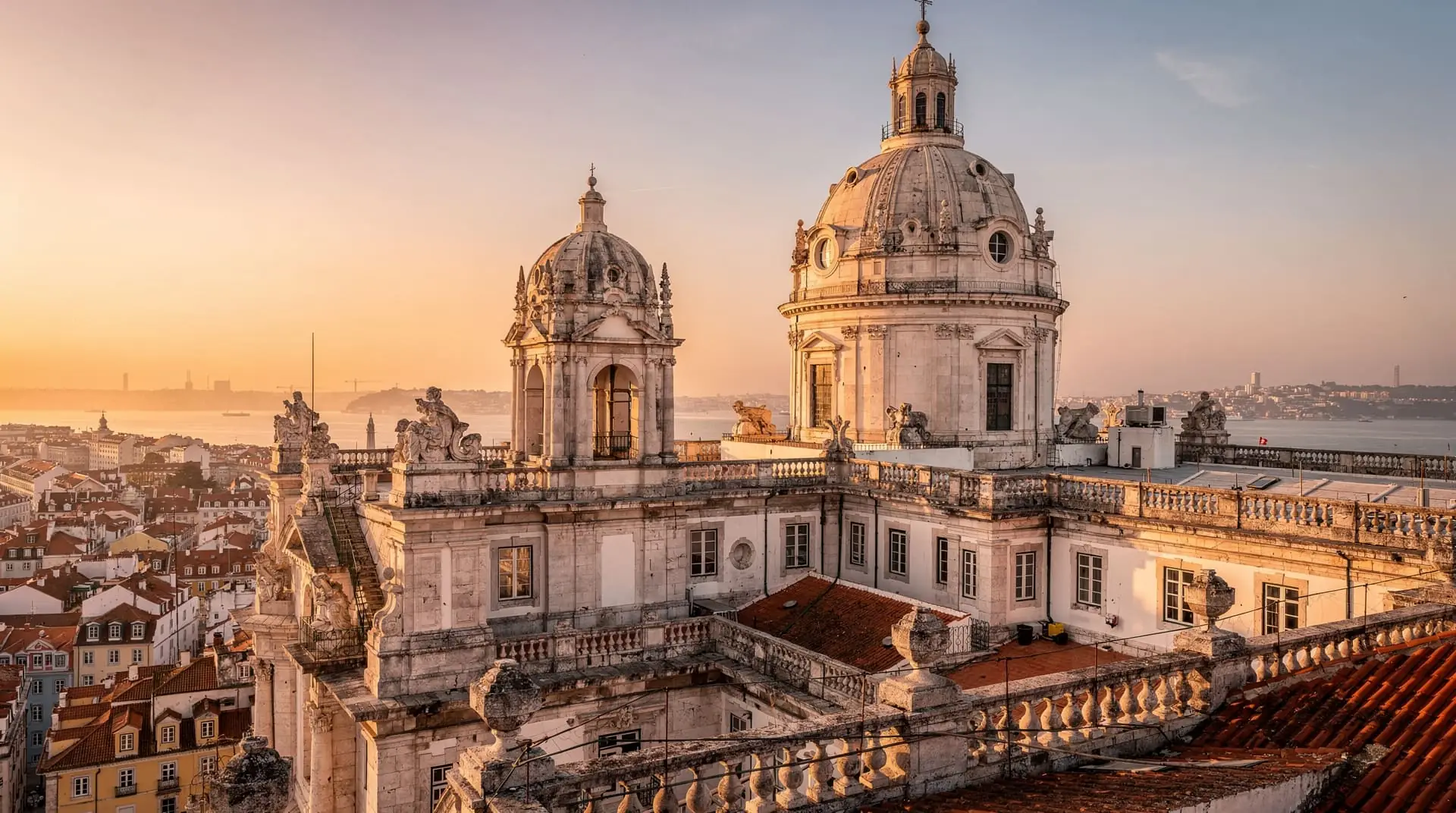
National Pantheon Lisbon: the Santa Engrácia dome and rooftop views
Lisbon's National Pantheon — Amália Rodrigues' tomb, the baroque dome, rooftop views over Alfama, and combining with the Feira da Ladra flea market.
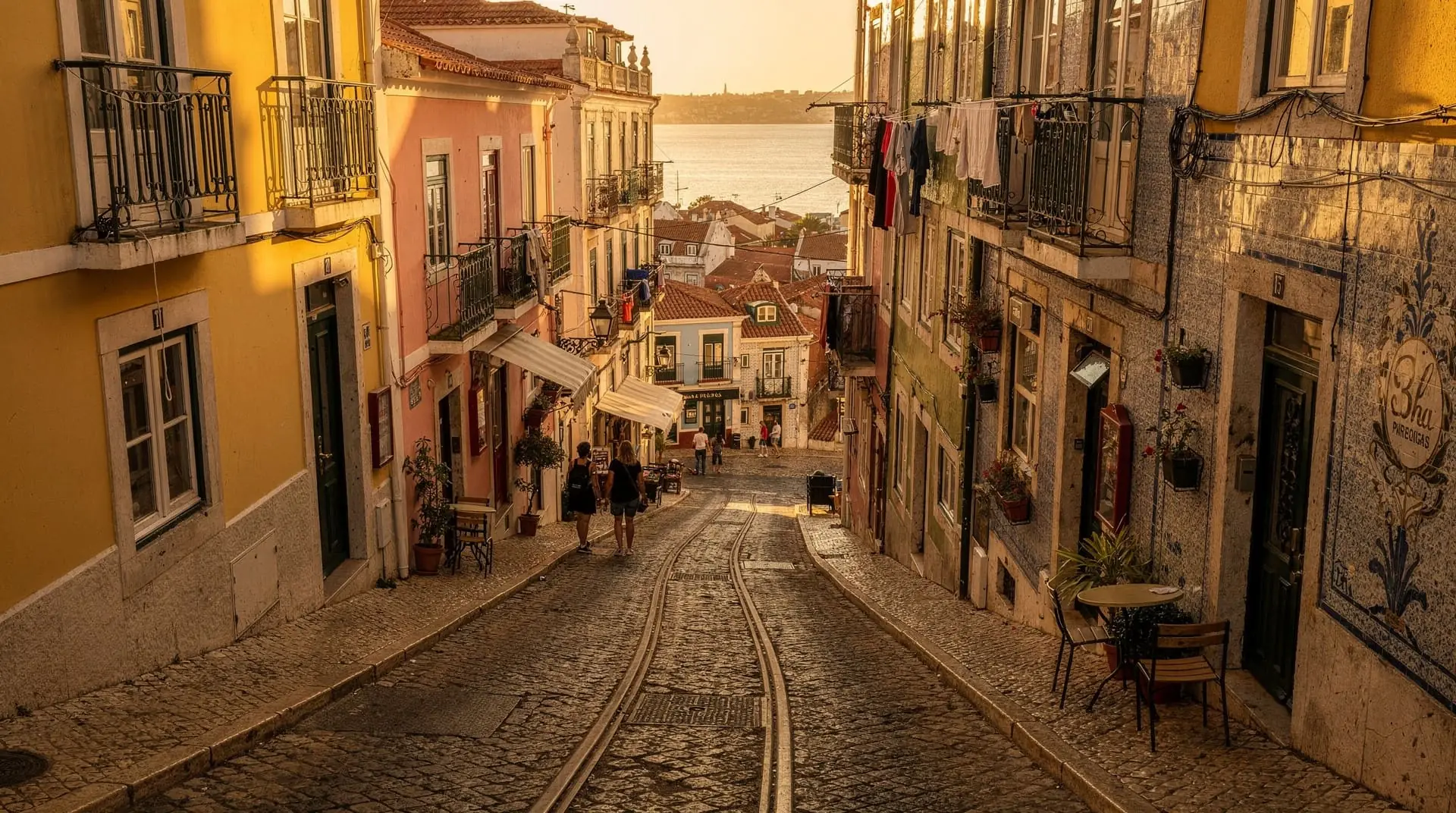
What to do in Alfama: the complete walking guide
Explore Alfama on foot: fado houses, the Sé cathedral, miradouros, and tile-covered alleys. Real routes, honest tips, and no tourist traps.
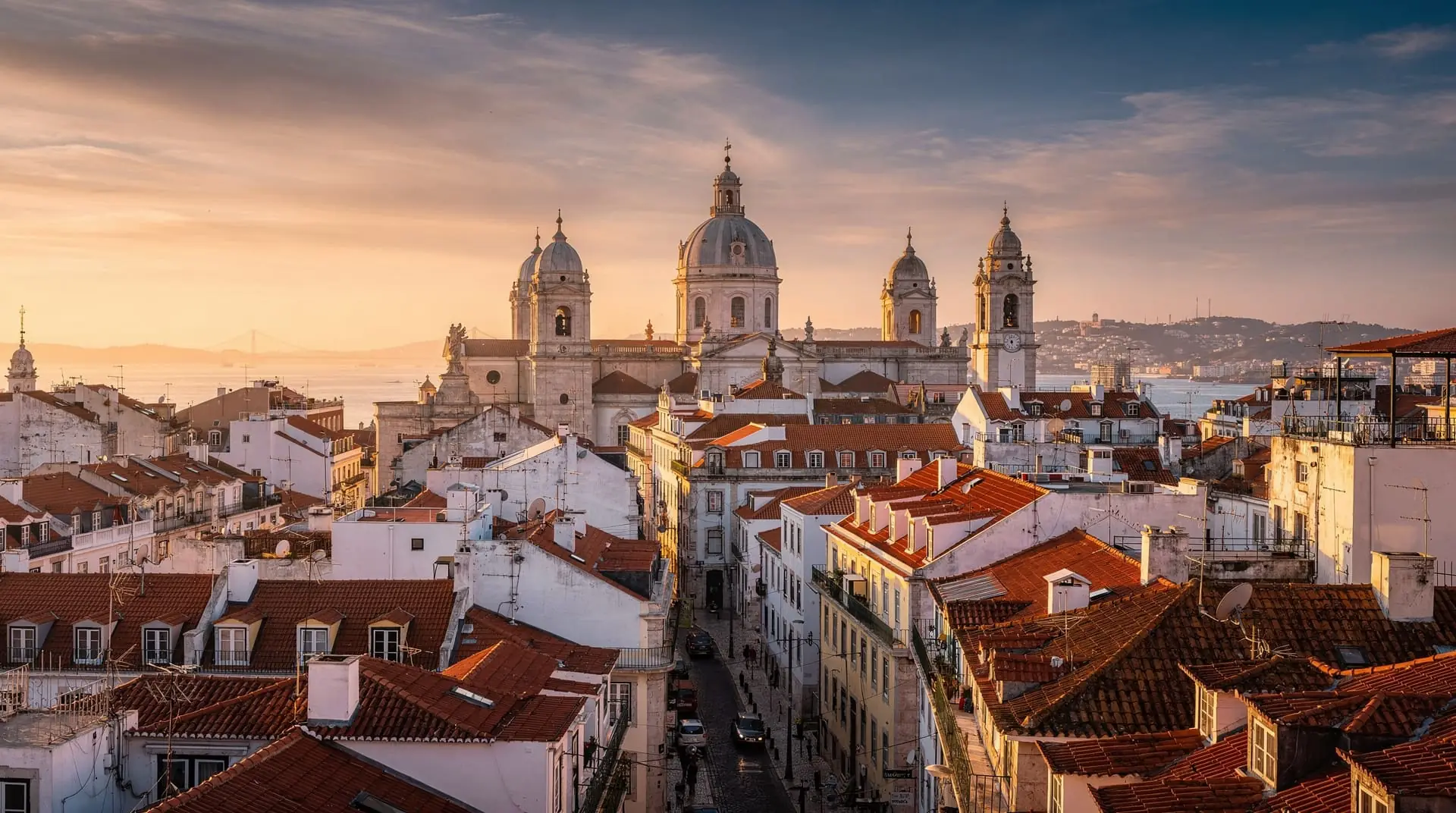
Best viewpoints in Lisbon — ranked and honest
The 8 best miradouros in Lisbon ranked: Senhora do Monte, Portas do Sol, São Pedro de Alcântara, Santa Catarina, Graça, Santa Luzia, Castelo, Cristo Rei.
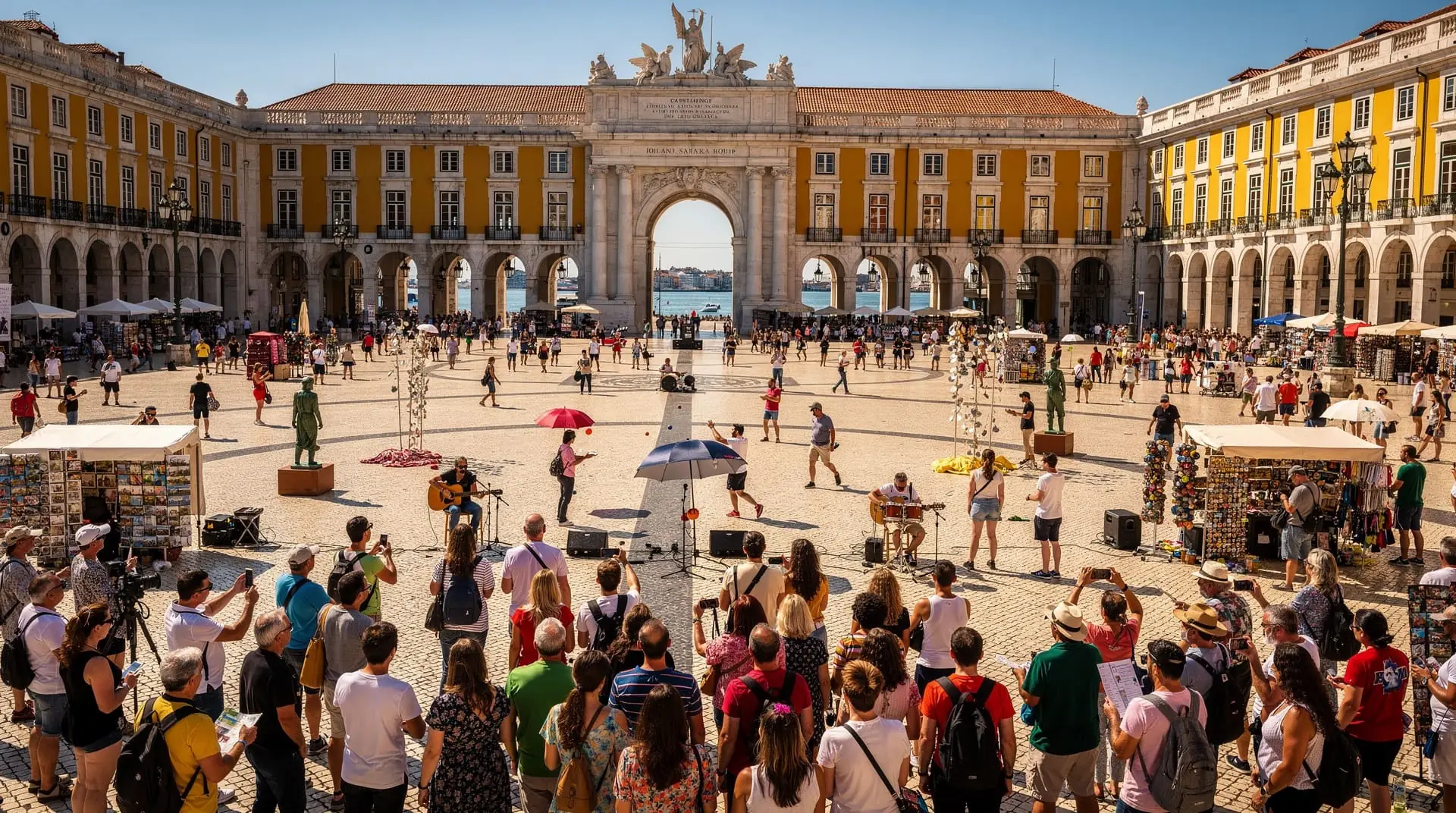
Lisbon tourist traps: the master list (and how to avoid each one)
The complete honest guide to Lisbon's tourist traps: couvert scam, fake fado, tram 28 pickpockets, airport taxis, Belém queues and more. Real advice.