Costa da Caparica
30 km of Atlantic beach 30 minutes from Lisbon: surf lessons, the transpraia mini-train, and Lisbon's nearest proper Atlantic beach.
Quick facts
Top tours and experiences
We earn a small commission if you book through GetYourGuide — at no extra cost to you. Every tour is hand-picked and verified.
Setubal & Tróia: Sado Estuary Dolphin Watching Boat Trip
Sesimbra: Arrábida Beaches & Caves Boat Tour with Snorkeling
Sesimbra: Secret Bays and Beaches Boat Tour with Snorkeling
Sesimbra: Private Boat Tour-Wild beaches, secret bays, Caves
Sesimbra: Scenic Boat Tour & Snorkeling/Paddle Boarding
Sesimbra: Boat Tour with Lunch at Portinho da Arrabida
Costa da Caparica is where Lisbon residents go when they want a proper beach. Not the river beaches of Cascais (the Tagus mouth still runs cold), not the sheltered coves of Arrábida (an hour south), but a long, exposed, wave-pounded Atlantic shore with consistent surf and sand that runs without interruption for 30 kilometres down the Arrábida peninsula.
The town of Caparica sits at the northern end of this beach, 15 kilometres from central Lisbon as the crow flies. You cannot take the bridge and drive straight there in 20 minutes (the one-way bridge access requires heading south past Almada), but by bus from Praça de Espanha or by the ferry-and-bus combination via Cacilhas, you can realistically be standing on the sand within 45–60 minutes of leaving your hotel.
For Lisbon-based travellers wondering whether to head to Cascais or Caparica for a beach day: Caparica has stronger surf, longer beach, and a less polished town. Cascais has the train, better infrastructure, and a more varied day out. For a surf lesson or a long Atlantic swim, Caparica wins.
| Where | 15 km southwest of Lisbon, across the Tagus |
| Cost | Budget-friendly; lunch €12–20, surf lesson €30–40 |
| Time needed | Half a day to full day |
| Getting there | Bus 161 from Praça de Espanha (~45 min) or ferry + bus |
| Best time | June–September for swimming; year-round for surf |
Getting to Costa da Caparica
By bus from Praça de Espanha (simplest)
Transportes Sul do Tejo (TST) runs express bus 161 from Praça de Espanha (Metro Jardim Zoológico, Line 2 Blue) directly to Costa da Caparica. Journey time is approximately 40–50 minutes depending on traffic, and the bus runs every 20–30 minutes in summer. Cost: around €3.50 one-way.
This is the most straightforward option and the one most visitors use. You can also pick up TST buses from Almada if you are already on the south bank.
Ferry from Cais do Sodré to Cacilhas, then bus
Take the Transtejo commuter ferry from Cais do Sodré terminal to Cacilhas (ferry stop is right at the train/metro station). The crossing takes 10 minutes and costs approximately €1.50 each way — one of the best-value river crossings in Europe. From Cacilhas, TST buses run to Costa da Caparica in around 30 minutes.
This route takes slightly longer overall (~55–65 minutes) but gives you the river crossing experience and is popular with commuters, meaning the connections are frequent and reliable. It is also the option the ferries guide covers in detail.
By car
Cross the Ponte 25 de Abril (direction Setúbal), exit at Costa da Caparica, and follow the N377. Journey time from central Lisbon is 25–35 minutes without traffic — dramatically longer on Friday afternoons in July–August when this is the main Lisbon beach escape route. Parking in Caparica town is pay-and-display and fills by 11am on summer weekends.
The beach and the transpraia mini-train
The Caparica beach begins at the town and extends 30 kilometres south. The northern section (beaches 1–15, numbered from the town end) is most accessible and has the best infrastructure. Beach 1 (Praia de São João) and beaches 2–5 are the most developed, with beach bars, showers, water sports operators, and food options.
The transpraia is a narrow-gauge mini-train that runs along a track behind the dunes from the town end (stop 1) to stop 20 and beyond in summer. It is an efficient way to reach the less crowded southern beaches; the train runs every 20–30 minutes in season and costs around €2–4 depending on how far south you go. Get on it to escape the crowds — beaches 15–20 are noticeably quieter than the northern section.
Beach designations: beaches closer to town attract a younger crowd (including beach bars and some late-night activity); beaches 10–17 are popular with families; the southern beaches beyond 17 are largely undeveloped.
Surfing at Caparica
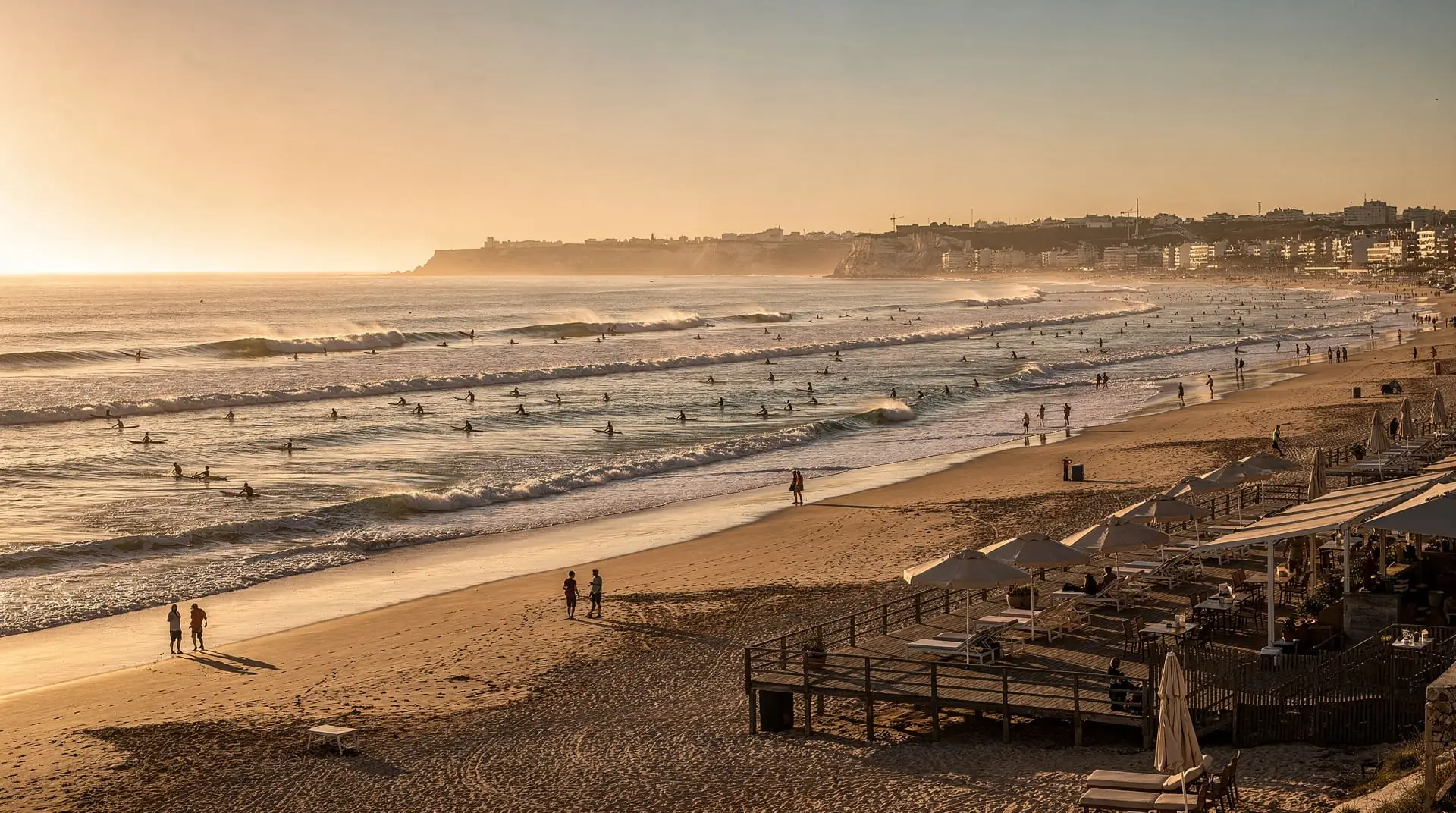
The Atlantic swell hits the Caparica coast consistently, making this the most reliable surf destination within easy reach of Lisbon. Waves are generally beach break — soft sand-bottom breaks that are well suited to learners — with some reef sections further south providing more defined conditions for experienced surfers.
Surf schools operate from the beach year-round; April–October are the best months for lessons (warmer air, manageable swell). A 2-hour group lesson including equipment typically costs €30–40; private lessons €60–80.
Costa da Caparica: surf experience Lisbon: surf experience at Costa da CaparicaThe water temperature at Caparica ranges from 14°C in winter to 20°C in peak summer — cold by Mediterranean standards, acceptable with a wetsuit. Wetsuits are provided with lesson bookings.
What else to do at Caparica
The town
Caparica town itself is functional rather than pretty — a grid of streets with restaurants, surf shops, accommodation, and the bus terminal. The Praça da Liberdade at the centre has a few decent cafés for morning coffee. The town has the feel of a Portuguese beach resort built for locals, not tourists — which means it is unpretentious and good value compared to Cascais or Sesimbra.
The fish restaurants on the streets behind the beach are the main food draw. Grilled fish, amêijoas, arroz de marisco — priced for weekending Lisbonites rather than foreign tourists.
Lagoa de Albufeira
About 15 km south of Caparica town (accessible by car or the transpraia), Lagoa de Albufeira is a sheltered lagoon just behind the dunes with calm, warmer water. Families with small children sometimes prefer it to the exposed Atlantic side. Windsurfing and kitesurfing are popular on the lagoon.
Walking the coastline
The dune system behind the beach is protected and interesting for a walk — marram grass, wildflowers in spring, and a stark Atlantic landscape. You can walk south from the town for kilometres without reaching development. The coastal path connects Caparica to the natural area of the Arrábida peninsula on a very long walk.
Where to eat at Caparica
Restaurante O Barbas on Rua dos Pescadores is the most locally respected for grilled fish and seafood. Simple, friendly, around €15–20 per person. Busy at weekends.
Tasca do Calado (near the fish market end of town) does a good arroz de lingueirão (razor clam rice) and is favoured by the local surf community.
Beach bar grill restaurants (esplanadas) on the beach itself are convenient for lunch — grilled chicken, fish, and sandwiches at €12–18. Quality varies; the ones at beaches 2–5 are the most established.
Avoid the tourist-menu restaurants directly facing the bus terminal — they are convenient but overpriced relative to what is two blocks inland.
Where to stay at Caparica
Hotel Costa da Caparica (central, 4-star, rooms from €90–130/night in summer) is the largest hotel in the area and conveniently located near the beach entrance.
Hotel Praia Mar is a smaller 3-star option closer to the water (from €70–100/night).
Surf camps — several operate in and around Caparica, offering dorm accommodation with surf lessons included. Prices from €40–60/night with instruction. Good options for solo travellers and younger visitors.
Most visitors to Caparica day-trip from Lisbon, which makes absolute sense given the transport connections and the cost of Lisbon accommodation.
How long to spend
Half a day works for a beach swim, a surf lesson, and lunch. Take the 10am bus from Praça de Espanha, arrive at 10:45am, two hours at the beach, lunch, back in Lisbon by 4pm.
A full day lets you take the transpraia south to the quieter beaches, have a long lunch, and return at sunset. Caparica sunsets can be spectacular — the beach faces west and the sky turns orange over the Atlantic.
Honest tips and traps
Avoid Fridays in summer if using the bus. The 161 bus from Praça de Espanha becomes very crowded on Friday afternoons as Lisbonites leave for the weekend. Go Thursday or Saturday-early instead.
The beach is exposed. Atlantic swell and wind are facts of life at Caparica; even on hot summer days, the wind picks up in the afternoon. Bring a windbreak or sit against the dunes on exposed days.
Sunburn is real here. The Atlantic reflection and the lack of shade mean sunburn rates are higher than at sheltered beaches. Factor 50 and early arrival are the standard advice.
The transpraia only runs in season. Outside June–September, the mini-train does not operate. You can still walk or cycle south along the beach track, but plan accordingly.
Rip currents exist. Caparica is patrolled by lifeguards in summer and flags are posted. Red flag means no swimming; yellow means caution. Never swim at unmarked unpatrolled beaches.
How Caparica fits an itinerary
Caparica is Lisbon’s nearest proper beach day trip — the go-to when the priority is waves and sand rather than architecture or wine. It pairs well with Almada — see Cristo Rei and the Cacilhas seafood restaurants in the morning, then take the bus to Caparica for the afternoon beach.
For broader planning, see best beaches near Lisbon and day trips from Lisbon. The Lisboa Card calculator is worth consulting since bus travel from Lisbon is covered by the card. The Lisbon without a car itinerary includes Caparica as a day trip option. For surfing context, the surfing near Lisbon guide and surf lessons Lisbon guide compare Caparica with Ericeira and Cascais. The Almada guide covers Cristo Rei and the Cacilhas ferry, which combine naturally with a Caparica afternoon. The getting around Lisbon guide explains the Viva Viagem card and TST bus ticketing.
Costa da Caparica for surfers: what to know
The surf at Caparica is beach break throughout — there are no serious reef breaks near the town. This makes it ideal for beginners and intermediate surfers and less interesting for experienced surfers looking for defined, powerful waves. That said:
Best conditions for learning: Summer mornings (before 11am, before the onshore wind picks up). The swell is typically 0.5–1.5 metres in summer, consistent, and the breaks close to shore allow easy recovery.
Best conditions for intermediates: Autumn and early spring bring larger Atlantic swells (1–2.5 metres) with better shape. September–October is a sweet spot: water still warm from summer, swell beginning to build, beach not crowded.
Surf school operators: Several established schools operate from the northern beaches near the town (beaches 1–5). Zulla Surf School, Caparica Surf Academy, and Ripcurl School are among those operating in 2026. A group lesson (2 hours) typically costs €30–40 including equipment. Private lessons run €60–80.
Equipment rental: Boards and wetsuits available at multiple shops along the main beach road. Full wetsuit rental costs approximately €10–15/day; bodyboard €8–10/day.
Weather to watch: Summer afternoons bring a reliable northerly sea breeze (the Portuguese nortada) that picks up by 1–2pm and makes conditions choppy for beginners. Morning sessions are consistently better from June–August.
Wildlife and nature at Caparica
The dune system behind the Caparica beach is a protected coastal habitat — one of the last significant dune ecosystems on the Atlantic coast near a major European capital. The vegetation (marram grass, sea holly, pine) stabilises the dunes and provides habitat for lizards, small mammals, and nesting birds. Spring brings wildflowers in the dune slacks between ridges.
The Lagoa de Albufeira lagoon (15 km south) is a birdwatching site, particularly in winter: flamingos, waders, and wildfowl use the shallow lagoon regularly. The tidal creek at the lagoon’s southern end is worth scanning with binoculars in October–November.
The Tagus Estuary Natural Reserve, accessible from the other side of the river near Alcochete, is one of the major wetland bird sites in Iberia — but that is a separate destination from Caparica.
Costa da Caparica vs Ericeira for surfing
Both are within reach of Lisbon and both deliver on the beach-break promise, but they suit different trips:
| Costa da Caparica | Ericeira | |
|---|---|---|
| Distance from Lisbon | 15 km, ~45 min by bus | 48 km, ~75 min by bus |
| Wave type | Beach break throughout, learner-friendly | Reef and beach breaks, wider range including expert-only |
| Best for | Quick beach lesson, day-trippers without a car | Serious surf trips, multi-day stays, World Surfing Reserve breaks |
| Town character | Functional beach resort, locals’ scene | Whitewashed fishing village, more atmosphere |
| Season | Consistent beach break year-round | Best September–May; quieter surf June–August |
If your priority is squeezing a surf lesson into a Lisbon city trip without dedicating a full day to travel, Caparica is the practical choice. If surfing is the whole point of your trip and you have a car or are willing to base yourself outside Lisbon for a night or two, Ericeira has the more serious breaks and the better village to spend an evening in.
A day plan that actually works
Half-day version (bus from Lisbon): 9:30am bus from Praça de Espanha, arrive Caparica 10:15am, two-hour surf lesson or free swim, lunch at one of the beach-road grills, 3pm bus back — you’re in central Lisbon again by 4pm without having burned a full day.
Full-day version (car or extended bus trip): Morning surf lesson at beach 1–5, transpraia south to the quieter beaches (15–20) for the early afternoon, a long lunch at O Barbas or Tasca do Calado, and a late-afternoon swim before catching the sunset over the Atlantic — Caparica’s west-facing beach makes for one of the more dependable sunset spots within easy reach of the city.
Frequently asked questions about Costa da Caparica
How do I get from Lisbon to Costa da Caparica without a car?
The easiest way: TST bus 161 from Praça de Espanha (Metro Jardim Zoológico) direct to Caparica, around 45 minutes, €3.50. Alternatively: Transtejo ferry from Cais do Sodré to Cacilhas (10 min, €1.50) then TST bus from Cacilhas (~30 min). Total journey either way is under an hour.
What is the transpraia at Caparica?
A narrow-gauge mini-train that runs along the dunes behind the beach from the town end southward, with numbered stops every kilometre or so. It operates in summer (June–September) and is the easiest way to reach the less crowded beaches in the middle and southern sections of the 30 km coast. Tickets cost €2–4 depending on distance.
Is Costa da Caparica suitable for beginner surfers?
Yes. The beach break here is generally considered one of the better learning environments near Lisbon — sandy bottom, consistent swell of manageable size in summer, and multiple surf schools on the beach. A 2-hour group lesson costs €30–40 and includes equipment and wetsuit.
How does Costa da Caparica compare to Cascais for a beach day?
Caparica has better surf and longer beach; Cascais has the 40-minute direct train from Cais do Sodré and a more scenic town. Caparica is less crowded on the beach itself despite being closer to Lisbon. If you want waves and sand, Caparica; if you want a train journey and a town to explore alongside the beach, Cascais.
Are there quiet beaches at Caparica?
Yes. The transpraia mini-train reaches beaches numbered 15–20 and beyond, which are noticeably less crowded than the first five. Walk even further south (beach 25 and beyond) and you will find largely undeveloped coastline accessible mainly on foot or by bike.
Is Costa da Caparica covered by the Lisboa Card?
Check current coverage — the Lisboa Card covers metro and bus travel within the Carris/Metro network, but TST buses (which serve Caparica) are covered for some journeys. Verify the current terms on the Lisboa Card website or use the Lisboa Card calculator tool to assess whether it saves you money given your planned day.
Is Costa da Caparica better than Ericeira for surfing?
It depends on the trip. Caparica is closer and easier for a half-day lesson without a car; Ericeira has the World Surfing Reserve breaks and a more serious surf culture, better suited to a dedicated surf trip of a few days. See the comparison table above for the specifics.
Can I do Costa da Caparica as a half-day trip?
Yes, comfortably. A 9:30am bus gets you there by 10:15am; two hours at the beach or a surf lesson, lunch, and a 3pm bus back has you in central Lisbon by 4pm. It’s one of the easiest half-day escapes from the city.