Lisbon in spring: jacarandas, ideal weather, and fewer crowds
Last reviewed
When is spring in Lisbon and why is it the best time to visit?
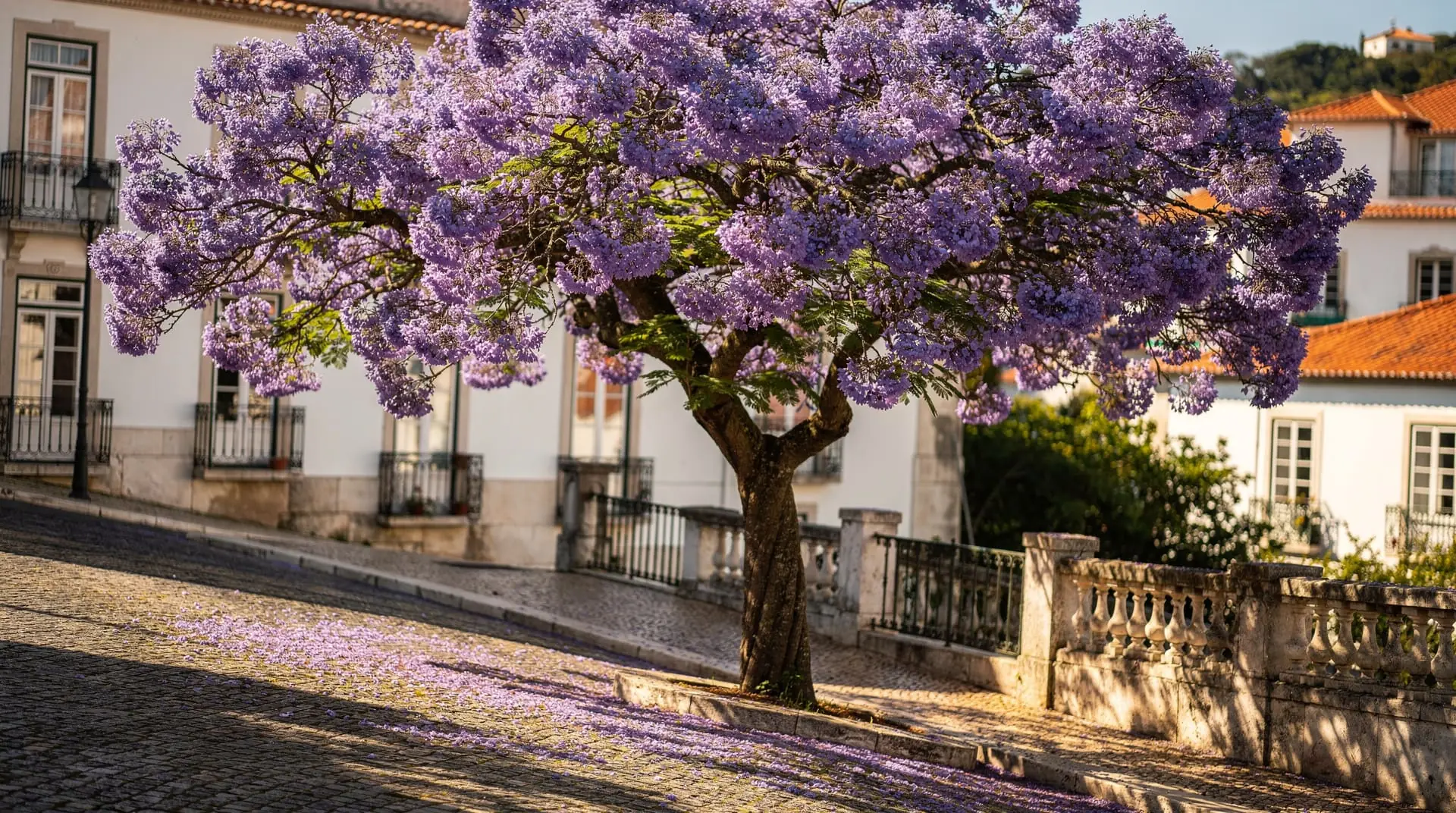
Spring in Lisbon runs from mid-March through May. April is consistently ranked the best month: average 20-22°C, rare rain, not yet crowded, flowers in bloom, and outdoor dining comfortable without summer heat. May is excellent but prices begin rising and crowds build. The jacaranda trees turn Lisbon purple in May — Avenida da Liberdade and Rua Ferreira Borges in Chiado are the best views.
Spring is the travel industry’s standard answer to “when should I visit Lisbon?” and for once the standard answer is correct. March through May offers the combination of decent weather, manageable crowds, reasonable prices, and the city’s most visually striking seasonal feature: the jacaranda trees that turn entire avenues purple-blue in late April and May.
This is also the window before the summer machine takes hold — before accommodation prices double, before Sintra queues reach two hours, before tram 28 becomes genuinely dangerous. The spring visitor gets most of summer’s advantages at winter’s costs.
| Best months | April (ideal), May (jacarandas), March (quietest) |
| Weather | Around 17-25°C, mostly dry, rain most likely in March |
| Crowds | Low in March, medium in April, building by late May |
| Prices | Around €60-140/night, rising through the season |
| Book ahead | 4-6 weeks for April, 6-8 weeks for May |
Month by month
March: the tentative spring
Average high 17-18°C, average low 10-11°C. Rain is possible (roughly 8-10 rainy days), but the weather is improving steadily from February. Lisbon in early March can still feel like a mild winter day; late March is unmistakably spring.
March is the quietest spring month for tourism. Hotels are at near-winter prices (often €60-100 below April rates for comparable rooms). The museums are quiet. Sintra in March can feel almost deserted — a strange experience after reading about summer queues.
Easter (March or April depending on year): Easter is Portugal’s major religious holiday. Good Friday brings solemn processions (including the striking Senhor dos Passos procession in Graça — worth seeing). Easter Sunday sees families gathering at home rather than eating out, which means restaurants in tourist areas are busy but family tascas in residential neighbourhoods are closed. Plan restaurant bookings accordingly.
The week surrounding Easter (Semana Santa) sees increased Portuguese domestic tourism — families travelling within Portugal — which pushes prices up slightly from the winter baseline.
April: the peak of spring
The best month to visit Lisbon. Average high 20-22°C, average low 12-14°C. Sunshine is consistent; rain is infrequent (5-7 days average). Daylight until 20:30 by late April.
April 25 (Carnation Revolution Day): The anniversary of the 1974 revolution that ended 48 years of authoritarian rule is a national holiday. Lisbon marks it with concerts, political events, and red carnation distributions (the revolution’s symbol — soldiers put carnations in their rifle barrels on the day). The Assembleia da República and the Museu do Aljube (Resistance and Freedom Museum, Rua Augusto Rosa 42) have special programming. Streets in Bairro Alto and Intendente fill for spontaneous celebrations. The holiday does not significantly affect tourist access to sights.
April is when the outdoor sightseeing becomes purely pleasurable: warm enough for café terraces and miradouro picnics, cool enough that Alfama’s uphill climbs do not leave you sweating. The Jardim da Estrela and Jardim do Príncipe Real are at their most beautiful, with roses and flowering trees.
May: the jacaranda month
Average high 23-25°C, average low 15-16°C. The warmest spring month; effectively early summer. Rain is minimal.
The jacaranda trees — introduced from Brazil in the 19th century, now one of Lisbon’s most distinctive visual features — bloom in late April and reach their peak in mid-May. The flowers are a vivid purple-blue, almost impossible to photograph well because they compete with the blue of the sky and the white of Lisbon’s buildings.
Best jacaranda views:
- Avenida da Liberdade: The grand central boulevard is lined with jacaranda — the effect from the Pombal end looking south is spectacular at peak bloom
- Rua Ferreira Borges, Chiado: A quieter street with mature trees creating a purple canopy
- Campo Grande park: Extensive jacaranda grove, less touristy, best experienced on a weekday morning
- Praça Marquês de Pombal and around: Multiple trees, central, always people photographing them
By late May, crowds are building. Sintra tickets for weekends should be booked 10-14 days ahead (as in summer). Hotel prices are approaching summer rates. The city is still manageable compared to July, but May no longer has the effortless ease of March-April.
Rainy-day backup plan
Spring rain, when it happens, tends to arrive as passing showers rather than all-day washouts — even so, it’s worth knowing where to go. The Gulbenkian Museum and its modern art wing can easily absorb half a day, as can the Berardo Collection in Belém, which pairs naturally with a covered look at the Jerónimos Monastery cloisters. For something more immersive, the Lisbon Story Centre on Praça do Comércio tells the city’s history in under an hour and stays dry throughout. Time Out Market and the covered stalls of the Lisbon markets are reliable lunch options when a shower rolls through.
Spring day trips: the ideal season
Spring is the best season for day trips from Lisbon. The reasons:
Arrábida in April: The Arrábida Natural Park is green, the wildflowers are extraordinary (orchids, poppies, wild rosemary), and the beaches — not yet warm enough for swimming in March, perfectly swimmable in May — are reachable without the summer vehicle restrictions. The park road is open all day in spring without the July-August traffic limits. See Setúbal Arrábida day trip.
Sintra in April: No summer crowds. Tickets available with a few days’ notice. The gardens of Quinta da Regaleira and the park around Pena Palace are in bloom. Walking the ridgeline trail from the Moorish Castle to the Cruz Alta is genuinely beautiful in April light. See Sintra day trip.
Évora in April: The Alentejo landscape in spring is stunning — a green carpet of wildflowers extending to the horizon between cork oaks and megalithic standing stones. The heat that makes the Alentejo brutal in summer is absent. April is the ideal month for the Évora day trip and Alentejo wine day trip.
Cascais in May: The Cascais coast in May, when the beaches are warming but not yet summer-crowded, is excellent. The 40-minute train from Cais do Sodré brings you to a town and coastline that feel like Portugal rather than a tourist production. See Cascais day trip.
Book an Arrábida Natural Park and Sesimbra day trip from LisbonSpring events and festivals
Easter processions (March or April): The Senhor dos Passos procession in Graça (Sunday before Easter) is the most solemn and visually striking. The procession moves through Alfama and Graça in near-silence, thousands of participants in purple robes carrying candles. Not a tourist spectacle — observe respectfully, don’t photograph in participants’ faces.
April 25 — Carnation Revolution Day: Concerts and events throughout the city. The Largo do Carmo (where the military command surrendered in 1974) has commemorative events. The Museu do Aljube runs special programming about the resistance movement.
Peixe em Lisboa (April): The major Lisbon seafood festival, typically in April at the Pátio da Galé near Praça do Comércio. Top restaurants set up outdoor stands, serving everything from percebes (barnacles) to grilled dourada. Ticketed event (€5-10 entry); crowded but worth it for the food.
Volta a Portugal (May-June): Portugal’s equivalent of the Tour de France begins in May. If the route passes through Lisbon (it varies by year), you might catch cyclists tearing along the waterfront — worth positioning yourself if it happens to coincide.
Spring walking in Lisbon
Spring is the best season for Lisbon’s walking routes. The heat is absent, the light is gentle, and the hills — which feel punishing in August — are pleasant in April.
Alfama circuit (2-3 hours): São Jorge Castle — Portas do Sol — Rua dos Remédios — Museu do Fado — up through Graça. See what to do in Alfama.
Belém to LX Factory (4-5 hours, flat): Along the Tagus waterfront from Belém eastward, past the Monument to the Discoveries, under the 25 de Abril Bridge, to the LX Factory in Alcântara. Excellent for the riverside perspective without any hills.
Sintra ridgeline trail: From Sintra train station (or the Moorish Castle) along the protected park, past Pena Palace, to the Cruz Alta (highest point), then down to Colares or Cabo da Roca. Allow 4-6 hours, take water and a map.
Bairro Alto-Chiado-Príncipe Real triangle: 2 hours of mostly flat walking through Lisbon’s most concentrated restaurant, bar, and shopping district. Best in the evening. See Bairro Alto guide and Baixa-Chiado guide.
Outdoor eating in spring
From mid-April, Lisbon’s restaurant terraces are fully operational and genuinely pleasant. Key areas:
Praça das Flores (Príncipe Real): A square surrounded by restaurants with outdoor seating under jacaranda trees. In May, lunch here with falling purple flowers is one of Lisbon’s most pleasant experiences.
Rua Nova do Carvalho (Pink Street), Cais do Sodré: Bar terraces spread across the pedestrianised pink-painted road. Evening rather than lunchtime — the bars fill from 18:00.
Bairro Alto tascas: Several small restaurants put tables on the narrow streets in spring and summer. Zé da Mouraria and similar neighbourhood spots; cheap, very local.
Tagus waterfront (Ribeira das Naus): The riverside promenade near Praça do Comércio has pop-up bars and food stands from April onwards. Informal, good for afternoon wine.
Practical considerations
Accommodation and pricing
Spring accommodation is significantly cheaper than summer and more available:
- Budget guesthouse: €60-90 in April (vs €100-140 August)
- Mid-range hotel: €90-140 in April (vs €150-220 August)
- Boutique: €140-220 in April (vs €250-350 August)
- May prices: 15-20% above April, already moving toward summer rates
Book 4-6 weeks ahead for April (Easter week is booked earliest). May should be booked 6-8 weeks ahead, especially for central locations.
What to pack
Spring weather is variable — a 22°C April day can drop to 14°C by evening. Pack:
- Light layers that can be added in the evening
- A waterproof jacket (not heavy rain gear, just a shell)
- Sunscreen (the spring sun is deceptive — you can burn in April without feeling hot)
- Comfortable walking shoes (important for cobblestones)
Sintra in spring
April is the ideal Sintra month. Book tickets online 2-5 days ahead (not weeks, as in summer). Take the early train. The bus 434 from Sintra station to Pena Palace runs every 15 minutes without summer queues. You can do Pena Palace, Quinta da Regaleira, and a walk to the Moorish Castle in a single spring day without the compressed misery of a summer visit.
See Sintra day trip, Sintra without a car, and the Sintra ticket planner.
Getting around in spring
Mild temperatures make spring the best season to explore on foot or by tram rather than taxi. A Viva Viagem card covers metro, buses, trams, and the Belém train, and is worth loading with a few days’ credit rather than buying single tickets. Tram 28 is still busiest in the late morning even in spring — ride it before 9:00 or after 18:00 if you want a seat, and see the tram 28 guide for the full route. If you’re combining central sightseeing with a coastal day trip, weigh the comfort of taxis and Uber/Bolt against driving and parking in Lisbon’s narrow, hilly streets — for most spring visitors, public transport plus the odd rideshare is simpler than a rental car.
Spring vs other seasons: the honest comparison
| Factor | Winter | Spring | Summer | Autumn |
|---|---|---|---|---|
| Weather | Cool, rainy | Ideal | Hot, dry | Variable |
| Crowds | Low | Medium | Very high | Medium-high |
| Prices | Lowest | Medium | Highest | Medium |
| Day length | Short | Growing | Maximum | Shortening |
| Sintra ease | Easy | Easy-Medium | Hard | Medium |
| Beach | No | April: no; May: possible | Yes | Sept: yes |
| Fado booking | Easy | Medium | Hard | Medium |
Spring is the optimal balance point. The only things summer offers that spring does not: beach swimming in Cascais (water too cold before May in the Atlantic), maximum daylight for evening sightseeing, and the June festival season (but this belongs to June rather than spring per se — see Santo António festival).
For the full seasonal breakdown, see best time to visit Lisbon. For building a specific itinerary, Lisbon 3-day itinerary, Lisbon 5-day itinerary, and the day trip matcher tool are the planning resources to use.
FAQ
Is April or May better for visiting Lisbon? April has slightly more reliable weather, thinner crowds, and lower prices; May adds the jacaranda bloom and warmer evenings but crowds and rates are visibly climbing by the second half of the month. If you want the calmest version of spring, choose April; if the purple-flowering trees matter to you, aim for the first half of May.
Do I need to book Sintra tickets in spring? In March and early April, a few days’ notice is usually enough. From mid-April, and especially on weekends through May, book online 1-2 weeks ahead — Sintra ticket queues start lengthening well before the summer peak.
Related guides
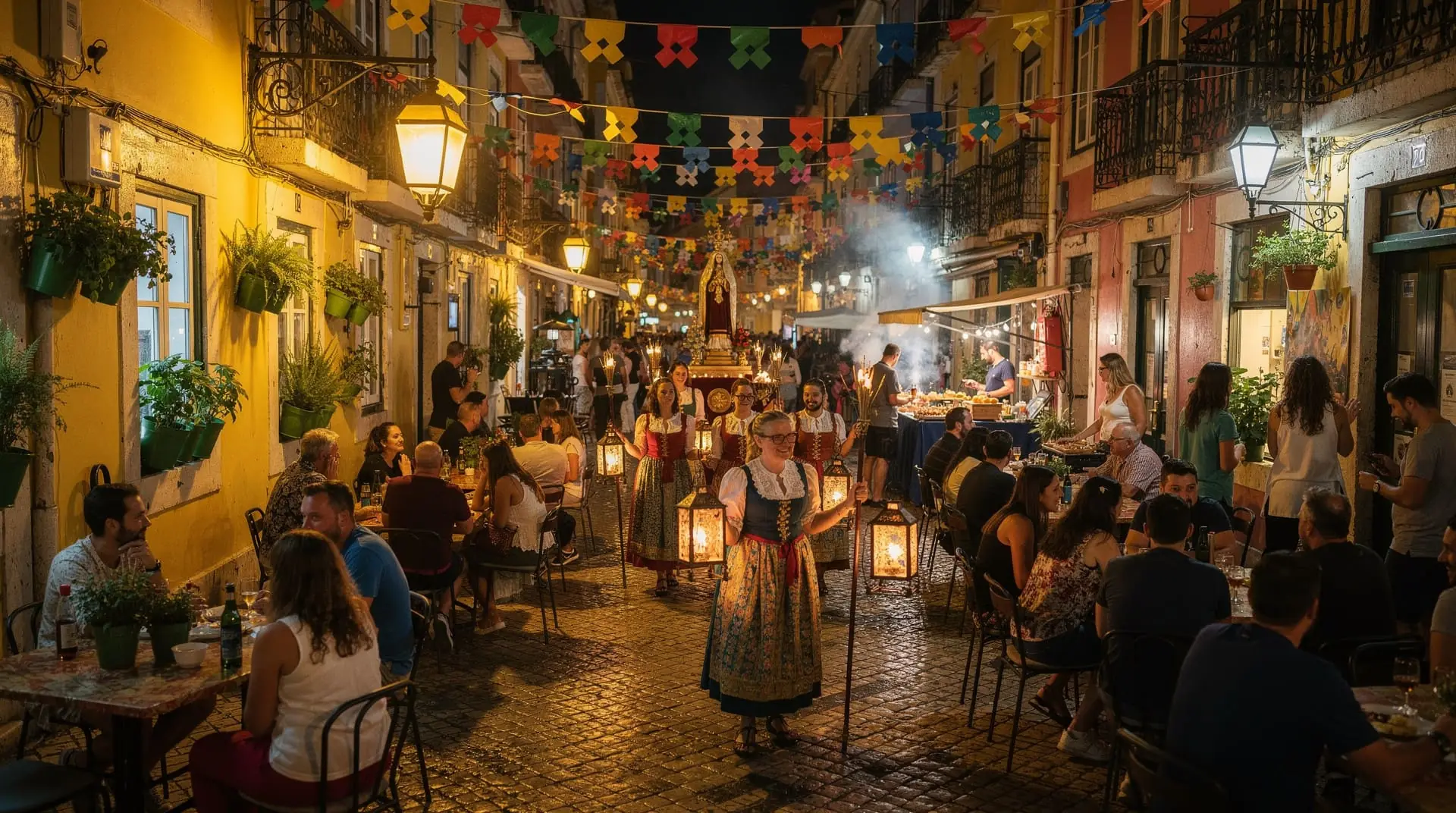
Santo António festival: Lisbon's Festas de Lisboa guide
Festas de Lisboa in June: sardines, marchas populares, mass weddings, Alfama all-nighters, and survival tips for June 12-13 when Alfama becomes impossible.
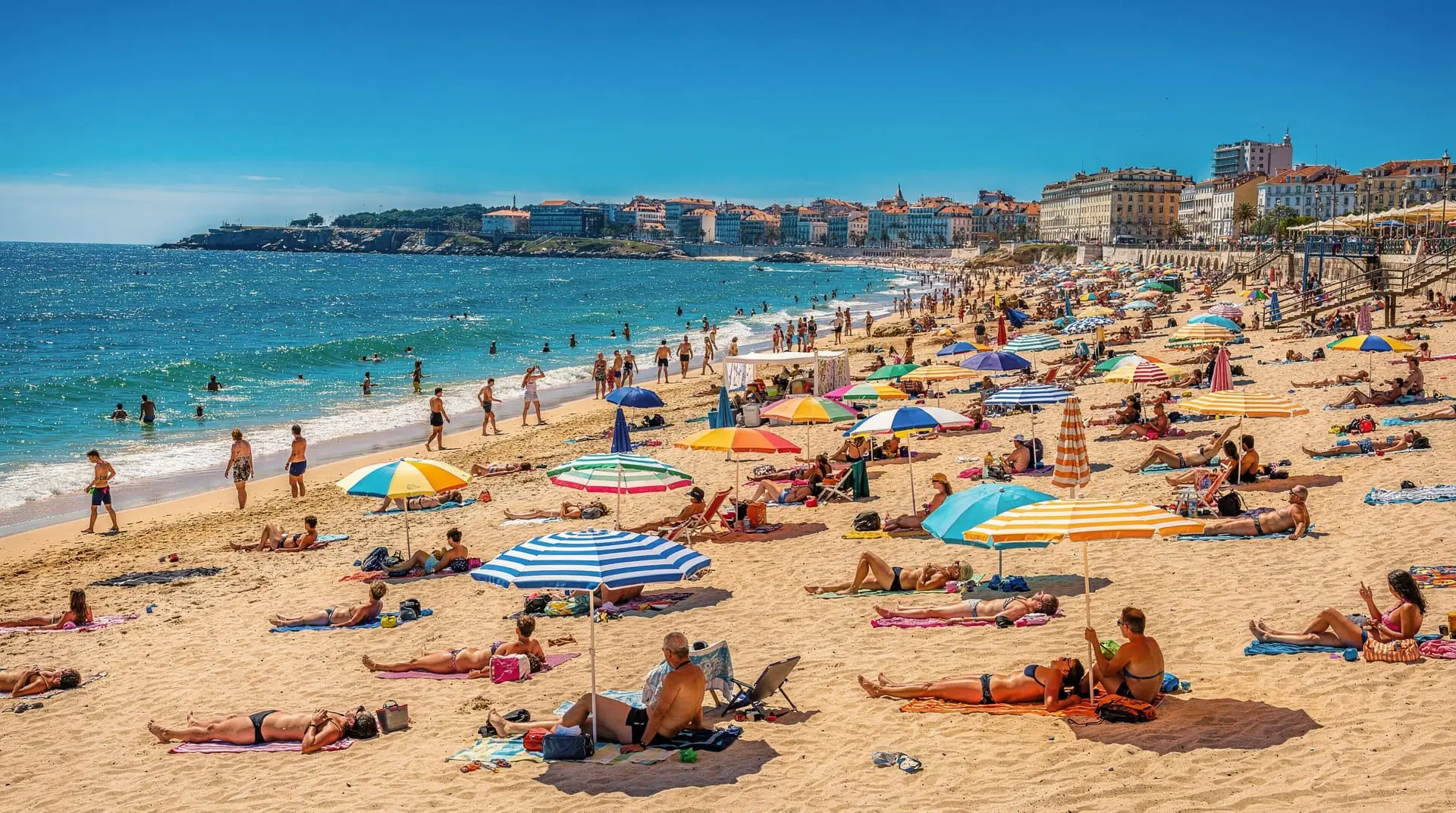
Lisbon in summer: heat, crowds, beaches, and what actually works
Lisbon in June, July, and August: 30°C+, Santo António festival, essential beach day-trips, crowd management, and the honest summer survival guide.

Lisbon in winter: mild, rainy, cheap, and underrated
Lisbon in December, January, and February: 12-17°C, Christmas markets, off-season prices, rain strategy, and the best winter activities. Honest seasonal guide.

Best time to visit Lisbon — month-by-month breakdown
When to visit Lisbon: April-June and September-October are ideal. Summer is hot and crowded. Winter is cheap and mild. Month-by-month guide with real data.
Ready to book? Top tours for this guide
We earn a small commission if you book through GetYourGuide — at no extra cost to you. Every tour is hand-picked and verified.

Lisbon: 48-Hour Hop-On-Hop-Off Bus Tour and Oceanarium Entry
Lisbon: MAAT Entry Ticket & Dolphin Watching Boat Tour
Lisbon: Alfama, Mouraria Walking Tour with Fado Night, Tapas
Lisbon: Hop-On Hop-Off Bus Tour
Lisbon: 1-or 2-Day Hop-On Hop-Off Bus Tour