Lisbon in summer: heat, crowds, beaches, and what actually works
Last reviewed
Is Lisbon worth visiting in summer despite the heat and crowds?
Yes, but with adjustments. July and August in Lisbon are hot (30-35°C), crowded at major sights, and accommodation is expensive. The payoff: long evenings until 21:30, beach access 30-45 minutes from the city, outdoor dining, and festivals. The key is starting sightseeing early (before 10:00), retreating to beaches or museums 12:00-16:00, and using evenings properly. Sintra in July without pre-booked tickets is genuinely unpleasant — do not attempt it.
Summer in Lisbon runs from June through August, though the Portuguese summer temperament starts in late May when the jacaranda trees finish and the humidity drops. The season is defined by heat, long days, beaches, and the summer’s greatest tourist concentration — all competing for the same narrow streets.
This is not a deterrent. It is context. Lisbon in July is genuinely fantastic if you understand its rhythm. Arrive expecting a European spring city and you will be disappointed. Arrive prepared for a warm southern European city with beach access and brilliant evenings, and it delivers.
| Best months | June (best balance), July-August (peak, hottest) |
| Weather | Around 26-35°C, dry, cooled by the Atlantic nortada breeze |
| Crowds | High from mid-June, maximum in July-August |
| Prices | Around €80-300+/night depending on category, annual peak |
| Book ahead | 2-3 months for July-August; Sintra tickets 1-2 weeks |
Temperature and conditions month by month
June: The best summer month. Average high 26°C, no rain to speak of, Lisbon not yet overwhelmed by August crowds. The first half of June brings the Festas de Lisboa — the Santo António festival and a full month of neighbourhood celebrations. Evenings are warm, golden, and long.
July: The peak. Average high 28-30°C, with heat waves pushing 35-38°C for days at a time. Zero rain. Maximum tourist density at Sintra, Belém, and the main viewpoints. Accommodation prices at their annual peak. This is when Lisbon shows its Mediterranean soul — outdoor dining until 23:00, beaches packed, the city buzzing from morning to midnight.
August: Similar to July, slightly hotter on average. Many Portuguese businesses close for the first two weeks of August — the Portuguese holiday season. Paradoxically, this means some neighbourhoods feel emptier while tourist areas are at maximum capacity.
Humidity: Lisbon is coastal but not oppressively humid in the way of Mediterranean cities further east. The Atlantic breeze (the nortada, a consistent north wind) keeps conditions drier than the temperature suggests. Mid-afternoon at 34°C with a sea breeze is bearable. Mid-afternoon at 34°C without it is not.
The heat survival strategy
Morning for sightseeing (07:30-12:00)
The best Lisbon hours in summer. São Jorge Castle before 10:00 has almost no queue. The Jerónimos Monastery in Belém at 09:00 is the version without the lunchtime scrum. The Alfama alleys are still cool in the shade. Use these hours.
Sintra specifically: Book tickets online the evening before your visit. The train from Rossio runs from 06:10; the 07:38 departure reaches Sintra before the crowds arrive. Pena Palace and Quinta da Regaleira are liveable before 11:00; after 13:00 in July, the queues for everything are 45-90 minutes even with pre-booked tickets. See Sintra day trip guide and Sintra without a car.
Midday retreat (12:00-16:00)
This is the difficult slot in July and August. Options:
- Beach: The beach day-trip from Lisbon solves the midday heat problem completely — see below
- Museum: MAAT (air-conditioned, interesting, overlooking the Tagus), Museu do Azulejo (tiled interior, cool), Museu Calouste Gulbenkian (vast, cool, gardens)
- Coffee and book in a café: Lisbon’s old cafés — A Brasileira (Chiado), Café Nicola (Rossio, touristy but cool) — are pleasant midday retreats
- Hotel room: Not shameful at 14:00 in August
Evenings (19:00-midnight)
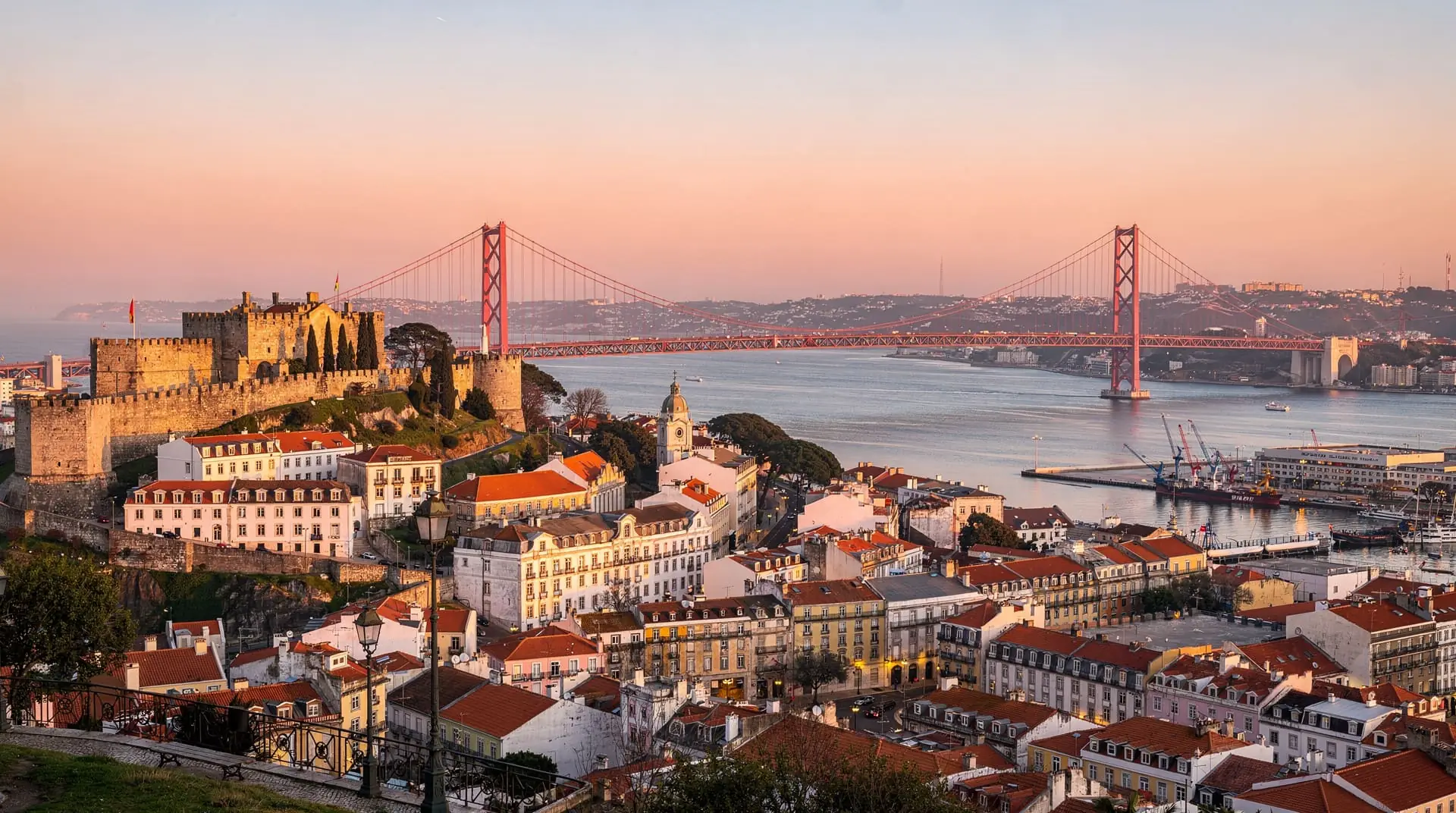
The summer payoff. Sunset is around 21:00-21:30 in June-July. The whole city is outside. The miradouros (viewpoints) — Senhora do Monte, Santa Catarina, Portas do Sol — fill with people watching the light change over the Tagus. Restaurant terraces are full. Fado begins in Alfama around 21:30. The Bairro Alto bars stay open until 02:00-03:00.
Essential beach day-trips from Lisbon
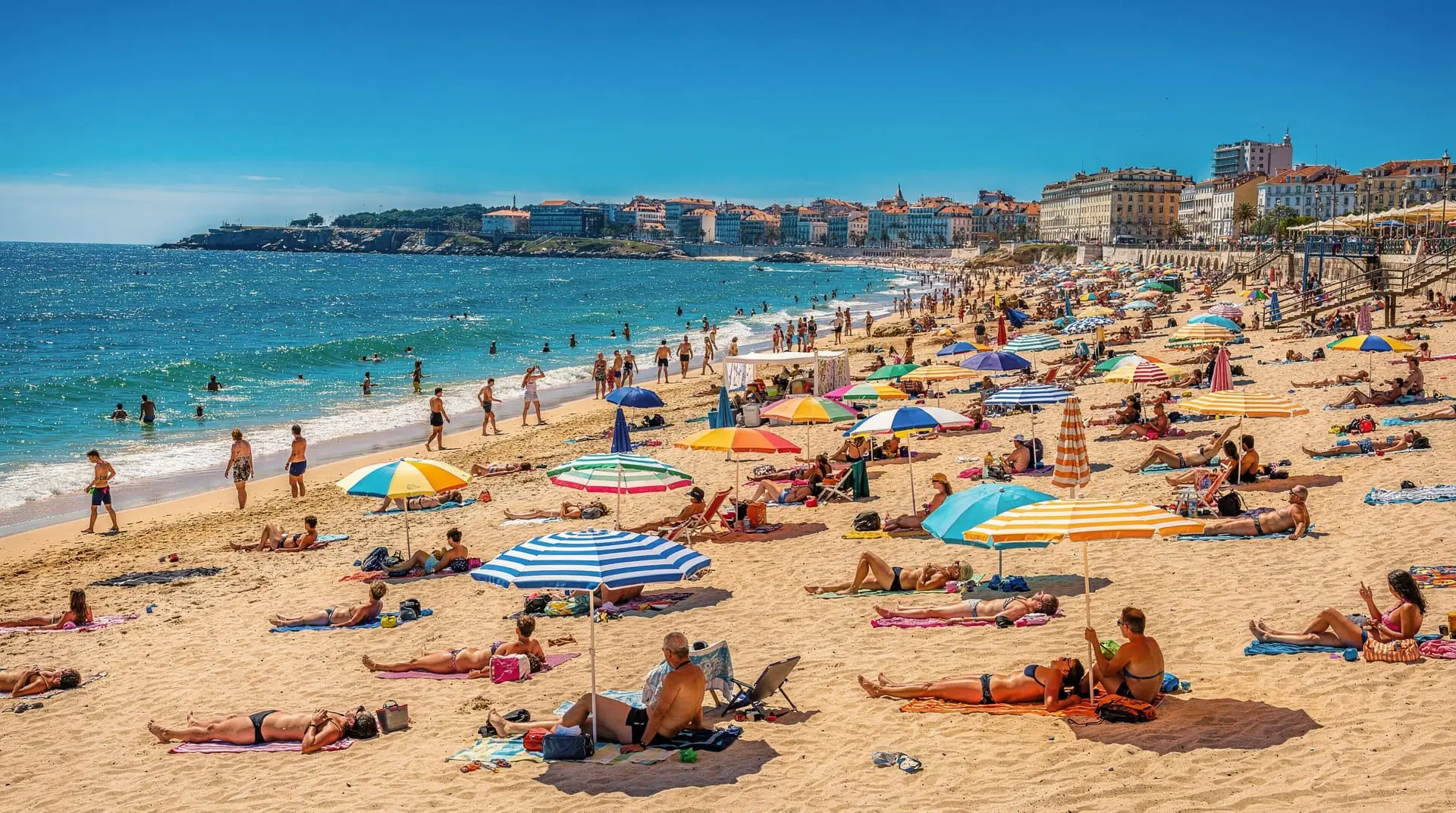
The beach is not optional in July and August — it is the core of the summer experience. Lisbon’s great advantage over inland cities is that excellent beaches are within 30-60 minutes.
Cascais beaches (train, 40 minutes)
Train from Cais do Sodré (line to Cascais, €2.35, runs every 20-30 minutes). The Cascais line beaches — Estoril, Cascais town beaches, Guincho 7 km west of Cascais — are the most accessible from Lisbon. Cascais beaches guide covers the individual options.
Guincho is the least crowded of the accessible options (the wind makes it better for surfers than sunbathers) but the others get very full on summer weekends. Arrive by 10:00 for a good spot.
Costa da Caparica (bus, 35-45 minutes)
South of Lisbon across the Tagus, Costa da Caparica is a 30 km stretch of Atlantic beach — the longest urban beach in Europe by some measures. The water is Atlantic cold (18-20°C), the waves suit surfers, and the sheer length means you can always find space. Ferry from Cais do Sodré to Cacilhas (10 minutes), then bus or taxi to Caparica. Alternatively, express bus from Praça de Espanha (summer service, ~45 minutes, €3.70 return). See Costa da Caparica beaches.
Arrábida beaches (car or organised tour, 50-60 minutes)
The jewel. Portinho da Arrábida and Galapinhos beach have Caribbean-quality water — turquoise, warm (22-24°C in summer), clear. The difficulty: no public transport serves the Arrábida beach road directly. By car (toll motorway south, then scenic coast road through the Natural Park) or by organised tour.
Access to the beach road is restricted in July and August (maximum vehicles permitted) — you either arrive before 08:00, take a boat from Sesimbra, or join an organised group that has reserved access. See Arrábida Natural Park guide and Setúbal Arrábida day trip.
Book an Arrábida Natural Park and Sesimbra day trip from LisbonSesimbra (car or bus, 45-60 minutes)
A fishing village with a sheltered, south-facing bay — the beach here is calmer than the Atlantic-facing options. Bus from Praça de Espanha (Sesimbra line, about 1 hour). Boat tours from Sesimbra show you the Arrábida coastline from the water, which is spectacular.
Comparing the beach options
| Beach area | Travel time | Water | Crowds |
|---|---|---|---|
| Cascais/Estoril | 40 min train | Cool Atlantic, 17-19°C | Busy on weekends |
| Costa da Caparica | 35-45 min ferry+bus | Cold, 18-20°C, surf swell | Space almost always available |
| Arrábida | 50-60 min, restricted access | Warm, clear, 22-24°C | Limited by vehicle caps |
| Sesimbra | 45-60 min bus/car | Calm, sheltered bay | Moderate |
For families weighing these against pool or hotel-based options, see family beaches near Lisbon and best beaches near Lisbon for the fuller comparison.
Festival Lisbon: June
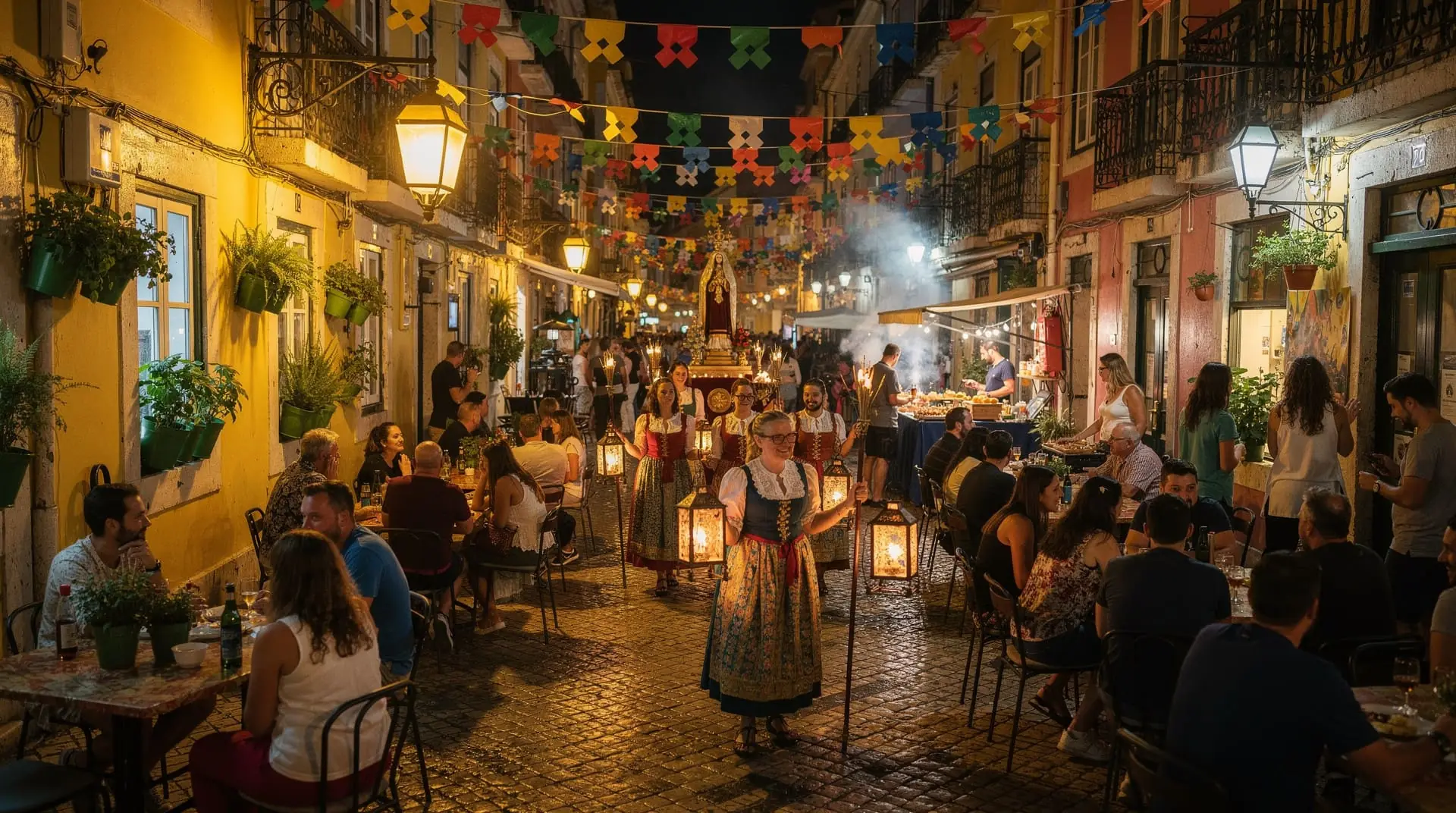
June is Lisbon’s festival month. The Festas de Lisboa runs from June 1 through June 29, with the peak around Santo António (June 13, the city’s patron saint day). See the Santo António festival guide for the full picture.
What to expect in early June: Street parties (arraiais) in neighbourhood squares throughout the city. Each parish has its own celebration — Alfama, Mouraria, Bairro Alto, Santos — with sardines grilled on the street, folding tables and chairs, cheap wine, and local music. These are genuinely communal events, not tourist productions.
June 12-13 (the core): Alfama becomes impassable by vehicle after 19:00 on June 12. The marchas populares (costumed neighbourhood processions) march down Avenida da Liberdade starting around 21:30. Sardines everywhere. The city is at its most communal and most chaotic. Book accommodation well outside Alfama if you want to sleep before 03:00.
June 24 (São João): Less emphasis in Lisbon than Porto, but some neighbourhoods celebrate. If you are in Portugal for midsummer, Porto’s São João (June 23-24) is the most spectacular street party in the country — a day trip or overnight from Lisbon is possible.
Crowds management: the real picture
Sintra in summer
Do not attempt Sintra on a summer weekend without:
- Online tickets for Pena Palace and Quinta da Regaleira (book at palaciopena.pt and regaleira.pt, 1-2 weeks ahead)
- An early start (train before 09:00)
- Acceptance that you will be in a large crowd regardless
Sintra parking in July-August is a catastrophe — do not drive. The train from Rossio (40 minutes, €2.35) is the only sensible option. The bus from Sintra town to Pena Palace (bus 434, €6.90 return) runs every 15-20 minutes but has queues in summer. See Sintra without a car.
Belém in summer
Jerónimos Monastery: pre-book tickets. Queue without booking can reach 60-90 minutes. The pastéis de nata queue at Pastéis de Belém (Rua de Belém 84-92) is legendary — 30-60 minutes in peak season. Buy from António Manuel (the small bakery 200m down the road) or wait for the evening when queues shorten after 17:00. See Belém pastéis queue.
São Jorge Castle in summer
Queue management is better than Sintra but pre-booking online still saves 20-30 minutes. The castle itself — outdoor, windy, cooler than the streets — is better on hot days than indoor museums.
Tram 28 and the pickpocket problem
Summer is when tram 28 is at its most crowded and most targeted by pickpockets — the combination of packed carriages, distracted tourists, and open windows makes it an easy environment for theft. If you want the tram 28 experience for its own sake rather than as transport, ride it early (before 09:00) with a bag worn on your front. See the tram 28 guide and the dedicated tram 28 pickpockets advice for specifics.
Accommodation in summer
July-August is the most expensive period for Lisbon accommodation:
- Budget hostel dorm: €25-45 per night (€15-20 in shoulder season)
- Budget hotel/guesthouse: €80-140
- Mid-range (3-star equivalent): €120-200
- Boutique hotel in Chiado/Bairro Alto: €180-300+
- Luxury: €300-500+
Book 2-3 months ahead for July-August, especially for anything in Alfama (limited supply, high demand), Chiado, or Bairro Alto. Príncipe Real and Santos are slightly less pressured. See where to stay in Lisbon.
Honest note on Alfama accommodation: Beautiful in photographs, steep in practice. Carrying luggage up Alfama’s hills in 34°C heat is character-building. Many Alfama apartments also have noise issues during June festival season — the street celebrations continue until 04:00.
What works specifically well in summer
Tagus river at sunset: A boat cruise on the Tagus at 19:00-21:00 in July is genuinely spectacular — the light on the water, the 25 de Abril Bridge, the Cristo Rei statue, the city panorama. Cooler than the streets.
Book a sunset cruise on the Tagus River from LisbonFado in summer: Fado houses are at their best in summer — the repertoire responds to the festival season. Book well ahead (see best fado houses).
Outdoor dining: Lisbon’s restaurant terraces are at full use in summer. The Alfama tascas, Chiado café terraces, and Bairro Alto restaurants spill onto the streets. Reserve ahead for popular spots.
Nightlife: Lisbon’s summer nightlife is excellent. The Pink Street (Rua Nova do Carvalho, Cais do Sodré) throbs nightly. Rooftop bars — TOPO (Centro Comercial Martim Moniz), Rio Maravilha (LX Factory) — are magnificent at sunset.
LX Factory: The old industrial complex in Alcântara has a Sunday market (Feira da Ladra subsidiary and artisan market, 10:00-18:00), restaurants, and bars that are at their best in summer. See LX Factory guide.
Summer practical checklist
What to bring:
- Sunscreen (SPF 50+ — the Lisbon sun on white buildings is intense)
- Hat and sunglasses mandatory
- Refillable water bottle (free water at most restaurants, fountains throughout the city)
- Light layers for evenings (the Atlantic breeze cools sharply after 20:00)
- Comfortable flat shoes for cobblestones (flip-flops are painful on the uneven calcada portuguesa)
What to download:
- CP (Comboios de Portugal) app for train tickets to Sintra and Cascais
- Uber and Bolt apps (cheaper than taxis after midnight)
- Google Maps offline for Lisbon (mobile data can be slow in crowded areas)
Transport in heat: Avoid tram 28 in peak hours (11:00-15:00) in summer — packed, slow, and a pickpocket environment. Metro is air-conditioned and reliable. Taxis and Uber are worth the premium in extreme heat for short journeys. See getting around Lisbon.
Hydration: Lisbon tap water is safe and good. Restaurants provide tap water on request (ask for “água da torneira”). Bottled water from hotel minibars costs 4-6x the price of street supermarkets.
Day trips that still work in summer heat
Not every day trip suits the peak-heat months. The Sintra day trip requires the early-start discipline described above, but the Évora day trip into the Alentejo interior is genuinely brutal in July-August — inland temperatures regularly exceed Lisbon’s by 5-8°C, and the region has little shade. If you want an Alentejo taste without the worst heat, aim for a June visit or wait for autumn; see the Alentejo wine day trip for what the region offers outside the sightseeing itself. Coastal day trips fare much better: Cascais, Comporta and boat-based options on the Tagus all benefit from sea breeze that inland routes lack.
FAQ
Is it too hot to visit Lisbon in July and August? It’s hot but manageable if you plan around it: sightsee in the morning, retreat to a beach or air-conditioned museum from midday to mid-afternoon, then enjoy the long, warm evenings. Trying to sightsee outdoors at 14:00 in a July heatwave is the main way visitors have a bad time.
Can I visit Sintra in summer without pre-booked tickets? Not comfortably. Queues without online tickets can reach 60-90 minutes for Pena Palace and Quinta da Regaleira on summer weekends. Book at least a few days ahead, and take an early train from Rossio to arrive before the crowds build.
For the full trip planning picture, see best time to visit Lisbon, first-time Lisbon tips, and Lisbon travel budget. Compare summer with other seasons at Lisbon in spring and Lisbon in winter.
Related guides
Santo António festival: Lisbon's Festas de Lisboa guide
Festas de Lisboa in June: sardines, marchas populares, mass weddings, Alfama all-nighters, and survival tips for June 12-13 when Alfama becomes impossible.
Lisbon in spring: jacarandas, ideal weather, and fewer crowds
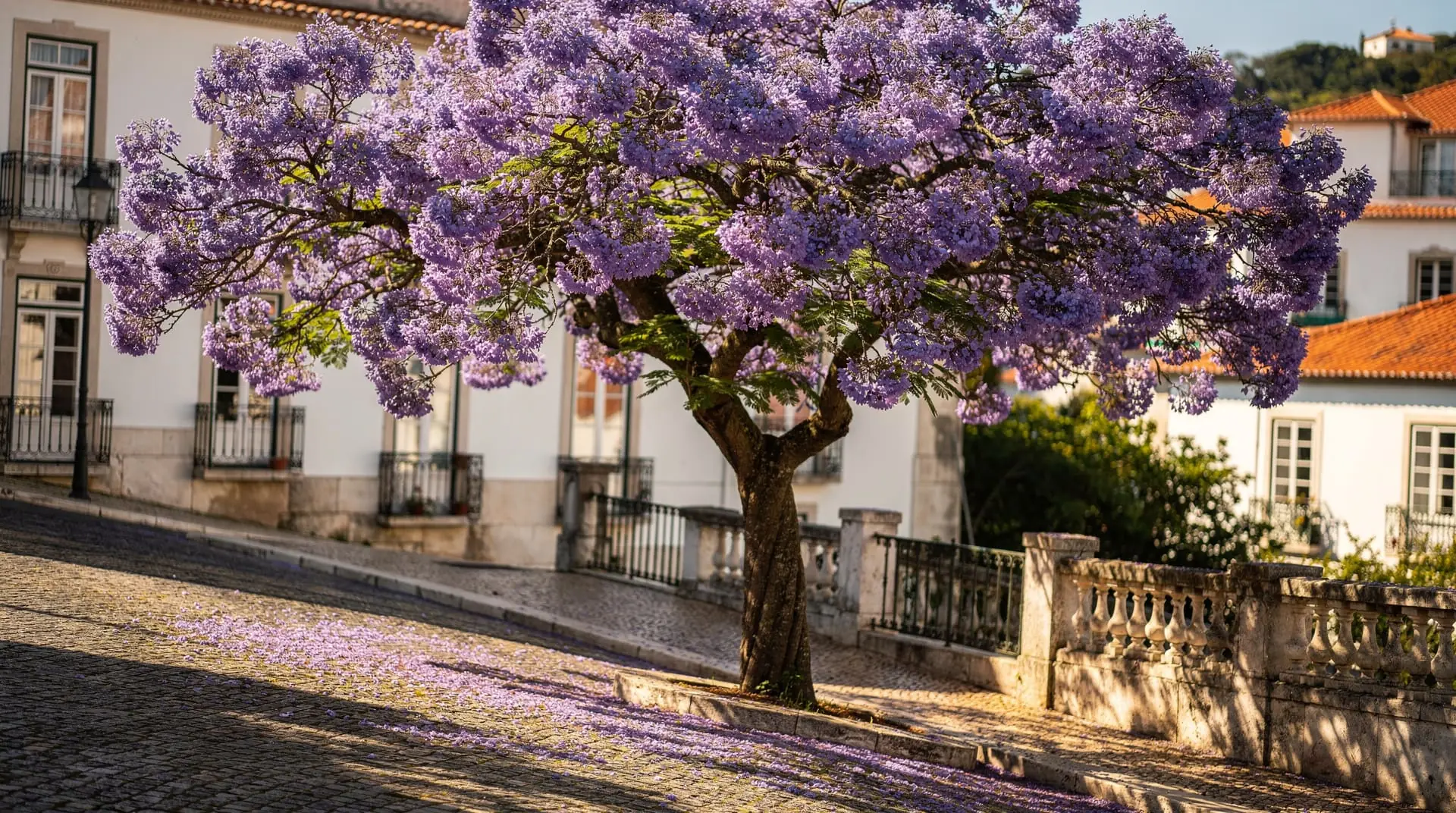
Lisbon in March, April, and May: jacaranda bloom, Easter week, 20-25°C weather, and the last chance for off-peak value before summer. Best time to visit guide.

Lisbon in winter: mild, rainy, cheap, and underrated
Lisbon in December, January, and February: 12-17°C, Christmas markets, off-season prices, rain strategy, and the best winter activities. Honest seasonal guide.
Best beaches near Lisbon — ranked by type and access
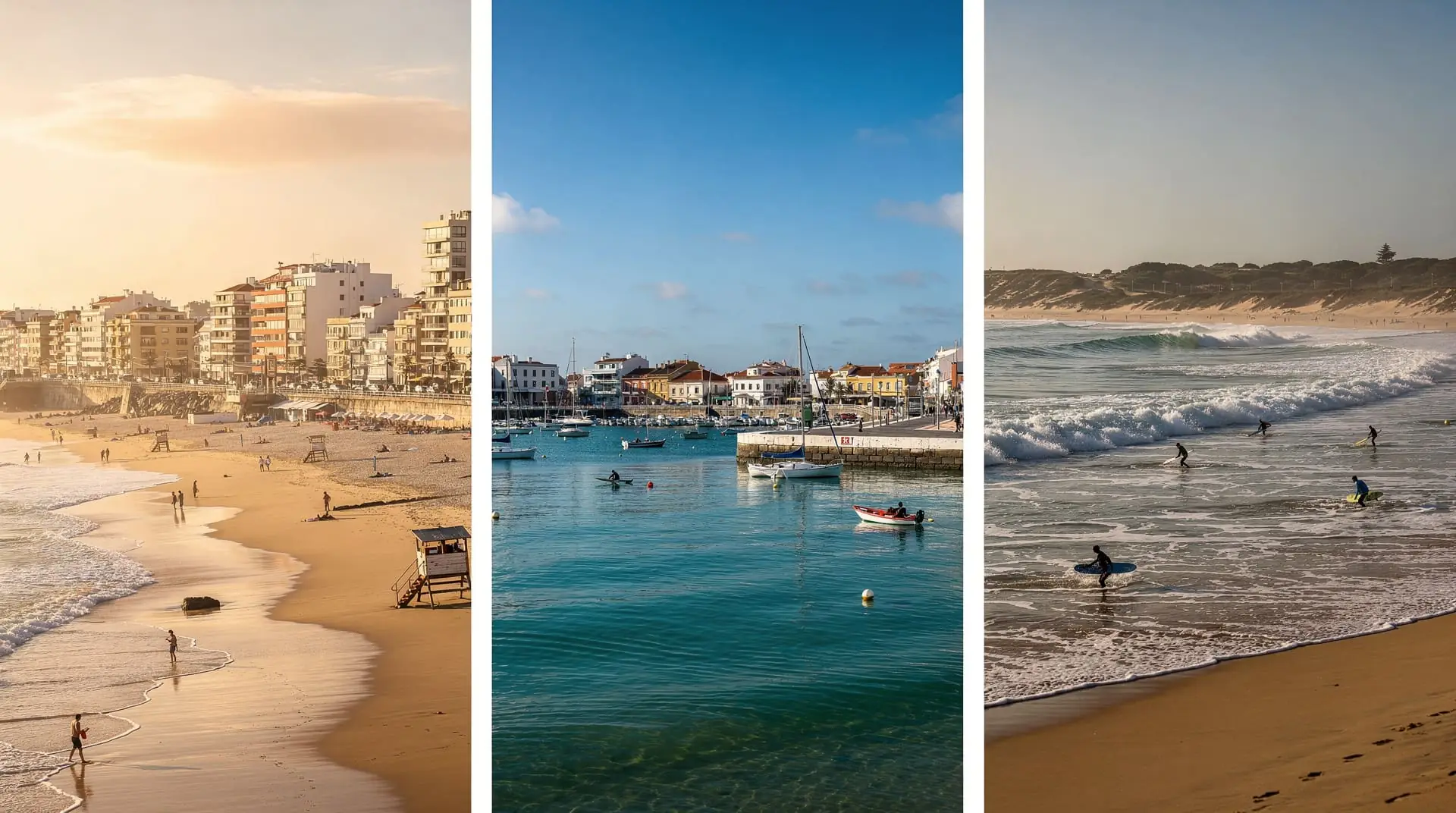
The 6 best beaches near Lisbon ranked: Caparica, Carcavelos, Cascais, Guincho, Arrábida, Comporta. By train, bus, and car with honest tips.
Ready to book? Top tours for this guide
We earn a small commission if you book through GetYourGuide — at no extra cost to you. Every tour is hand-picked and verified.
Lisbon: 48-Hour Hop-On-Hop-Off Bus Tour and Oceanarium Entry
Lisbon: MAAT Entry Ticket & Dolphin Watching Boat Tour
Lisbon: Alfama, Mouraria Walking Tour with Fado Night, Tapas
Lisbon: Hop-On Hop-Off Bus Tour
Lisbon: 1-or 2-Day Hop-On Hop-Off Bus Tour